Can Betta Fishes Be Together

Can betta fishes be together? It depends on the gender, tank size, and setup. Male bettas should never live together, but female bettas can sometimes coexist in groups called sororities. With the right conditions, careful planning, and close monitoring, some betta fish can share a tank successfully.
Key Takeaways
- Male bettas cannot live together: Two male betta fish will fight aggressively, often to the death, due to their territorial nature.
- Female bettas can sometimes coexist: A group of 4-6 female bettas, called a sorority, can work in a heavily planted 20+ gallon tank.
- Male and female together is risky: They should only be paired temporarily for breeding under strict supervision.
- Tank size matters enormously: A minimum of 20 gallons is recommended for any betta community setup.
- Heavy planting and hiding spots are essential: Breaking lines of sight reduces aggression and stress significantly.
- Individual temperament varies: Some bettas are more aggressive than others, so always have a backup plan.
- Close monitoring is non-negotiable: Watch for signs of stress, fin nipping, and aggression daily.
📑 Table of Contents
- Can Betta Fishes Be Together? The Complete Guide
- Why Are Betta Fish So Aggressive?
- Can Two Male Betta Fish Be Together?
- Can Female Betta Fish Be Together?
- Can Male and Female Betta Fish Be Kept Together?
- What Tank Mates Work With Betta Fish?
- Signs of Stress and Aggression to Watch For
- Essential Tips for Keeping Betta Fish Together Safely
- Frequently Asked Questions About Betta Fish Together
- Conclusion: Can Betta Fishes Be Together?
Can Betta Fishes Be Together? The Complete Guide
If you have ever walked into a pet store, you have probably seen betta fish sitting alone in tiny cups. It makes you wonder — can betta fishes be together in the same tank? It is one of the most common questions new and experienced fish keepers ask. The answer is not a simple yes or no. It depends on several factors, including the gender of the fish, the size of the tank, and how the environment is set up.
Betta fish, also known as Siamese fighting fish, are famous for their stunning colors and flowing fins. They are also famous for something else — their aggression. Male bettas, in particular, are extremely territorial. In the wild, they claim a small patch of water and defend it fiercely. This instinct does not disappear in a home aquarium. Understanding this natural behavior is the key to figuring out whether betta fishes can be together safely.
In this guide, we will break down everything you need to know. We will cover male bettas, female bettas, mixed-gender setups, tank requirements, warning signs, and much more. By the end, you will have a clear answer to the question: can betta fish be together?
Why Are Betta Fish So Aggressive?
The Fighting Fish Legacy
Betta fish earned the name “Siamese fighting fish” for a reason. In Thailand, where they originate, people historically bred them for organized fighting matches. Over hundreds of years, the most aggressive and territorial bettas were selectively bred. This means the betta fish you see in stores today carries generations of fighting instinct in their DNA.
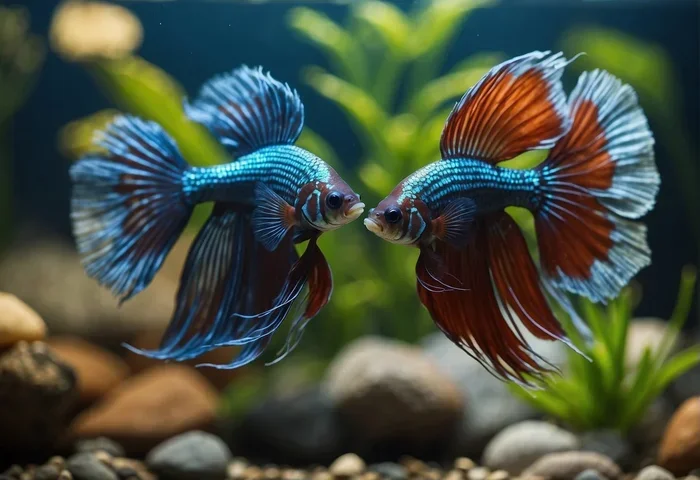
Male bettas are the most aggressive. When two males see each other, they flare their gills, spread their fins, and prepare to attack. In a small tank with nowhere to escape, these fights can be fatal. This is why the default advice is simple — never house two male betta fish together.
Territorial Instincts in the Home Aquarium
Even a single male betta in a community tank can show aggression toward fish that look similar to him. Bright colors and long fins on other fish can trigger his territorial response. This is why choosing tank mates for betta fish requires careful thought.
Female bettas are generally less aggressive than males. However, they can still be territorial, especially in smaller tanks. The difference is that female bettas can sometimes learn to coexist with proper setup and enough space.
Can Two Male Betta Fish Be Together?
The Short Answer: No
Let us be very clear. You should never keep two male betta fish in the same tank. This is one of the most important rules in betta fish care. No matter how large the tank is, no matter how many plants you add, two males will almost always fight. These fights are not playful. They involve biting, chasing, and tearing fins. The stress alone can weaken their immune systems and lead to illness or death.
Some people claim they have kept two males together without issues. While this is theoretically possible with an extremely large, heavily divided tank, it is not worth the risk. The vast majority of attempts end badly. If you want multiple betta fish, consider a female sorority or keep males in separate tanks.
What Happens When Two Males Meet?
When two male bettas are placed in the same aquarium, a predictable sequence of events usually unfolds. First, they notice each other. Their bodies tense up. They flare their gill covers, called opercula, to appear larger and more threatening. Their fins spread wide. Colors intensify. This is a warning display.
If neither fish backs down — and with bettas, backing down rarely happens — physical combat begins. They bite at each other’s fins, bodies, and gills. The fight continues until one fish is severely injured or killed. Even if you separate them after the first sign of aggression, the stress has already taken a toll.
Can Female Betta Fish Be Together?
The Sorority Tank Concept
Here is where things get more interesting. Female betta fish can sometimes live together in a group known as a betta sorority. A sorority typically consists of 4 to 6 female bettas kept in a single tank. The idea is that with enough females, no single fish becomes the sole target of aggression. The aggression gets distributed across the group.
However, a betta sorority is not a beginner-level project. It requires careful planning, a large tank, and constant monitoring. Not every group of female bettas will get along. Some individuals are simply too aggressive to live with others. You need to be prepared to separate fish if things go wrong.
Requirements for a Successful Sorority
If you want to try keeping female betta fish together, here are the essential requirements:
- Tank size: Minimum 20 gallons, though 30 gallons or larger is better. More space means less territorial behavior.
- Number of fish: At least 4 to 6 females. Odd numbers like 5 are often recommended to prevent pairing off.
- Heavy planting: Live or silk plants throughout the tank. Plants break up sight lines and create natural territories.
- Hiding spots: Caves, driftwood, and decorations where fish can retreat and feel safe.
- Introduce all at once: Add all the females to the tank at the same time. This prevents established fish from viewing newcomers as invaders.
- Backup tanks: Have separate tanks or dividers ready in case you need to remove an aggressive fish.
Even with all these precautions, a sorority can fail. Some bettas have personalities that simply do not allow for communal living. Always watch for signs of bullying, such as one fish constantly chasing others or a fish hiding and refusing to eat.
Can Male and Female Betta Fish Be Kept Together?
Breeding Only — With Caution
Male and female betta fish should only be placed together for breeding purposes, and even then, only under careful supervision. During the breeding process, the male builds a bubble nest at the water’s surface. The female is introduced, and if she is receptive, spawning occurs.
After spawning, the female must be removed from the tank. The male guards the eggs and fry, and he may attack the female if she remains. Keeping a male and female betta together long-term is not recommended. The male may harass the female constantly, causing stress, injury, and even death.
Why Long-Term Coexistence Does Not Work
Unlike some fish species that form pairs, bettas do not bond. The male’s territorial instincts do not turn off just because a female is present. In a standard home aquarium, the male will often chase and nip at the female. Without enough space and hiding places, the female has no way to escape the attention.
If you are interested in breeding bettas, research the process thoroughly. It requires a dedicated breeding tank, specific water conditions, and a plan for raising the fry. It is not something to attempt casually.
What Tank Mates Work With Betta Fish?
Safe Community Fish Options
While betta fishes cannot always be together, bettas can sometimes live peacefully with other species of fish. The key is choosing tank mates that do not look like bettas and do not invade their territory. Good options include:
- Corydoras catfish: Peaceful bottom dwellers that stay out of the betta’s way.
- Neon tetras: Small, fast, and occupy the middle of the tank.
- Kuhli loaches: Shy, bottom-dwelling fish that hide during the day.
- Harlequin rasboras: Calm schooling fish that are not fin nippers.
- Snails and shrimp: Mystery snails and cherry shrimp can work, though some bettas may see shrimp as food.
Avoid fish with bright colors or long fins, such as guppies, as these can trigger aggression. Also avoid fin-nipping species like tiger barbs. Every betta has a unique personality, so always monitor new additions closely.
Setting Up a Betta Community Tank
A community tank with a betta should be at least 10 gallons, though 20 gallons is much better. Use plenty of live plants like Java fern, Anubias, and Amazon sword. These provide cover and help maintain water quality. Make sure the filter flow is gentle, as bettas prefer calm water.
Add the betta to the tank last. This allows the other fish to establish themselves first, reducing the betta’s sense of territorial ownership. Watch the tank closely for the first few weeks. If the betta shows excessive aggression, you may need to rearrange decorations or remove certain fish.
Signs of Stress and Aggression to Watch For
Physical Warning Signs
Whether you are keeping betta fishes together or housing a betta with other species, knowing the signs of trouble is critical. Watch for these red flags:
- Torn or ragged fins: A clear sign of fighting or fin nipping.
- Faded color: Stress causes bettas to lose their vibrant coloration.
- Clamped fins: Fins held tight against the body indicate fear or illness.
- Excessive hiding: A fish that never comes out is being bullied.
- Refusal to eat: Stress can cause bettas to stop eating entirely.
- Visible wounds or white spots: Injuries from fighting can lead to infections or ich.
Behavioral Warning Signs
Behavior is just as important as physical appearance. Aggressive chasing, constant flaring, and one fish cornering another are all signs that the arrangement is not working. Some mild establishing of hierarchy is normal in a new sorority, but it should settle down within a few days. If aggression escalates or continues beyond a week, intervention is needed.
Essential Tips for Keeping Betta Fish Together Safely
Tip 1: Always Have a Backup Plan
Before you attempt to keep betta fishes together, have a separate tank or divider ready. Things can go wrong quickly. A fish that seemed peaceful yesterday might become aggressive overnight. Being prepared to separate fish at a moment’s notice can save lives.
Tip 2: Use a Tank Divider for Testing
If you are unsure whether two bettas will get along, start with a tank divider. This allows the fish to see each other without physical contact. Watch their reactions. If they flare constantly and try to attack through the divider, they should not be placed together. If they seem calm, you can try removing the divider under close supervision.
Tip 3: Rearrange the Tank Before Introducing New Fish
When adding new bettas to an established tank, rearrange all the decorations first. This disrupts existing territorial claims and gives all fish a fresh start. It is a simple trick that can significantly reduce aggression.
Tip 4: Feed Fish on Opposite Sides of the Tank
Competition for food can trigger aggression. When feeding, drop food on opposite ends of the tank so no single fish can monopolize the meal. This is especially important in sorority setups.
Tip 5: Maintain Excellent Water Quality
Stressed fish are more aggressive fish. Poor water quality adds stress to an already tense situation. Perform regular water changes, test your water parameters, and keep ammonia and nitrite levels at zero. A healthy environment promotes calmer behavior.
Frequently Asked Questions About Betta Fish Together
Can betta fish live in a 5-gallon tank together?
No. A 5-gallon tank is only suitable for a single betta fish. There is not enough space for two bettas, regardless of gender. Even a female sorority requires a minimum of 20 gallons.
How many female bettas can live together?
A group of 4 to 6 female bettas is the standard recommendation for a sorority. Fewer than 4 can result in one fish being singled out and bullied. More than 6 requires a proportionally larger tank.
Can I put a male betta with a female betta permanently?
No. Male and female bettas should only be together temporarily for breeding. Long-term cohabitation usually results in the male harassing or injuring the female.
What is the minimum tank size for keeping betta fish together?
For a female sorority, the minimum is 20 gallons. For a betta community tank with other species, 10 gallons is the minimum, but 20 gallons is strongly recommended.
Conclusion: Can Betta Fishes Be Together?
So, can betta fishes be together? The answer is nuanced. Two male bettas should never be placed in the same tank — it is a recipe for disaster. Female bettas can sometimes live together in a well-planned sorority, but it requires experience, a large tank, and constant vigilance. Male and female bettas should only meet under controlled breeding conditions.
If you are determined to try keeping betta fish together, start with a female sorority in a heavily planted 20-gallon tank. Introduce all the fish at once. Watch them closely every single day. And always, always have a backup plan. The beauty of betta fish is best enjoyed when they are healthy, stress-free, and thriving.
Remember, every betta fish has its own personality. What works for one fish might not work for another. Patience, preparation, and a willingness to adapt are the keys to success. Whether you keep a single betta in a beautifully decorated tank or manage a thriving sorority, the reward is the same — the joy of watching these incredible fish live their best lives.
Frequently Asked Questions
Can two betta fish live in the same tank?
Two male betta fish should never live in the same tank, as they will fight aggressively. Female bettas can sometimes coexist in a group of 4-6 in a 20+ gallon tank with heavy planting and hiding spots.
Why can’t you put two betta fish together?
Male bettas are extremely territorial due to centuries of selective breeding for fighting. When two males share a space, they flare, chase, and bite each other, often causing serious injury or death.
Can female betta fish live together peacefully?
Female bettas can live together in a sorority setup, but it requires a large tank of at least 20 gallons, plenty of plants, and close monitoring. Not all female groups will get along, so a backup plan is essential.
What happens if you put a male and female betta together?
A male betta may constantly chase and harass a female if kept together long-term. They should only be paired temporarily for breeding under careful supervision, and the female must be removed after spawning.
How many betta fish can be kept together?
A group of 4 to 6 female bettas is the recommended number for a sorority tank. Male bettas must always be kept alone. The tank should be at least 20 gallons for any communal betta setup.
What size tank do I need for multiple betta fish?
For a female betta sorority, you need a minimum of 20 gallons, though 30 gallons or larger is ideal. For a single betta with other species, a 10-gallon tank is the minimum, but 20 gallons is much better.