Can a Betta Fish Live in a Cup
Betta fish are often seen in tiny cups, but this “cute” setup can hide serious health problems. Learn why a proper tank, proper water care, and enrichment are essential, and how to transition your betta from a cup to a thriving home.
Key Takeaways
- Understanding can a betta fish live in a cup: Provides essential knowledge
📑 Table of Contents
Introduction: The Cup Myth
When you first see a bright‑red betta swimming in a tiny glass cup, it feels like a perfect “starter” pet. The image is everywhere on social media, in pet store promos, and even on novelty mugs. But the question remains—can a betta fish live in a cup without suffering?
In this article we’ll break down the science, the practicalities, and the ethics behind cup housing. You’ll learn what happens to a betta’s body and mind in a cramped space, how water conditions deteriorate, and why a small tank is a far better home. We’ll also give you a step‑by‑step guide to move your betta from a cup to a proper tank, plus tips to keep it thriving.
Why Size Really Does Matter
The natural range of a betta
Betta splendens are native to the shallow rice paddies and slow‑moving streams of Southeast Asia. In the wild they swim through vegetation, dart between roots, and explore water columns up to 12 inches deep. Their long, flowing fins can span more than half their body length.
When you place a betta in a typical cup—often 250 ml (8 oz) or less—you’re cutting its natural territory down to a few inches of water. This restriction limits exercise, reduces oxygen intake, and can cause fin damage from constant contact with the cup walls.
Space and stress
Stress in fish shows up as faded colors, frayed fins, and a weakened immune system. A cramped cup increases cortisol levels, making your betta more prone to bacterial infections and fin rot. Studies on stress hormones in cyprinids (the family that includes bettas) show that confinement can double cortisol concentrations compared to fish in a 2‑gallon tank.
Comparing cup vs. tank volumes
- Typical cup: 250 ml (≈ 0.07 gal)
- Recommended minimum tank: 2 gal (≈ 7.5 L)
- Ideal tank for an active male: 5 gal (≈ 19 L) with plants and décor
The difference is stark. A 2‑gallon tank provides roughly eight times the water volume of a cup, allowing for more stable temperature, better dilution of waste, and room for the betta to exhibit natural behaviors.
Water Quality: The Hidden Danger
Ammonia, nitrite, nitrate—what they are and why they matter
Fish produce waste that turns into ammonia, which is toxic even at low levels. In a well‑cycled tank, beneficial bacteria convert ammonia → nitrite → nitrate (the nitrogen cycle). A cup has no surface area for colonies to grow, so ammonia spikes quickly.
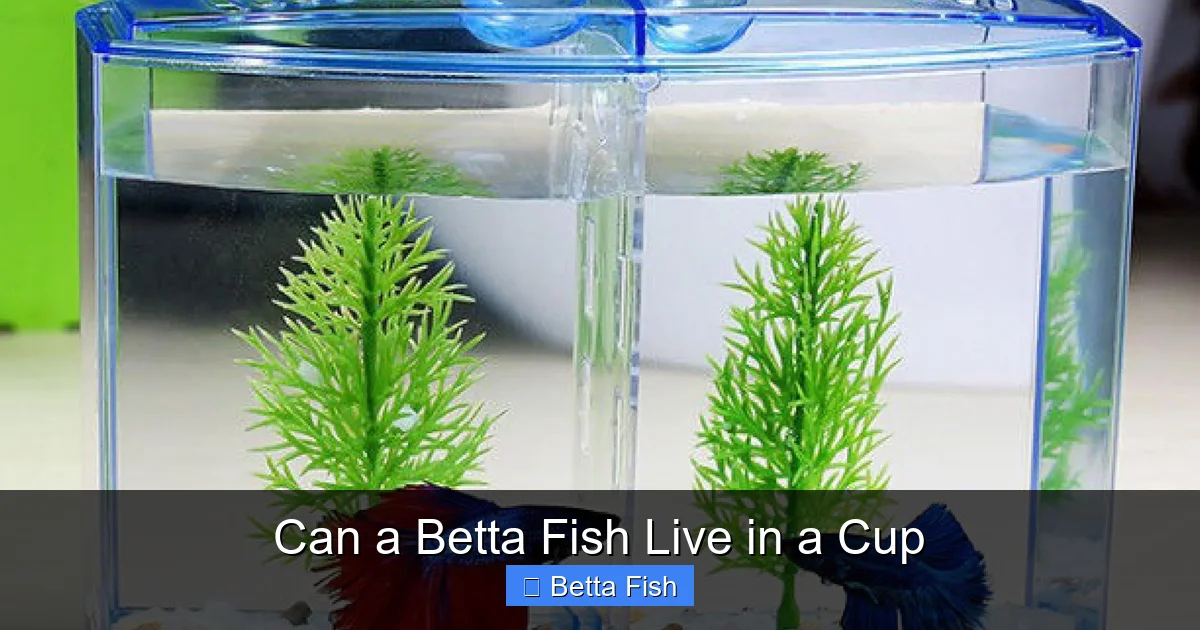
Visual guide about Can a Betta Fish Live in a Cup
Image source: m.media-amazon.com
Within 24‑48 hours, a cup can reach lethal ammonia concentrations (≥ 2 ppm). Without a filter or regular water changes, the water becomes cloudy, smelly, and unsafe.
Temperature fluctuations
Bettas are tropical fish that need water between 76‑82 °F (24‑28 °C). A cup cannot hold a heater, and the small volume loses heat fast. A cup left near a window can drop below 70 °F at night, causing shock.
Rapid temperature changes stress the fish’s metabolism and weaken its immune response. In a 2‑gallon tank, a heater maintains a steady temperature, and the larger water mass buffers against room temperature shifts.
Cleaning frequency
If you keep a betta in a cup, you’ll need to perform a full water change at least every day. Even then, you can’t remove dissolved toxins. In contrast, a filtered tank needs a partial change (20‑30 %) once a week, and the filter continuously removes waste.
Enrichment: More Than Just a Fancy Plant
Why bettas need stimulation
Bettas are intelligent, curious fish. In the wild they explore, hunt insects, and interact with other bettas during breeding displays. A barren cup offers no stimulation, leading to boredom and aggressive flaring at reflections.
Simple décor ideas
- Live or silk plants: Provide hiding spots and help absorb nitrates.
- Floating log or leaf: Gives a surface to rest on and mimics natural debris.
- Background: Adding a dark background reduces stress from outside movement.
All these items fit easily in a 2‑gallon tank but are impossible in a cup.
Interactive enrichment
Use a small teaser (like a floating ping‑pong ball) to encourage your betta to chase and exercise. Change the arrangement of plants weekly to keep the environment fresh. These activities improve muscle tone and keep colors vibrant.
Transitioning Your Betta from a Cup to a Tank
Step 1: Prepare the new tank
Set up a 2‑gallon tank with a gentle filter (sponge or hang‑on‑back) and a heater set at 78 °F. Rinse the substrate and décor with dechlorinated water. Let the tank run for at least 24 hours to stabilize temperature.
Step 2: Acclimate the water parameters
Test the new tank’s pH (6.5‑7.5) and temperature. If the cup water is at a similar temperature, you can skip a slow acclimation. Otherwise, float the cup in the tank for 15‑20 minutes to equalize temperature.
Step 3: Gradual water mixing
Every 5 minutes, add a small cupful of tank water to the cup, stirring gently. After 30‑45 minutes, the water chemistry will match closely enough to transfer the betta safely.
Step 4: The actual move
Use a soft net to lift the betta, supporting its delicate fins. Release it gently into the new tank, turning off the lights for a few minutes to reduce stress.
Step 5: Monitor and adjust
Watch for signs of stress (clamped fins, rapid breathing). Keep feeding a high‑quality betta pellet twice daily and perform a 20 % water change after the first 48 hours.
Common Misconceptions Answered
“Bettas can breathe air, so they don’t need a filter.”
While bettas have a labyrinth organ that lets them gulp air, they still extract oxygen through their gills. In a cup, oxygen levels drop quickly, especially at night when the fish isn’t surfacing.
“A cup looks cute and saves space.”
Cute isn’t the same as humane. A small, well‑decorated tank can also look attractive and fits on a desk or nightstand without compromising the fish’s welfare.
“If I change the water daily, a cup is fine.”
Daily changes are labor‑intensive and still don’t remove dissolved toxins like nitrite. A filter provides continuous biological filtration that a cup simply can’t replicate.
Choosing the Right Tank for Your Betta
Tank size recommendations
- Minimum: 2 gallon (7.5 L) for a single male betta.
- Ideal: 5 gal (19 L) if you want live plants, snails, or a breeding pair.
Filter types
Low‑flow sponge filters are perfect—they provide gentle water movement that won’t stress a betta’s delicate fins. Hang‑on‑back filters with adjustable flow work too, just set the output to a trickle.
Heater selection
A 25‑50 W submersible heater is sufficient for a 2‑5 gal tank. Use a reliable thermostat and check the temperature daily.
Decor and plants
Silk plants are safe (no sharp edges). Live plants like Java fern or Anubias improve water quality and give a natural look.
Conclusion: A Cup Is Not a Home
Answering the headline question—can a betta fish live in a cup—the short answer is “yes, it can survive for a short time, but it will not thrive.” A cup fails to provide the space, water quality, temperature stability, and enrichment a betta needs for a healthy, colorful life.
Investing in a small, filtered tank is affordable, easy to maintain, and far more humane. By following the transition steps and providing proper care, you’ll enjoy a vibrant, active betta that lives many years—often up to three or more with good husbandry.
Remember, the goal is not just to keep a betta alive, but to give it a life worth watching. Choose a tank, not a cup, and watch your betta flourish.
Further Reading
For more insight into betta housing, check out our article on Can Betta Fish Live In A Bowl, learn about water filtration options in Can Betta Fish Live In A Bowl Without Filter, and discover which companions are safe in Which Fish Can Live With Betta Fish In A Tank.
Frequently Asked Questions
Can a betta survive in a cup for a few days?
Yes, a healthy betta can survive a few days in a cup if the water is clean and temperature‑controlled, but stress and health issues will appear quickly.
Do bettas need a heater if they are in a cup?
They still need a stable temperature. Without a heater, the water in a cup can drop several degrees at night, which is harmful.
Is it legal to sell bettas in cups?
Many regions have animal‑welfare guidelines that discourage or prohibit selling fish in containers smaller than 2 gallons, but laws vary.
How often should I change the water in a betta cup?
Ideally daily, but even with daily changes toxins can accumulate. A proper tank reduces the need for such frequent changes.
Can I add live plants to a cup?
Live plants need substrate and space to root, which a cup cannot provide. Silk or plastic plants are the only realistic option.
What signs show my betta is stressed in a cup?
Faded colors, clamped fins, rapid breathing, and frequent hiding are clear indicators of stress.