How to Treat Swim Bladder in a Betta Fish
Swim bladder disease is a common but treatable condition that affects betta fish buoyancy and swimming ability. This guide covers everything you need to know about how to treat swim bladder in a betta fish, including fasting methods, dietary changes, and water quality adjustments. With the right care, most bettas recover fully within days to weeks.
Swim bladder disease is one of the most common health issues betta fish owners face. If your betta is floating sideways, sinking to the bottom, or struggling to stay upright, there is a good chance swim bladder problems are to blame. The good news is that how to treat swim bladder in a betta fish is simpler than most people think. In this guide, we walk you through every step of the treatment process, from identifying the symptoms to preventing the problem from coming back.
You do not need expensive equipment or a veterinary degree to help your betta feel better. Most cases of swim bladder disease respond well to simple home treatments. Whether your fish is dealing with constipation, a bacterial infection, or a physical injury, the right approach can make a real difference. Let us dive into what swim bladder disease actually is and why it happens so often in bettas.
Swim bladder disease is not just one single illness. It is a collection of symptoms that affect a fish’s ability to control its buoyancy. The swim bladder is a small gas-filled organ inside the fish’s body. It works like a flotation device, helping the fish stay at different depths without using too much energy. When this organ gets compromised, the fish loses control over its balance.
The swim bladder sits near the spine, just below the backbone. It expands and contracts to adjust the fish’s density in the water. Think of it like a tiny balloon that the fish can fill with gas or release. When something goes wrong with this system, the fish either floats too much or sinks too much.
There are several types of swim bladder problems that betta fish can experience. Some fish float to the top and cannot dive down. Others sink to the bottom and cannot rise. Some tilt sideways or swim in circles. Each type of buoyancy problem has a slightly different cause, but the treatment approach is often similar.
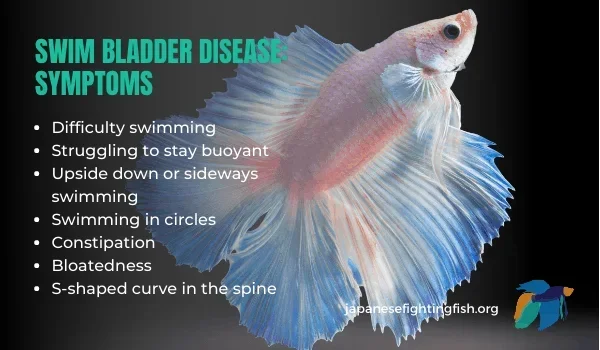
The first thing you should do when you notice something wrong is to observe your betta carefully. Swim bladder symptoms can range from mild to severe, and catching them early makes treatment much easier. Here are the most common signs to watch for.
Behavioral Changes to Watch For
One of the earliest swim bladder symptoms is a change in how your betta swims. A healthy betta moves gracefully through the water with smooth, controlled movements. A betta with swim bladder issues may struggle to maintain its position. You might notice your fish floating at the top of the tank and unable to dive down. Or your fish might sink to the bottom and refuse to swim up.
Some bettas tilt to one side while swimming. Others swim in tight circles or rub their bodies against the tank walls. These behavioral changes can be alarming, but they are actually helpful clues. They tell you something is off with your fish’s buoyancy control.
Physical Signs of Swim Bladder Problems
Beyond swimming behavior, there are physical signs you can look for. A betta with swim bladder disease may have a noticeably swollen belly. The scales might stick out slightly, giving the fish a pinecone-like appearance. This swelling happens because the swim bladder is compressed by gas or fluid buildup in the body.
Some fish also lose their appetite when they have swim bladder issues. They may ignore food completely or eat only a little before stopping. If you notice your betta looking lethargic and unresponsive, that is another warning sign. The sooner you act, the better the chances of a full swim bladder recovery.
Understanding what causes swim bladder disease helps you treat the problem and prevent it from happening again. Several factors can contribute to swim bladder issues in betta fish. Let us break them down.
Overfeeding and Dietary Causes
The most common cause of swim bladder problems in bettas is overfeeding. Betta fish have small stomachs, and they do not need a lot of food. When you feed them too much or too often, their digestive system gets backed up. This creates constipation, which puts pressure on the swim bladder and disrupts buoyancy.
Dry foods like flakes and pellets can also cause problems. These foods expand when they absorb water in the fish’s stomach. If your betta eats too much dry food at once, the expansion can compress the swim bladder. This is why betta fish constipation is so closely linked to swim bladder disease.
Water Quality Issues
Poor water quality is another major contributor to fish swim bladder problems. When ammonia and nitrite levels rise in the tank, the fish becomes stressed. Stress weakens the immune system and makes the fish more vulnerable to infections and organ dysfunction. Even small changes in water temperature can affect how the swim bladder functions.
Betta fish need warm, clean water to thrive. The ideal temperature range is between 78 and 80 degrees Fahrenheit. If the water is too cold, the fish’s metabolism slows down, which can lead to digestive issues and swim bladder disorder. Regular water changes and proper filtration are essential for preventing these problems.
Infections and Physical Injuries
Bacterial and parasitic infections can also damage the swim bladder. In some cases, the infection spreads to the area around the organ, causing inflammation and fluid buildup. Physical injuries from tank decorations or fights with other fish can bruise or damage the swim bladder directly.
If you suspect an infection, you may notice other symptoms alongside buoyancy problems. These can include clamped fins, faded colors, loss of appetite, and unusual spots or growths on the body. How to treat swim bladder in a betta fish caused by an infection often requires medicated treatment, which we will cover below.
Now that you understand the causes, let us get into the actual treatment. How to treat swim bladder in a betta fish depends on the severity of the condition and what is causing it. Here is a step-by-step approach that works for most cases.
Step 1: Fast Your Betta
Fasting is the most effective first step for treating swim bladder disease. Most cases in bettas are caused by constipation or digestive blockages. Giving your fish a break from food allows the digestive system to clear out. How to treat swim bladder in a betta fish with fasting is simple but requires patience.
Stop feeding your betta for 2 to 3 days. Do not worry, betta fish can easily go this long without food. Their bodies are designed to handle periods of fasting in the wild. During this time, make sure the water quality stays high. Perform a small water change to keep ammonia levels low.
Step 2: Feed a Shelled Pea
After the fast, offer your betta a single shelled pea. Frozen or canned peas work best. Simply thaw the pea, remove the outer skin, and mash it into a small piece. The fiber in the pea acts as a natural laxative that helps clear the digestive tract.
Feed just a tiny piece, about the size of your betta’s eye. Remove any uneaten food after a few hours. This method has helped many fish owners resolve swim bladder problems quickly. If your betta does not eat the pea right away, try again the next day.
Step 3: Adjust the Diet Long-Term
Preventing future episodes is just as important as treating the current one. Switch your betta to high-quality betta pellets that sink slowly. Soak the pellets in tank water for a few minutes before feeding. This prevents them from expanding inside your fish’s stomach.
Avoid feeding flakes, bread, or other human foods. These offer little nutritional value and can cause digestive blockages. A varied diet of pellets, frozen bloodworms, and brine shrimp keeps your betta healthy and reduces the risk of swim bladder disease recurring.
Step 4: Improve Water Conditions
Clean water is a cornerstone of fish swim bladder treatment. Test your tank water for ammonia, nitrite, and nitrate levels. Perform a 25 to 30 percent water change to remove toxins and refresh the tank. Make sure the water temperature stays stable and within the ideal range of 78 to 80 degrees Fahrenheit.
Good filtration is important, but avoid strong currents. Betta fish are not strong swimmers and prefer gentle water movement. A sponge filter works well for betta tanks. Clean water reduces stress, supports the immune system, and promotes faster swim bladder recovery.
Step 5: Treat Underlying Infections
If fasting and dietary changes do not help within 3 to 5 days, the cause may be an infection. In that case, you may need to use aquarium salt or a bacterial medication. Aquarium salt at a dosage of one teaspoon per gallon can help reduce inflammation and support healing.
For more serious infections, consult a fish veterinarian or use a broad-spectrum fish antibiotic. How to treat swim bladder in a betta fish caused by an infection requires a different approach than constipation-related cases. Pay close attention to any additional symptoms and treat accordingly.
If your betta is floating upside down and not responding to home treatment, it may be time to seek professional help. Some swim bladder conditions are caused by physical damage that cannot be fixed at home. A veterinarian experienced with fish can diagnose the exact cause and prescribe targeted treatment.
You should also consult a vet if your betta shows signs of dropsy, which includes severe bloating, pinecone scales, and loss of color. These symptoms suggest a more serious internal condition that needs immediate attention. Early intervention gives your betta the best chance of recovery.
The best way to deal with swim bladder disease is to prevent it from happening in the first place. A few simple habits can keep your betta healthy and buoyant for years to come.
- Feed small meals twice a day: Instead of one large feeding, offer small amounts morning and evening. This prevents overeating and digestive issues.
- Soak all dry food before feeding: This stops the food from expanding inside your fish’s stomach and putting pressure on the swim bladder.
- Perform regular water changes: A weekly 25 percent water change keeps toxins low and the environment stable.
- Maintain stable water temperature: Use a reliable heater to keep the tank between 78 and 80 degrees Fahrenheit.
- Avoid overstocking the tank: A stressed fish is more prone to illness. Give your betta plenty of space and a calm environment.
- Quarantine new fish before adding them: This prevents the spread of infections that could affect the swim bladder.
The question on every betta owner’s mind is: will my fish get better? The answer is usually yes. Most bettas recover fully from swim bladder disease when treated promptly and correctly. The key is to act quickly and not ignore the symptoms.
Recovery time varies depending on the cause. Constipation-related cases often improve within 2 to 3 days of fasting and dietary changes. Infection-related cases may take a week or longer with proper medication. The most important factor is consistent care and maintaining excellent water quality throughout the recovery period.
If you have been searching for how to treat swim bladder in a betta fish, you now have the knowledge and tools to help your fish. Start with fasting and a shelled pea, improve the water conditions, and adjust the diet going forward. Most bettas bounce back and return to their normal, graceful swimming within days.
Remember that prevention is always better than cure. By feeding properly, keeping the water clean, and monitoring your betta’s health daily, you can greatly reduce the chances of swim bladder problems returning. Your betta fish depends on you for its well-being, and a little consistent care goes a long way.
If you want to learn more about related health issues, check out how to treat bloat in betta fish and how to treat ich on a betta fish. Understanding these conditions helps you become a more confident and effective fish owner.
Many betta owners also wonder about the long-term outlook. Can a betta fish die from swim bladder disease? While severe cases can be life-threatening, most fish survive with proper treatment. The survival rate is high when owners take action early and follow a consistent care routine.
Finally, if you are dealing with a stressed fish alongside swim bladder symptoms, addressing stress is important. Learn how to treat a stressed betta fish to support overall healing and well-being. A calm, healthy environment speeds up recovery and keeps your betta thriving.
Can Swim Bladder Disease Be Cured Completely?
Yes, most cases of swim bladder disease can be fully cured with proper treatment. The key is identifying the cause early and following the right steps. Constipation-related cases respond well to fasting and dietary changes. Infection-related cases may need medication. With consistent care, most bettas return to normal swimming within a few days to a couple of weeks.
How Long Does It Take for a Betta to Recover from Swim Bladder Disease?
Recovery time depends on the cause and severity. Mild constipation cases often improve within 2 to 3 days of fasting. More serious infections or injuries may take 7 to 14 days with proper treatment. The most important factor is maintaining clean water and following the treatment plan consistently throughout the recovery period.
Is Swim Bladder Disease Contagious to Other Fish?
Swim bladder disease itself is not contagious. However, if the underlying cause is a bacterial or parasitic infection, that infection could potentially spread to other fish in the tank. It is a good idea to monitor other fish closely and maintain excellent water quality to prevent any secondary issues from developing.
Can I Use Epsom Salt Instead of Aquarium Salt?
Epsom salt can help with constipation and bloating because it acts as a mild laxative. You can use it as a short-term treatment by dissolving one tablespoon per gallon of water for a 15-minute bath. However, aquarium salt is better for overall tank use and treating infections. Always use aquarium salt formulated for fish tanks for long-term treatment.
Should I Lower the Water Level if My Betta Is Floating?
Yes, this is a helpful short-term trick. Lowering the water level makes it easier for your betta to swim and access the surface for air. Bettas breathe atmospheric air using their labyrinth organ, so a lower water level reduces the effort needed to stay buoyant. Just make sure the water remains warm and clean during the treatment period.
What Is the Difference Between Swim Bladder Disease and Dropsy?
Swim bladder disease primarily affects buoyancy and balance, while dropsy is a more serious condition involving severe fluid retention and organ failure. Dropsy symptoms include extreme bloating, pinecone-like scales, and loss of color. Swim bladder disease usually causes floating or sinking problems without the dramatic physical changes seen in dropsy. If you are unsure which condition your betta has, consult a fish veterinarian for a proper diagnosis.
How to treat swim bladder in a betta fish comes down to three core principles: fasting, diet adjustment, and clean water. Most bettas recover fully when these steps are followed consistently. The condition is common, but it is also very manageable with the right knowledge and a little patience.
Start treatment as soon as you notice symptoms. The faster you act, the better the outcome. Focus on preventing future episodes by feeding properly, maintaining water quality, and keeping your betta stress-free. Your betta fish will reward you with vibrant colors, playful behavior, and years of companionship when you take good care of its health.
Swim bladder disease does not have to be scary or overwhelming. You now have the tools and understanding to handle it confidently. Trust your instincts, observe your fish daily, and never hesitate to seek professional help when needed. Your betta is lucky to have an owner who cares enough to learn how to help it heal.
Key Takeaways
- Swim bladder disease affects buoyancy: It causes betta fish to float upside down, sink to the bottom, or struggle to stay upright.
- Multiple causes exist: Overfeeding, constipation, poor water quality, and infections can all trigger swim bladder problems.
- Fasting is the first treatment step: Giving your betta a 2-3 day fast can relieve constipation and ease swim bladder symptoms.
- Diet changes prevent recurrence: Switching to high-quality pellets and soaking food before feeding reduces swim bladder risk.
- Water quality matters greatly: Clean, properly heated water supports healing and prevents further complications.
- Most bettas recover fully: With prompt treatment and good care, swim bladder disease is rarely fatal.
Frequently Asked Questions
What is how to treat swim bladder in a betta fish?
how to treat swim bladder in a betta fish is an important topic with many practical applications.