How Often Should You Clean Betta Fish Water
How often should you clean betta fish water? The answer depends on your tank size, filter, and fish load. Most betta owners need to do a partial water change every one to two weeks to maintain healthy water quality. Clean water prevents ammonia buildup, keeps your betta active, and extends its lifespan significantly.
Keeping your betta fish in clean water is one of the most important things you can do for its health. Dirty water leads to stress, disease, and a shortened lifespan. But how often should you actually clean your betta’s water? The answer is not as simple as a single number. It depends on several factors, including your tank size, filter type, and how many fish share the habitat.
In this guide, we walk you through everything you need to know about betta fish water cleaning. You will learn the ideal cleaning frequency, step-by-step methods, and the most common mistakes fish owners make. Whether you keep your betta in a small bowl or a larger tank, this article has practical advice you can use right away.
Key Takeaways
- Partial water changes every 1-2 weeks are the standard recommendation for most betta tanks.
- Test your water regularly using a liquid test kit to monitor ammonia, nitrite, and nitrate levels.
- Never use soap or harsh chemicals when cleaning your betta fish habitat.
- Match the temperature and pH of new water to your existing tank water before adding it.
- Gravel vacuuming removes waste buildup that can degrade water quality between cleanings.
- Larger tanks are more stable and require less frequent water changes than small bowls.
- A good filter reduces cleaning frequency but does not eliminate the need for regular water changes.
📑 Table of Contents
- How Often Should You Clean Betta Fish Water
- Signs Your Betta Fish Water Needs Cleaning
- Step-by-Step Guide to Cleaning Betta Fish Water
- Common Mistakes When Cleaning Betta Fish Water
- Betta Fish Water Cleaning Schedule by Tank Type
- Quick Tips for Better Water Quality Between Cleanings
- How Often Should You Change Betta Water Completely
- Conclusion
How Often Should You Clean Betta Fish Water
What Clean Water Means for Your Betta
Clean water for a betta fish means water that is free from harmful toxins like ammonia and nitrite. It also means the water has stable pH levels and low nitrate content. When water quality drops, your betta shows signs of stress. These signs include faded colors, lethargy, loss of appetite, and clamped fins.
The frequency of cleaning depends largely on your setup. A small bowl without a filter needs more frequent attention than a larger tank with a good filtration system. As a general rule, a partial water change every one to two weeks works well for most betta setups. But let us break this down further so you can find the right schedule for your specific situation.
The Role of Ammonia and Nitrates
Fish waste, uneaten food, and decaying plant matter produce ammonia. Even small amounts of ammonia are toxic to betta fish. A healthy aquarium has beneficial bacteria that convert ammonia into nitrite and then into nitrate. Nitrates are less harmful but still need to be kept in check through regular water changes.
If you skip cleanings, ammonia and nitrite levels spike. This can happen surprisingly fast in small bowls and unfiltered tanks. That is why consistent water maintenance is so important. Testing your water weekly helps you catch problems before they become dangerous for your fish.
Signs Your Betta Fish Water Needs Cleaning
Your betta will tell you when the water is not right. Paying attention to these warning signs helps you act before a small problem becomes a serious health issue.
Cloudy Water
Cloudy or murky water is one of the most obvious signs that cleaning is overdue. Cloudiness can come from bacterial blooms, excess debris, or high levels of dissolved waste. If your water looks foggy, it is time for a water change. Cloudy water not only looks bad but also reduces oxygen levels, which your betta needs to thrive.
Unusual Fish Behavior
Watch how your betta behaves. A healthy betta is curious and active. If your fish spends most of its time hiding, sits at the bottom of the tank, or gasps at the surface, the water quality may be poor. These behaviors often signal that ammonia or nitrite levels have risen too high.
Strong or Unpleasant Odors
A healthy aquarium should not smell bad. If you notice a foul or rotten smell coming from your betta’s tank, this is a clear sign that organic waste has built up. Do not wait to address this. A strong odor means the water has been contaminated for a while and needs immediate attention.
Algae Overgrowth
Some algae is normal and even natural. But when green slime coats the glass, decorations, and substrate, it indicates excess nutrients in the water. This usually happens when you go too long between water changes. While algae alone is not deadly, it signals that your water parameters are out of balance.
Step-by-Step Guide to Cleaning Betta Fish Water
Cleaning betta fish water does not have to be complicated. With the right tools and a simple routine, you can keep the water fresh without stressing your fish. Here is a straightforward process you can follow every time.
What You Will Need
Before you start, gather these supplies:
- A bucket or container dedicated to fish water only
- A gravel vacuum or siphon
- A water conditioner or aquarium water conditioner
- A thermometer to check water temperature
- A liquid test kit for ammonia, nitrite, nitrate, and pH
- A clean sponge or algae scraper
Never use soap, detergent, or any household cleaning product on fish equipment. These chemicals are lethal to betta fish even in tiny amounts.
The Cleaning Process
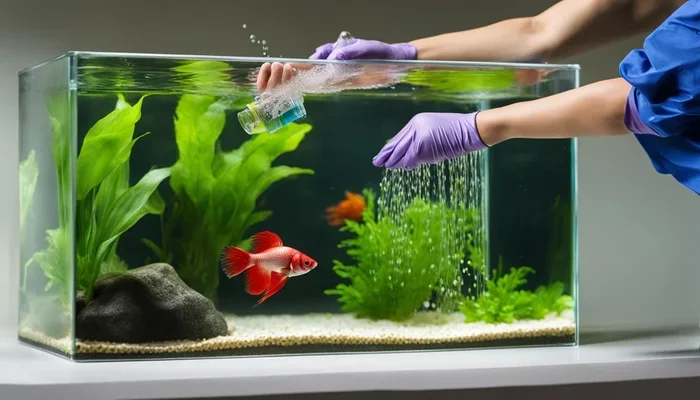
Start by unplugging any heaters or filters. Remove about 25 to 50 percent of the tank water using a gravel vacuum. This removes waste from the substrate without disturbing beneficial bacteria. Use the vacuum on the gravel to pull out debris and fish waste hidden below the surface.
Next, prepare fresh water. If you use tap water, let it sit out for 24 hours or treat it with a conditioner to remove chlorine and chloramine. Can you use tap water for your betta fish? Yes, but only after treating it properly. Always match the temperature of the new water to the existing tank water. A difference of more than a few degrees can shock your betta.
Slowly add the fresh water back into the tank. Avoid pouring directly onto your betta or the substrate. Use a plate or your hand to diffuse the flow. After refilling, check the temperature and treat with conditioner if needed. Plug your filter and heater back in.
Tips for a Stress-Free Cleaning Routine
Keep your betta calm during water changes by working gently and quietly. Do not remove your betta from the tank unless absolutely necessary. If you must, use a small container with some of the original tank water. Clean one area at a time rather than trying to do everything at once. This keeps the process efficient and less stressful for both you and your fish.
Common Mistakes When Cleaning Betta Fish Water
Even experienced fish keepers make mistakes. Knowing what to avoid saves you time and protects your betta’s health.
Using Soap or Harsh Chemicals
This cannot be stressed enough. Never, ever use soap, bleach, or household cleaners on anything that touches your betta’s water. Residue from these products is toxic and can kill your fish within hours. If you need to clean a tank or decoration, rinse it thoroughly with plain warm water only.
Changing All the Water at Once
Some beginners think that dumping all the water and refilling is the fastest method. This is actually very harmful. A full water change removes all the beneficial bacteria that keep your nitrogen cycle running. It also causes a dramatic shift in water parameters that can shock your betta. Stick to partial water changes of 25 to 50 percent at a time.
Ignoring the Filter
Your filter does the heavy lifting between water changes. But a clogged or dirty filter loses its effectiveness. Rinse filter media in old tank water (never tap water) once a month to keep it working properly. Replacing all filter media at once also strips your tank of beneficial bacteria.
Using the Wrong Water Source
Not all water is safe for betta fish. Distilled water lacks essential minerals. Well water may contain harmful contaminants. Can you use well water for a betta fish? It depends on your local water quality, but in most cases, treated tap water or spring water is safer. Always test your water source before using it.
Betta Fish Water Cleaning Schedule by Tank Type
Different setups require different cleaning frequencies. Here is a general guide to help you plan your maintenance routine.
Cleaning a Small Bowl (Under 5 Gallons)
Small bowls have very little water volume, which means toxins build up quickly. You should do a partial water change of about 50 percent every week. Use a turkey baster or small siphon to remove debris from the bottom. Since bowls typically lack filters, you rely on water changes to maintain quality.
If you keep your betta in a bowl, you may also want to learn more about how often should you clean your betta fish bowl to get specific guidance for that setup.
Cleaning a Standard Tank (5 to 10 Gallons)
A 5 to 10 gallon tank with a filter is the sweet spot for most betta owners. You can stretch water changes to every 10 to 14 days. Change 25 to 30 percent of the water each time. The filter helps maintain biological stability, so you do not need to clean as aggressively.
Cleaning a Larger Tank (15 Gallons and Above)
Larger tanks are more stable because the water dilutes waste more effectively. A 15 gallon or larger tank with a good filter may only need a 20 to 25 percent water change every two weeks. However, always test your water to confirm that parameters remain in the safe range.
For more details on cleaning frequency across different tank sizes, check out our guide on how often to clean a betta fish tank.
Quick Tips for Better Water Quality Between Cleanings
You do not have to wait for your scheduled cleaning to keep water quality high. These daily and weekly habits make a big difference.
- Do not overfeed your betta. Excess food decays and pollutes the water fast. Feed only what your fish can eat in two minutes, once or twice a day.
- Remove uneaten food promptly. Use a small net or siphon to pick up any food that falls to the bottom within a few minutes of feeding.
- Wipe the glass regularly. A quick algae wipe with a clean sponge keeps the tank looking fresh and prevents excess nutrient buildup.
- Test water weekly. A simple liquid test kit takes minutes and gives you valuable data about ammonia, nitrite, nitrate, and pH levels.
- Keep your filter running 24/7. Turning off the filter for long periods allows waste to accumulate and beneficial bacteria to die off.
How Often Should You Change Betta Water Completely
A full water change is different from a partial water change. A full change means removing 100 percent of the water and replacing it with fresh water. This should only be done in extreme situations, such as when the tank is severely contaminated or when you are setting up a brand new tank.
For routine maintenance, partial water changes are always the better choice. They preserve the beneficial bacteria colony and keep water parameters stable. If you find yourself needing to do full water changes frequently, something is wrong with your setup. You may need a larger tank, a better filter, or simply more frequent partial changes.
If you want to learn more about the water change process specifically, our article on how often to change water for betta fish covers this topic in greater detail.
Conclusion
So, how often should you clean betta fish water? The short answer is every one to two weeks with partial water changes of 25 to 50 percent. But the real answer is that it depends on your specific setup, tank size, and filtration. The best approach is to test your water regularly and adjust your cleaning schedule based on what you find.
Clean water is the foundation of a healthy betta fish. It supports vibrant colors, active behavior, and a longer lifespan. By following the tips in this guide, you create a safe and comfortable environment for your betta to thrive. Make water maintenance a consistent habit, and your fish will reward you with years of beauty and companionship.
Remember, preventing water quality problems is always easier than fixing them. Stay proactive, keep your equipment clean, and never hesitate to test your water. Your betta depends on you for a clean and safe home.
Frequently Asked Questions
How often should I clean my betta fish water in a 3 gallon bowl?
In a small 3 gallon bowl without a filter, you should do a 50 percent water change every week. Small volumes accumulate toxins quickly, so frequent attention is essential. Use a turkey baster or small siphon to remove waste and refresh the water.
Can I use bottled water for my betta fish tank?
Some bottled waters are safe, but others contain additives or lack minerals your betta needs. Always check the label for added minerals or chlorine. Spring water and purified drinking water can work, but treating tap water with a conditioner is usually the most reliable and cost-effective option.
How do I know if my betta fish water has high ammonia?
The clearest signs are cloudy water, a strong ammonia smell, and your betta gasping at the surface or showing signs of stress. A liquid test kit gives you an accurate reading of ammonia levels. If ammonia is detected, do a partial water change immediately and retest after 24 hours.
Should I clean the gravel in my betta tank during water changes?
Yes, gently vacuuming the gravel during a partial water change is an excellent practice. It removes trapped fish waste, food particles, and debris that settle in the substrate. Use a gentle siphon and avoid disturbing beneficial bacteria colonies that live in the gravel.
How long after cleaning the tank can I feed my betta?
Wait at least one hour after a water change before feeding your betta. This gives your fish time to settle and adjust to the new water conditions. Feeding immediately after a cleaning can cause digestive issues since the fish may be stressed from the water disturbance.
Is it safe to use a water conditioner every time I do a water change?
Yes, using a water conditioner every time you add new water is not only safe but highly recommended. Conditioners neutralize chlorine, chloramine, and heavy metals found in tap water. They make the water safe for your betta and are an essential part of any regular water change routine.