can you put a snail with betta fish tank mates safely
can you put a snail with betta fish is a question many new betta owners ask, and the good news is that it can work beautifully with the right setup. In this guide, we’ll walk you through the best snail species, essential tank requirements, and smart tips to ensure both your betta and snail stay healthy and stress-free.
Bringing a new companion into your betta’s home can feel exciting, but it also comes with questions. One of the most common inquiries is, can you put a snail with betta fish without causing stress or conflict? The answer isn’t a simple yes or no—it depends on the snail’s temperament, the betta’s personality, and how you prepare the tank. In this comprehensive guide, we’ll explore everything you need to know to create a harmonious environment where both your betta and snail can thrive.
Betta fish are known for their vibrant colors and feisty personalities. While some bettas are surprisingly docile, others can be highly territorial. Snails, on the other hand, are generally peaceful creatures that spend their time grazing on algae and exploring the substrate. When these two meet, the outcome largely depends on introduction methods, tank size, and the specific snail species chosen.
Key Takeaways
- Point 1: Choose snail species known for peaceful coexistence, such as mystery or nerite snails, which rarely provoke betta aggression.
- Point 2: Ensure your tank is at least 10 gallons to provide adequate swimming space and territory for your betta while accommodating a snail’s movement.
- Point 3: Maintain stable water parameters, keeping pH between 6.5 and 7.5 and nitrate levels low, as both bettas and snails are sensitive to poor water quality.
- Point 4: Provide plenty of hiding spots and live plants so your betta can retreat if it feels curious or territorial toward the newcomer.
- Point 5: Quarantine new snails for 1–2 weeks before introducing them to your betta tank to prevent parasites or diseases from spreading.
- Point 6: Monitor your betta’s behavior closely after introduction, and be ready to rehome the snail if excessive flaring or nipping occurs.
- Point 7: Avoid carnivorous snails like assassin snails in community tanks, as they may prey on small tank mates or disrupt the tank’s balance.
📑 Table of Contents
Understanding Your Betta’s Personality
Before adding any tank mate, it’s essential to understand your betta’s unique temperament. Some bettas flare at anything that moves into their perceived territory, while others are more curious and accepting. Factors like tank size, previous experiences, and even the time of day can influence how your betta reacts to a new snail. Observing your betta’s behavior during feeding times and periods of activity can give you valuable clues about whether a snail will be welcomed or viewed as an intruder.
If your betta frequently flares at its own reflection or aggressively guards certain areas of the tank, extra caution is warranted. However, many bettas eventually ignore snails altogether, especially when the snail stays busy grazing and doesn’t trigger the betta’s hunting instinct.
Recognizing Stress Signs in Bettas
Stress in bettas can manifest as faded coloration, clamped fins, loss of appetite, or increased hiding. If you notice these signs before introducing a snail, it may be best to address water quality or tank setup first. A stressed betta is more likely to react negatively to any new addition, including a snail.
Top Snail Species That Get Along With Bettas
Not all snails are created equal when it comes to betta compatibility. Some species are more likely to be accepted, while others may trigger defensive reactions. Here are the most popular and betta-friendly options:
Mystery Snails
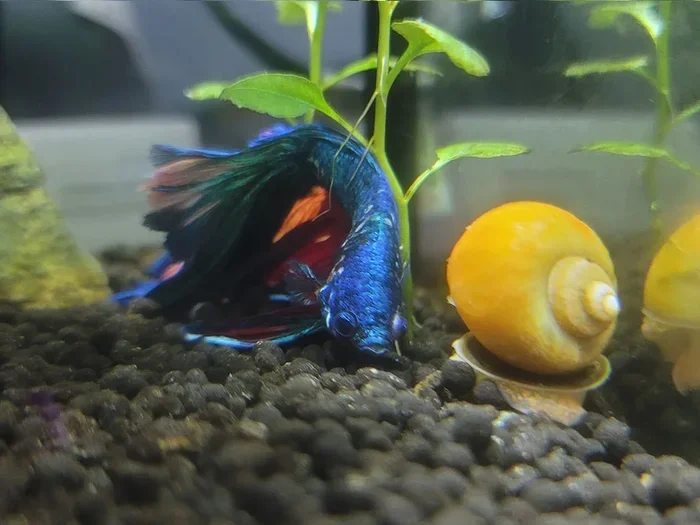
Mystery snails are among the most common choices for betta tanks. They come in beautiful colors like gold, blue, and ivory, and they grow to a manageable size of about 2 inches. Their calm demeanor and algae-grazing habits make them excellent cleaners. Because they’re larger than many other snail species, they’re often less likely to be nipped at by curious bettas.
Nerite Snails
Nerite snails are highly prized for their incredible algae-eating abilities and striking shell patterns. They remain small, typically staying under 1 inch, and they rarely reproduce in freshwater, which helps keep their population in check. Their hard shells provide some protection, and bettas often lose interest once they realize the snail isn’t food.
Ramshorn Snails
Ramshorn snails reproduce quickly and come in various colors, including red and brown. They’re small, peaceful, and excellent for keeping algae under control. However, their rapid breeding means you’ll need to monitor their numbers. Bettas may occasionally nip at their antennae, but usually, the snails can hold their own.
Assassin Snails
If you’re dealing with a pest snail overpopulation, assassin snails can be a fascinating addition. They have a unique hunting behavior and striking yellow-and-black stripes. While they’re generally peaceful toward bettas, their predatory nature means they’ll target other snails in the tank. Use them carefully if you have other snail species established.
Essential Tank Conditions for a Snail-Betta Setup
Creating the right environment is just as important as choosing the right snail species. Proper tank conditions reduce stress for both inhabitants and make coexistence much more likely.
Tank Size and Space
A minimum of 10 gallons is recommended when keeping a snail with a betta. This size provides enough swimming room for your betta to establish territory while giving the snail ample space to explore without constant close encounters. A longer tank shape often works better than a tall one, as it offers more horizontal swimming space and surface area for the betta to patrol.
Water Parameters
Bettas thrive in water temperatures between 76°F and 82°F with a pH range of 6.5 to 7.5. Most snail species prefer similar conditions, but it’s always wise to research the specific needs of your chosen snail. Maintaining stable parameters is crucial; sudden swings in pH or temperature can stress both fish and snail, increasing the likelihood of aggressive behavior.
Filtration and Water Quality
A gentle filtration system is ideal. Bettas have delicate fins and can struggle against strong currents, while snails produce waste that needs efficient removal. A sponge filter or a filter with a adjustable flow rate works well. Regular water changes—about 20% weekly—keep nitrate levels low and the environment healthy for everyone.
Substrate and Hiding Spots
A soft, fine substrate like sand or smooth gravel protects the snail’s delicate body as it moves about. Adding live plants such as java moss, Anubias, or floating plants provides cover for both the betta and the snail. Hiding spots reduce confrontations by giving your betta a place to retreat if it feels curious or territorial.
Feeding and Maintaining a Balanced Tank
Proper feeding routines prevent competition and keep both your betta and snail well-nourished.
Betta Feeding
Feed your betta a high-quality pellet or frozen food once or twice daily, offering only what it can consume in 2–3 minutes. Overfeeding not only clouds the water but also provides excess food for snails, which can lead to rapid population growth if you’re not careful.
Snail Nutrition
Snails are primarily herbivores that graze on algae, biofilm, and decaying plant matter. Supplement their diet with blanched vegetables like zucchini, cucumber, or spinach clips a few times a week. Sinking pellets or algae wafers designed for bottom feeders can also ensure your snail gets enough nutrition, especially if the betta is a competitive eater.
Avoiding Food Competition
To prevent your betta from snatching all the food, try feeding the betta in one area of the tank while placing snail food near the substrate on the opposite side. This spatial separation reduces direct competition and helps both animals eat comfortably.
Reading the Signs: Compatibility vs. Conflict
After introducing a snail, close observation is key. Understanding the difference between normal curiosity and genuine aggression helps you take action before anyone gets hurt.
Positive Signs
- The betta ignores the snail after an initial investigation.
- The snail actively grazes on algae and explores the tank.
- Both animals maintain healthy appetites and vibrant colors.
Warning Signs
- The betta constantly flares its gills at the snail.
- The betta nips at the snail’s antennae or shell.
- The snail appears stressed, hides constantly, or stops eating.
- Water quality deteriorates rapidly due to uneaten food or snail waste.
If you notice warning signs, don’t panic. Often, simply rearranging decorations or adding more hiding spots can diffuse tension. If the betta’s aggression persists, you may need to rehome the snail to a separate tank or consider a different species.
Common Mistakes and How to Avoid Them
Many betta owners make well-intentioned but avoidable errors when adding snails. Being aware of these pitfalls can save you and your pets a lot of stress.
Mistake 1: Choosing a Tank That’s Too Small
A cramped tank leaves no room for either animal to escape the other. Stick to at least 10 gallons, and larger is always better for maintaining water stability and reducing territorial disputes.
Mistake 2: Skipping the Quarantine Period
Introducing a snail straight from the pet store can bring parasites, bacteria, or even eggs of unwanted pests into your established tank. Quarantine the snail in a separate container for 1–2 weeks, observing it for signs of illness before adding it to the main tank.
Mistake 3: Overlooking Water Parameter Differences
While bettas and many snail species share similar pH and temperature preferences, some snails require harder water or specific calcium levels for shell health. Research your snail’s needs and adjust accordingly, often by adding a crushed coral substrate or liquid calcium supplement.
Mistake 4: Assuming All Snails Are Compatible
Some snails, like large apple snails or carnivorous assassin snails, may not be suitable for a betta community. Always research the adult size, temperament, and dietary needs of any snail before purchase.
Quick Tips for Success
- Start with a single snail to gauge your betta’s reaction before adding more.
- Use a net or container to acclimate the snail to tank temperature slowly over 15–20 minutes.
- Turn off tank lights during the first introduction to reduce overall activity and stress.
- Keep a log of your betta’s behavior and water parameters for the first few weeks.
- Be prepared to separate the animals if compatibility doesn’t improve after a couple of weeks.
Conclusion
So, can you put a snail with betta fish safely? Absolutely—with the right preparation, species selection, and ongoing observation. By choosing peaceful snail species like mystery or nerite snails, providing a spacious and well-maintained tank, and monitoring your betta’s response, you can create a beautiful, balanced aquarium where both creatures flourish. Remember, every betta is an individual, and patience is key. With the tips and insights shared here, you’re well-equipped to make an informed decision and enjoy the unique charm a snail can bring to your betta’s underwater world.
If you’re ready to take the plunge, start by researching the specific snail species that interest you, measure your tank’s dimensions, and prepare a quarantine setup. Your betta—and its new shelled friend—will thank you!
Frequently Asked Questions
Can any snail live with a betta fish?
Not all snails are suitable for betta tanks. Peaceful species like mystery and nerite snails generally coexist well, while larger or more aggressive snails may provoke your betta or outcompete it for resources.
How many snails can I keep with one betta?
It’s best to start with one or two snails in a 10-gallon or larger tank. Overcrowding can increase waste, compete for food, and heighten the chances of your betta feeling stressed or territorial.
Will my betta eat the snail?
Bettas are carnivorous and may nip at small snails or their antennae, but most healthy adult snails are too large to be swallowed. Choosing snails with hard shells and adequate size significantly reduces this risk.
Do snails help keep the tank clean?
Yes, snails are excellent algae eaters and help break down uneaten food and decaying plant matter. However, they’re not a substitute for regular water changes and tank maintenance.
Should I quarantine a new snail before adding it to my betta tank?
Absolutely. Quarantining a new snail for 1–2 weeks helps ensure it’s healthy and free of parasites or diseases before introducing it to your established tank, protecting your betta and other inhabitants.
What should I do if my betta attacks the snail?
If your betta persistently flares or nips at the snail, try rearranging tank decorations to break line of sight, add more hiding spots, or temporarily separate the snail in a breeder box. Monitor the situation, and if aggression continues, rehoming the snail may be the kindest option.