Do Male and Female Betta Fish Fight or Live Together Peacefully
Do male and female betta fish fight? The answer depends on many factors, including tank size, temperament, and how you introduce them. While males are famously aggressive toward other males, pairing them with females requires careful planning. This guide explains the risks, signs of trouble, and best practices for keeping your aquarium calm and healthy.
Key Takeaways
- Aggression varies by individual: Not every betta shows the same level of hostility, so personality matters more than gender alone.
- Tank size changes everything: A larger aquarium with hiding spots reduces stress and lowers the chance of conflict.
- Male-female pairings need supervision: Even compatible pairs can turn aggressive during feeding or breeding season.
- Never house two males together: Male bettas will almost always fight if placed in the same tank without a divider.
- Watch for warning signs: Flared gills, chasing, fin nipping, and hiding are clear signals that something is wrong.
- Separate when needed: Having a backup tank or partition ready can save lives if aggression escalates quickly.
- Choose tank mates wisely: Peaceful, non-territorial fish often coexist better than bold or fin-nipping species.
📑 Table of Contents
- Understanding Betta Fish Behavior and Aggression
- Do Male and Female Betta Fish Fight? The Real Answer
- Can Male and Female Bettas Live Together Safely?
- Do All Male Betta Fish Fight Each Other?
- Do Female Bettas Fight Each Other?
- Choosing Safe Tank Mates for Bettas
- When to Separate and How to Prevent Injury
- Expert Insights for Long-Term Success
- Conclusion
Understanding Betta Fish Behavior and Aggression
Betta fish are known for their bright colors and big personalities. Many people call them fighting fish because males often clash with each other. But the real question is: do male and female betta fish fight, or can they share a tank peacefully? The answer is not a simple yes or no. It depends on the fish, the setup, and how you manage the environment.
Male bettas are naturally territorial. In the wild, they guard small spaces and react strongly to rivals. Females can also show aggression, though it often looks different. Some females are calm and social. Others are bold and quick to defend their space. This means you cannot judge every fish by the same rule. You have to watch behavior closely.
If you want a peaceful community tank, you need to understand what triggers conflict. Limited space, poor water quality, lack of hiding places, and sudden introductions can all increase tension. Even compatible fish can struggle if the tank feels crowded or stressful. The good news is that with the right plan, many bettas can live with other fish without constant fighting.
What Makes Bettas Aggressive?
Bettas usually act aggressively when they feel threatened or challenged. A male may see another colorful fish as a rival. A female may react to crowding or competition for food. Stress also plays a major role. When fish feel unsafe, they become more defensive.
Common triggers include:
- Small tanks that leave little room to escape
- Bright reflections that make the fish think there is a rival nearby
- Sudden tank changes that disrupt familiar territory
- Competition for food or hiding spots
- Bright, bold tank mates that draw attention
If you reduce these stressors, you give your fish a better chance to coexist. That does not guarantee peace, but it improves the odds significantly.
Male vs Female Temperament Differences
Males are usually more dramatic in their displays. They flare their gills, spread their fins, and patrol their territory. Females can be assertive too, but their behavior is often less intense. In some cases, females form loose groups and establish a hierarchy without serious violence.
This difference matters when you think about pairing fish. A male and female may tolerate each other better than two males would. Still, that does not mean they will automatically get along. You should treat every pairing as a case-by-case situation.
Do Male and Female Betta Fish Fight? The Real Answer
So, do male and female betta fish fight? They can. Some pairs live together with very little conflict. Others clash quickly and need to be separated. The key is to understand that gender alone does not decide the outcome. Individual personality, tank conditions, and how the fish are introduced all matter.
A male may chase a female if he sees her as a threat or if he is ready to breed. A female may bite or dart away if she feels crowded. Sometimes the behavior is brief and manageable. Other times it becomes repeated harassment. That is why observation matters so much in the first few days after introduction.
If you are considering a male and female together, you should also think about your goals. Are you hoping to breed them? Are you trying to create a community tank? Are you simply looking for a companion for your betta? Each goal changes the risks and the setup you need.
When Conflict Is Most Likely
Conflict is more likely in certain situations. Small tanks are one of the biggest problems. When fish cannot move away from each other, tension rises fast. Poor water conditions can also make fish more irritable and less tolerant.
Other risk factors include:
- Introducing a new fish too quickly
- Keeping the tank bare with no plants or decorations
- Overfeeding or uneven feeding that creates competition
- Breeding behavior that increases chasing and guarding
- Two fish with very different temperaments
If you notice repeated chasing, hiding, or fin damage, do not wait too long to act. Early intervention is much easier than trying to fix a crisis later.
Signs Your Bettas Are Getting Along
Peaceful coexistence usually looks calm and predictable. Fish may share the tank without constant attention to each other. They may explore different areas and rest in separate spots. Feeding should feel steady rather than frantic.
Positive signs include:
- Relaxed swimming instead of frantic darting
- Fish resting near each other without tension
- Normal eating habits at mealtime
- Fins held naturally instead of constantly flared
- No visible injuries or torn tissue
These signs do not guarantee forever peace, but they show the current setup is working. Keep monitoring the tank, because behavior can change over time.
Can Male and Female Bettas Live Together Safely?
Many aquarium owners ask the same question in different ways: can male and female betta fish live together, or can you keep one male and female betta fish together without trouble? The short answer is yes, but only with careful planning. A safe setup usually means a larger tank, good hiding places, and a slow introduction process.
Some people also wonder, can you place a male and female betta fish together in a community tank with other species. That is possible too, but it adds more variables. More fish means more chances for stress, competition, and misunderstandings. If you want the best chance of success, start with a simple setup and expand only after you know how your betta behaves.
Best Tank Setup for Peaceful Coexistence
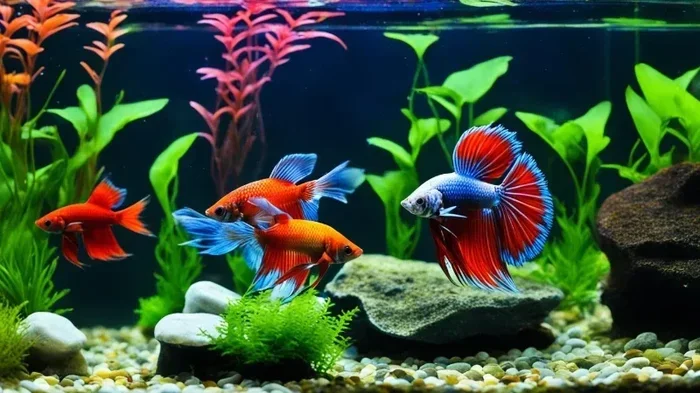
A good tank setup gives fish room to choose their own space. It also breaks lines of sight so one fish does not feel constantly challenged. Plants, caves, and other decorations help a lot. Smooth edges are important so fins do not get torn.
Helpful setup features include:
- A tank of at least 10 gallons for a small community
- Live or silk plants that soften the environment
- Driftwood or caves for hiding and resting
- Clear sightline breaks so fish can avoid each other
- Stable filtration and heating for consistent water quality
A spacious, enriched tank does not erase aggression, but it gives fish a better way to manage it.
How to Introduce a Male and Female Betta
A slow introduction is one of the smartest things you can do. Sudden changes often trigger defensive behavior. Instead, give the fish time to adjust before they share the same water.
A simple introduction plan can look like this:
- Place the new fish in a separate container near the main tank for a few days
- Swap tank water gradually so both fish get used to similar conditions
- Use a tank divider if possible for the first few days together
- Watch feeding behavior closely once they share space
- Be ready to separate them if chasing becomes constant
Patience pays off. A careful introduction gives you a chance to spot problems before they become serious.
Do All Male Betta Fish Fight Each Other?
People often confuse male-female issues with male-male issues. If you are wondering, do all male betta fish fight each other, the general answer is that males are much more likely to clash with other males than with females. Two males in the same open tank usually create serious problems. That is why most experts recommend keeping males separate from other males.
This matters because it changes how you plan your aquarium. If you already have a male betta, adding another male is usually a bad idea. If you want more than one betta, a female-only group or a carefully managed setup may be a better option. Still, even female groups can have drama, so you should not assume they will automatically be peaceful.
Why Male-Male Conflict Is Different
Male bettas often treat other males as direct rivals. Their displays can become intense, and the conflict may escalate quickly. This is different from male-female interactions, where the motivation may be breeding, discomfort, or territorial stress rather than pure rivalry.
Because of this, male-male pairings are riskier in most home aquariums. Even with dividers or large tanks, the tension can remain high. If your goal is a calm tank, it is usually wiser to avoid putting two males together.
Female-Only Groups and Hierarchy
Female bettas can sometimes live in groups, but they still form rankings. One fish may become more dominant, and others may need time to adjust. In a good setup, this hierarchy stays manageable. In a crowded or bare tank, it can turn into bullying.
If you want to keep females together, give them plenty of space and multiple hiding places. Watch for pinned fish, loss of appetite, or constant chasing. Those are signs that the group dynamic is not working well.
Do Female Bettas Fight Each Other?
Another common question is, do female betta fish fight, or do 2 female betta fish fight when placed together. The answer is that they can, especially if the tank is too small or if one fish is especially dominant. Female aggression is often less dramatic than male aggression, but it can still cause stress and injury.
Some female pairs settle into a stable routine. Others remain tense for long periods. You may see occasional chasing, blocking, or brief displays. That does not always mean the setup has failed. It does mean you need to keep watching and be ready to make changes.
Reading Female Betta Body Language
Female bettas communicate in subtle ways. A fish that feels threatened may clamp her fins, hide, or stay near the bottom. A bolder fish may patrol the tank and block access to food or shelter. Learning these signals helps you spot trouble early.
Watch for:
- Frequent hiding by one fish
- One fish controlling food access
- Constant following or blocking
- Torn fins or pale stress marks
- Sudden color changes that suggest fear or illness
If these signs appear, adjust the tank or separate the fish before the situation gets worse.
Choosing Safe Tank Mates for Bettas
If you want to build a community tank, you need to think beyond bettas alone. Many owners also ask, do betta fish and goldfish fight, or do betta fish fight with guppies. The answer depends on the species, the tank size, and the individual fish. Goldfish, for example, often have very different temperature and space needs, which can make them poor companions for bettas.
Guppies and other small community fish may work in some cases, but even peaceful species can trigger chasing if they are too colorful or too active. Slower, calmer fish sometimes do better because they are less likely to draw attention. The safest approach is to choose tank mates that share similar water needs and do not compete aggressively for space.
Good and Risky Tank Mate Choices
Not every fish is a good match. Some species are too boisterous, while others are too fragile. A thoughtful choice improves the odds of a calm tank.
Compare common options like this:
- Peaceful bottom dwellers: may work well if they stay out of the betta’s main zone
- Small schooling fish: can work if the tank is large enough and the school is stable
- Bright, flashy fish: may attract unwanted attention from a territorial betta
- Large or aggressive species: often create too much competition
- Different temperature needs: can cause long-term health problems for one or both species
The best tank mate is not just “peaceful” on paper. It also fits your tank size, your water conditions, and your betta’s personality.
How to Reduce Fighting With Other Species
If you already have other fish, you can still lower the risk of conflict. Keep the tank clean, feed evenly, and make sure every fish has a place to retreat. Avoid adding too many fish at once. A crowded tank makes everyone more stressed.
Helpful habits include:
- Feeding in multiple spots so one fish does not control all the food
- Adding plants and decor to break up open space
- Monitoring behavior after every new addition
- Keeping water parameters stable to reduce irritability
- Removing aggressive fish early if the tank cannot handle the tension
Community tanks can be beautiful, but they work best when you manage the environment carefully.
When to Separate and How to Prevent Injury
Even with the best plan, sometimes fish need to be separated. If you see relentless chasing, injured fins, or a fish that cannot eat comfortably, do not ignore it. The sooner you act, the better the outcome. A backup container or tank divider can make a huge difference.
Separation is not failure. It is responsible care. Some bettas simply do better alone, and that is okay. A single betta can live a full and active life in a well-maintained tank with enrichment and good water quality.
Quick Steps to De-escalate Conflict
If tension rises, try a few simple actions right away. These steps can calm the tank and give you time to decide what to do next.
- Add temporary hiding places to create more visual breaks
- Reduce feeding competition by spreading food around the tank
- Dim the lights slightly if the fish seem overstimulated
- Use a divider if the fish cannot tolerate full access
- Move one fish to a separate tank if the conflict continues
These measures are not forever solutions for every case, but they can prevent injury while you assess the situation.
Common Mistakes to Avoid
Many problems come from rushed decisions or unrealistic expectations. Avoid these common mistakes if you want a safer tank:
- Assuming gender guarantees peace
- Starting with a tank that is too small
- Adding new fish without observation time
- Ignoring early warning signs
- Keeping the tank bare and stressful
- Forcing a pairing because it looks cute online
A little planning goes a long way. Good habits protect both your fish and your peace of mind.
Expert Insights for Long-Term Success
Experienced keepers usually say the same thing: know your fish before you commit to a setup. A betta that is calm in one tank may act very differently in another. Water quality, decor, feeding routine, and tank mates all shape behavior. That is why consistency matters so much.
It also helps to keep expectations realistic. Some bettas thrive alone. Some do well with one carefully chosen companion. Others need a divider or a separate space. There is no single perfect formula. The best approach is to match the setup to the fish you actually have, not the fish you hoped to have.
Key Takeaways for a Calm Tank
If you want the best chance of harmony, focus on these priorities:
- Give fish enough space to choose their own zones
- Make the environment rich with plants and shelter
- Introduce new fish slowly and watch closely
- Separate early if aggression becomes repeated
- Choose companions that fit your tank and your betta’s temperament
- Keep water clean and stable to reduce stress
These habits do not just reduce fighting. They also support healthier, more relaxed fish overall.
Conclusion
So, do male and female betta fish fight? They can, but they do not always. Success depends on the individual fish, the tank setup, and how carefully you manage introductions and daily care. A male and female may coexist peacefully in a spacious, enriched tank, while another pair may need separation to stay safe. Two males, however, are much more likely to clash and usually should not share the same open tank.
The best thing you can do is observe, prepare, and stay flexible. Watch your fish closely, make changes when needed, and do not force a pairing that causes stress. With patience and good tank management, you can create an environment where your bettas feel secure and your aquarium stays calm.
Frequently Asked Questions
Do male and female betta fish fight when placed in the same tank?
They can, especially if the tank is small or the fish feel crowded. Some pairs tolerate each other well, while others chase or nip. Careful introduction and close observation are essential.
Can you keep one male and female betta fish together safely?
Yes, but only with a large enough tank, plenty of hiding spots, and slow introductions. You should still watch for chasing, stress, or injuries and be ready to separate them if needed.
Do female betta fish fight each other?
They can, particularly if one fish becomes dominant or the tank lacks space and shelter. Female aggression is often less intense than male aggression, but it can still cause stress and harm.
Do all male betta fish fight each other?
Most males are far more likely to fight other males than females. Because of that, keeping two males together in the same open tank is usually risky and often not recommended.
Can a male and female betta fish share a tank with other fish?
Sometimes, but it depends on the species and the tank setup. Calm, compatible tank mates may work, while bold or competitive fish can increase tension and trigger more chasing.
What should I do if my bettas start fighting?
Add hiding places, reduce competition, and separate the fish if the aggression continues. If injuries appear or one fish cannot eat comfortably, move it to a separate tank right away.