Betta fish can absolutely see ghost shrimp, but their ability to detect these nearly transparent creatures depends on several factors including lighting, water clarity, and movement. While ghost shrimp are semi-transparent, they are not invisible to betta fish. Understanding how your betta perceives its environment will help you make better decisions about tank mates and create a harmonious aquarium setup.
Key Takeaways
- Betta fish can see ghost shrimp despite their transparent bodies, though detection depends on lighting, movement, and water conditions.
- Ghost shrimp are not truly invisible — their internal organs, movement, and slight coloration make them visible to betta fish.
- Betta vision is quite sharp and designed for detecting movement, which means swimming ghost shrimp are easier for bettas to spot.
- Individual betta temperament matters — some bettas will hunt ghost shrimp while others completely ignore them.
- Proper tank setup with hiding spots significantly increases ghost shrimp survival rates when housed with betta fish.
- Ghost shrimp can be a food source for betta fish, especially smaller or juvenile shrimp that fit in a betta’s mouth.
- Monitoring early interactions is essential when first introducing ghost shrimp to a betta tank to prevent losses.
📑 Table of Contents
- Can Betta Fish See Ghost Shrimp? The Complete Answer
- How Betta Fish Vision Actually Works
- Why Ghost Shrimp Are Not Truly Invisible
- Will Your Betta Fish Hunt Ghost Shrimp?
- Tips for Successfully Keeping Ghost Shrimp With Betta Fish
- What to Do If Your Betta Attacks Ghost Shrimp
- Frequently Asked Questions About Betta Fish and Ghost Shrimp
- Final Thoughts on Betta Fish and Ghost Shrimp
Can Betta Fish See Ghost Shrimp? The Complete Answer
If you have ever watched ghost shrimp swimming around your aquarium, you know just how transparent they really are. Their bodies are so clear that you can sometimes see their internal organs, their food passing through their digestive tract, and even tiny eggs carried by females. It is no wonder that so many betta fish owners wonder whether their betta can actually see these nearly invisible little creatures.
The short answer is yes — betta fish can see ghost shrimp. But the full answer is a bit more nuanced than that. A betta’s ability to detect ghost shrimp depends on several factors, including the lighting in your tank, how clear the water is, how much the shrimp are moving, and even the individual personality of your betta. Some bettas will hunt ghost shrimp relentlessly, while others seem completely oblivious to their presence. Understanding the science behind betta vision and ghost shrimp transparency will help you make smart decisions about your aquarium.
In this article, we will break down everything you need to know about how betta fish see their world, why ghost shrimp are not as invisible as they appear, and what you can do to give both your betta and your ghost shrimp the best chance of coexisting peacefully. Whether you are planning to add ghost shrimp as tank mates or as a cleanup crew, this guide will give you the knowledge you need to succeed.
How Betta Fish Vision Actually Works
The Anatomy of a Betta Fish Eye
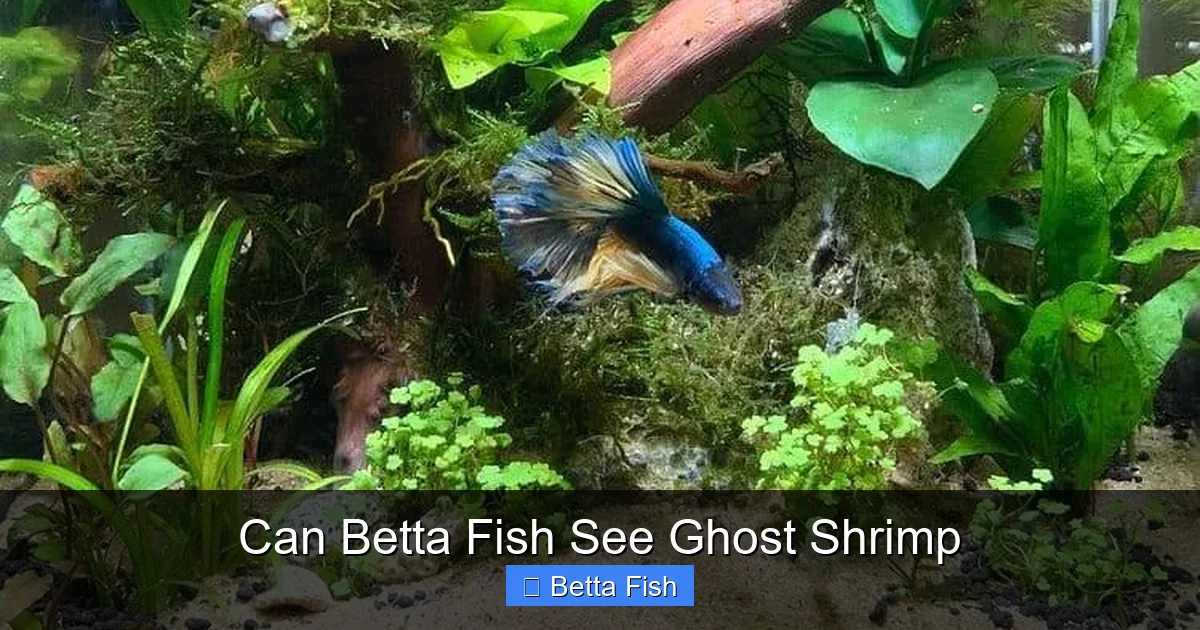
Betta fish have surprisingly well-developed eyes for their size. Their eyes are positioned on the sides of their heads, which gives them a wide field of view — nearly 360 degrees when you factor in their ability to see in almost every direction at once. This lateral eye placement is common among prey and predator fish alike because it helps them detect threats and food from multiple angles simultaneously.
Visual guide about Can Betta Fish See Ghost Shrimp
Image source: ouraquariumlife.com
Betta fish have both rod and cone cells in their retinas. Rod cells are responsible for detecting movement and working in low-light conditions, while cone cells allow them to perceive color. In fact, betta fish are known to see a broader spectrum of colors than humans can. They can detect ultraviolet light, which means their visual world is far more vibrant and detailed than we might assume.
What Betta Fish Can See Clearly
Bettas are particularly good at detecting movement. In the wild, betta fish live in shallow, often murky waters like rice paddies, slow-moving streams, and stagnant ponds. Their vision has evolved to pick up even the slightest motion in the water, which helps them spot both prey and predators. This means that a ghost shrimp darting across the tank is far more likely to catch your betta’s attention than one sitting perfectly still.
Bettas also have excellent color perception. They can distinguish between different shades and hues, which plays a role in how they interact with other fish, how they respond to their environment, and even how they react to their owners. If you have ever noticed your betta flaring at a specific color or swimming excitedly when you approach the tank, that is their color vision at work.
Limitations of Betta Vision
Despite their impressive visual abilities, betta fish do have some limitations. They are somewhat nearsighted, meaning they see objects that are close to them more clearly than objects that are far away. In a typical home aquarium, this is not a major issue since the tank is relatively small. However, it does mean that a ghost shrimp hiding in a distant corner of a large tank might be harder for your betta to detect.
Water clarity also plays a significant role. In a tank with poor water quality, floating debris, or cloudy water, your betta’s ability to see ghost shrimp — or anything else — will be diminished. Keeping your water clean and well-filtered is not just important for the health of your fish and shrimp, but also for maintaining the visual clarity your betta relies on.
For more details on how betta fish perceive their surroundings in different lighting conditions, check out our guide on can betta fish see in the dark.
Why Ghost Shrimp Are Not Truly Invisible
The Science Behind Transparency
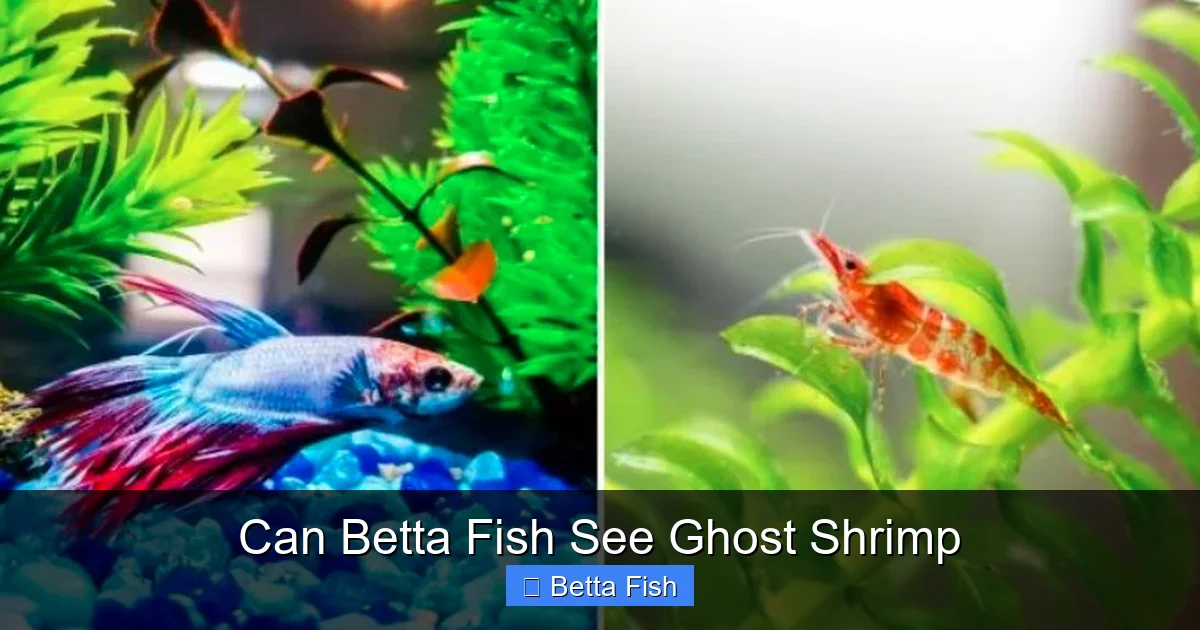
Ghost shrimp, also known as glass shrimp, belong to the genus Palaemonetes. Their bodies are semi-transparent, meaning light passes through their tissues rather than being reflected back to an observer. This transparency is an evolutionary adaptation that helps them avoid predators in the wild. In shallow, clear freshwater environments, being see-through is a significant survival advantage.
Visual guide about Can Betta Fish See Ghost Shrimp
Image source: thegoldfishtank.com
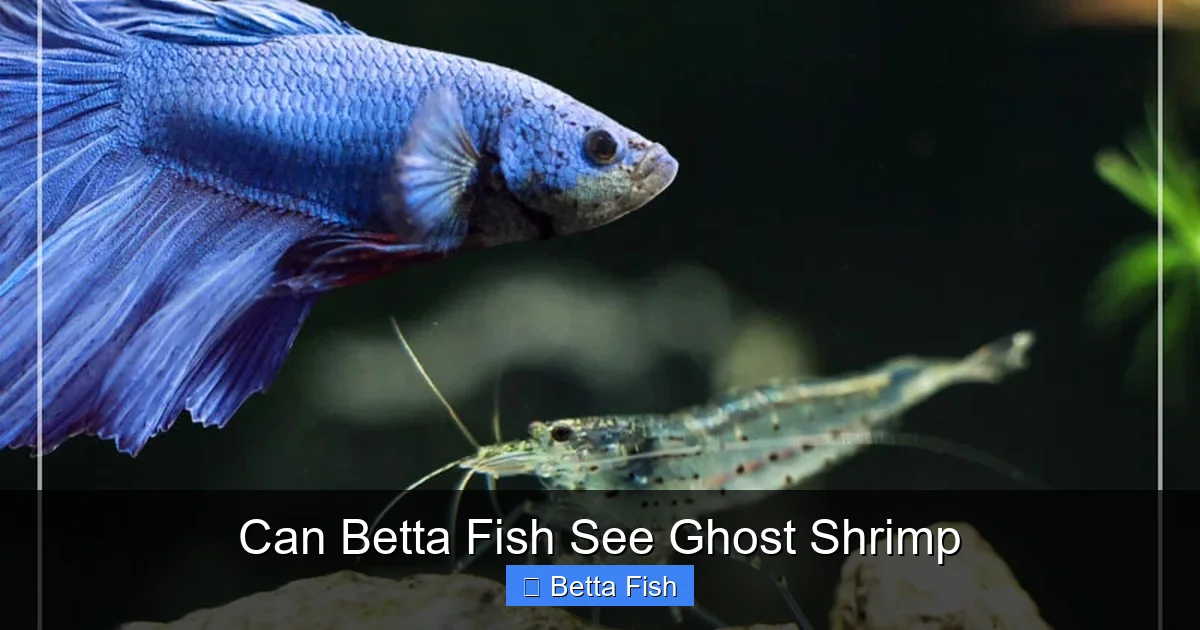
However, “semi-transparent” is not the same as “invisible.” Ghost shrimp still have internal organs, a digestive system, and sometimes a slight greenish or brownish tint to their bodies. You can often see food moving through their gut, and females carrying eggs display a visible cluster of greenish dots along their underside. All of these features make ghost shrimp detectable to a predator with good eyesight — like a betta fish.
Movement Gives Ghost Shrimp Away
Even if a ghost shrimp’s body is difficult to see, its movement is not. Betta fish are hardwired to detect motion in the water. When a ghost shrimp walks along the substrate, swims from one plant to another, or flicks its tail to dart backward, it creates vibrations and visual cues that a betta can pick up. This is one of the main reasons why ghost shrimp are not truly invisible to betta fish.
Think of it this way: imagine trying to spot a clear glass marble on a white table. When the marble is sitting still, it is nearly impossible to see. But the moment someone rolls it across the table, you can track its movement even if you cannot see the marble itself. The same principle applies to ghost shrimp in your betta tank.
Lighting Conditions Matter
The visibility of ghost shrimp also depends heavily on the lighting in your aquarium. Under bright, direct light, ghost shrimp become slightly more visible because light passes through their bodies and creates subtle reflections and refractions. Under dim lighting, they become even harder to see. If your betta tank has a strong light source, your betta will have an easier time detecting ghost shrimp than in a tank with minimal lighting.
Interestingly, the color of your substrate and tank decorations can also affect how visible ghost shrimp are. Against a dark background, the slight coloration of ghost shrimp becomes more apparent. Against a light or sandy background, they blend in more effectively. This is worth considering when you are setting up a tank that will house both bettas and ghost shrimp.
Will Your Betta Fish Hunt Ghost Shrimp?
Understanding Betta Temperament
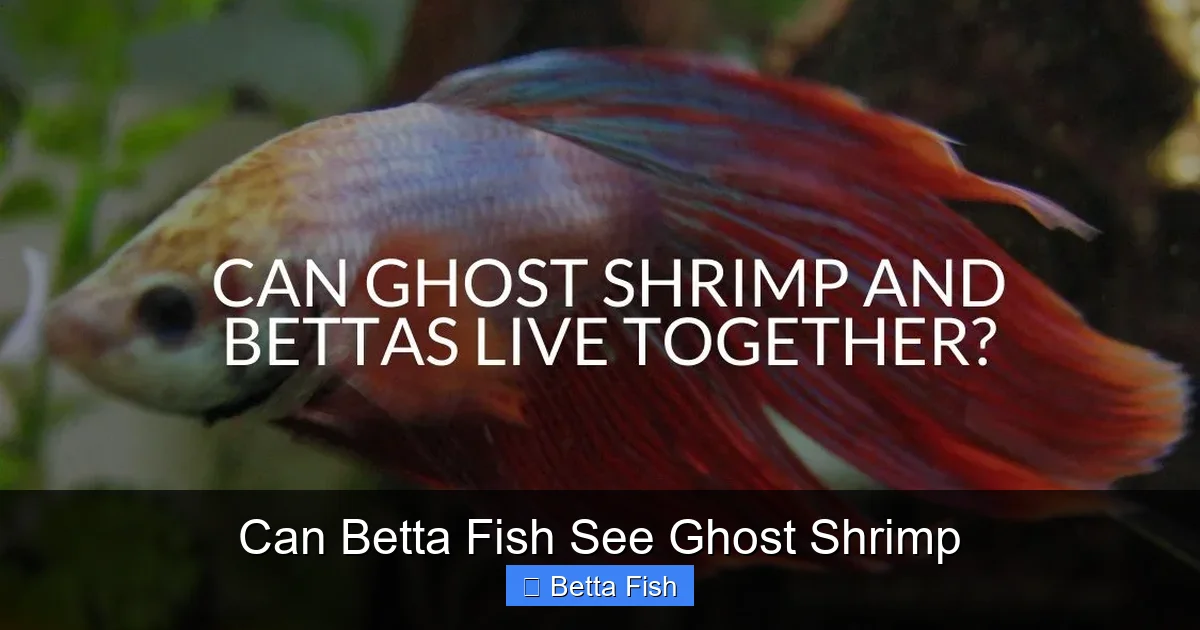
Not all betta fish behave the same way toward ghost shrimp. Betta temperament varies dramatically from fish to fish. Some bettas are naturally aggressive and will chase, attack, and eat any shrimp they can catch. Others are more docile and may completely ignore ghost shrimp, even when the shrimp swim right past their faces.
Visual guide about Can Betta Fish See Ghost Shrimp
Image source: bettacarefishguide.com
There is no reliable way to predict how your individual betta will react to ghost shrimp until you actually introduce them. However, there are some general patterns. Bettas that have been fed a varied diet and are not food-motivated may be less likely to hunt shrimp. Bettas that are naturally territorial or have a high prey drive are more likely to see ghost shrimp as food rather than tank mates.
Size Matters
The size of the ghost shrimp relative to your betta plays a significant role in whether they become a snack. Adult ghost shrimp that are fully grown (around 1.5 inches) are generally too large for a betta to eat comfortably. However, juvenile ghost shrimp or freshly molted shrimp (which are soft and vulnerable) can easily fit in a betta’s mouth and may be viewed as a tasty treat.
If you are adding ghost shrimp to your betta tank, it is best to purchase adults that are already near their full size. This reduces the likelihood that your betta will see them as food. Even so, there is always some risk involved, and you should be prepared for the possibility that you may lose a few shrimp.
Signs Your Betta Is Hunting Shrimp
When you first introduce ghost shrimp to your betta tank, watch for these signs that your betta is viewing them as prey rather than tank mates:
- Stalking behavior — Your betta follows the shrimp slowly and deliberately, often with its fins flared.
- Charging or lunging — Your betta darts toward the shrimp suddenly, trying to catch it off guard.
- Nipping — Your betta takes bites at the shrimp, particularly targeting the tail or legs.
- Flaring — Your betta displays its gill covers and fins in an aggressive posture when near the shrimp.
- Refusing to leave them alone — Your betta seems fixated on the shrimp and will not swim away or lose interest.
If you notice these behaviors, you may need to separate the shrimp or provide more hiding places to keep them safe.
Learn more about the dietary relationship between bettas and shrimp in our article on can betta fish eat shrimp.
Tips for Successfully Keeping Ghost Shrimp With Betta Fish
Provide Plenty of Hiding Spots
The single most important thing you can do to protect ghost shrimp in a betta tank is to provide ample hiding places. Ghost shrimp are naturally shy and spend much of their time hiding among plants, rocks, and decorations. When they have places to retreat, they are far less likely to be caught by a curious or aggressive betta.
Visual guide about Can Betta Fish See Ghost Shrimp
Image source: smartaquariumguide.com
Live plants are one of the best options for creating hiding spots. Plants like Java moss, Java fern, Anubias, and Hornwort provide dense cover where ghost shrimp can hide and feel secure. Floating plants like frogbit or water lettuce also help by dimming the light from above and creating shaded areas where shrimp can retreat.
In addition to plants, you can add decorations like driftwood, rock caves, and ceramic ornaments with small openings. Ghost shrimp love to squeeze into tight spaces, and these decorations give them places to hide that your betta cannot easily access.
Introduce Shrimp Before the Betta
If you are setting up a new tank, consider adding the ghost shrimp before you introduce the betta fish. This allows the shrimp to establish themselves, find hiding spots, and become comfortable in the environment before a predator arrives. When the betta is added later, it enters the shrimp’s territory rather than the other way around, which can reduce territorial aggression.
If your betta is already established in the tank, you can rearrange the decorations before adding the shrimp. This disrupts the betta’s established territory and makes it less likely to aggressively defend the entire tank against newcomers.
Feed Your Betta Well
A well-fed betta is less likely to hunt ghost shrimp out of hunger. Make sure you are feeding your betta a balanced, varied diet that includes high-quality pellets, frozen foods, and occasional treats. When your betta is satisfied and well-nourished, it may be less motivated to chase shrimp for a meal.
That said, some bettas will hunt shrimp regardless of how well they are fed. For these bettas, hunting is driven by instinct and prey drive rather than hunger. In these cases, providing hiding spots and monitoring interactions become even more important.
Monitor the First 48 Hours Closely
The first two days after introducing ghost shrimp to your betta tank are the most critical. This is when your betta is most likely to display aggressive or predatory behavior toward the new arrivals. Watch the tank closely during this period and be ready to intervene if necessary.
If your betta is relentlessly attacking the shrimp and you are losing shrimp one by one, you may need to remove the shrimp to a separate tank or use a tank divider. It is better to err on the side of caution than to lose your entire shrimp population.
For a comprehensive guide on pairing bettas with invertebrates, visit our article on can you keep betta fish with shrimp.
What to Do If Your Betta Attacks Ghost Shrimp
Immediate Steps to Take
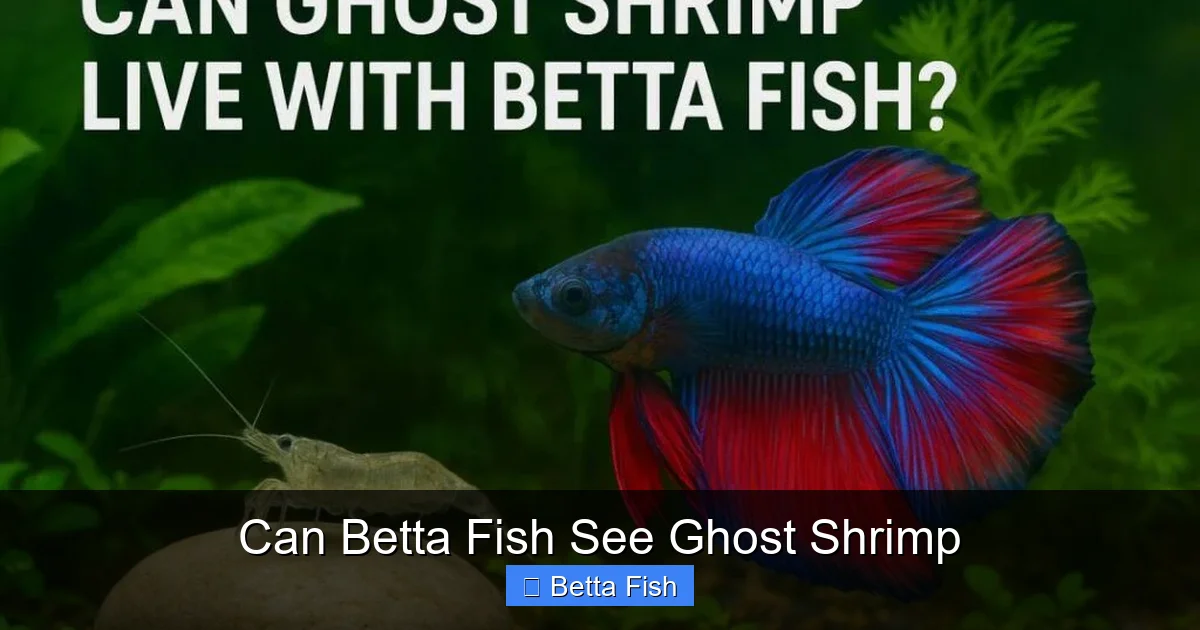
If you notice your betta attacking ghost shrimp, do not panic. There are several steps you can take to protect the shrimp and restore peace in your tank. First, try feeding your betta immediately. Sometimes, redirecting your betta’s attention with food can break its focus on the shrimp.
Visual guide about Can Betta Fish See Ghost Shrimp
Image source: fishiohub.com
If feeding does not help, consider adding more plants or decorations to create additional barriers and hiding spots. Sometimes, simply breaking the line of sight between the betta and the shrimp is enough to reduce aggression. You can also try dimming the tank lights, as lower light levels can calm an aggressive betta.
Using a Tank Divider
If the aggression continues, a tank divider can be a useful temporary solution. A divider separates the tank into two sections, allowing the shrimp to live on one side while the betta occupies the other. This gives the shrimp time to grow, molt, and establish themselves without being under constant threat.
Keep in mind that dividers are not always a permanent solution. Some bettas will continue to flare and stress themselves out by seeing the shrimp on the other side. In these cases, a separate tank for the shrimp may be the best long-term option.
When to Remove the Shrimp
If your betta is consistently killing ghost shrimp despite your best efforts, it may be time to accept that this particular betta is not compatible with shrimp. Some bettas simply have too high a prey drive to coexist with small invertebrates. In this case, removing the shrimp to their own tank or rehoming them is the kindest option for everyone involved.
There is no shame in admitting that your betta and ghost shrimp are not a good match. Every fish has its own personality, and what works for one betta owner may not work for another. The important thing is that both your betta and your shrimp are healthy and stress-free.
Frequently Asked Questions About Betta Fish and Ghost Shrimp
Do ghost shrimp clean betta tanks?
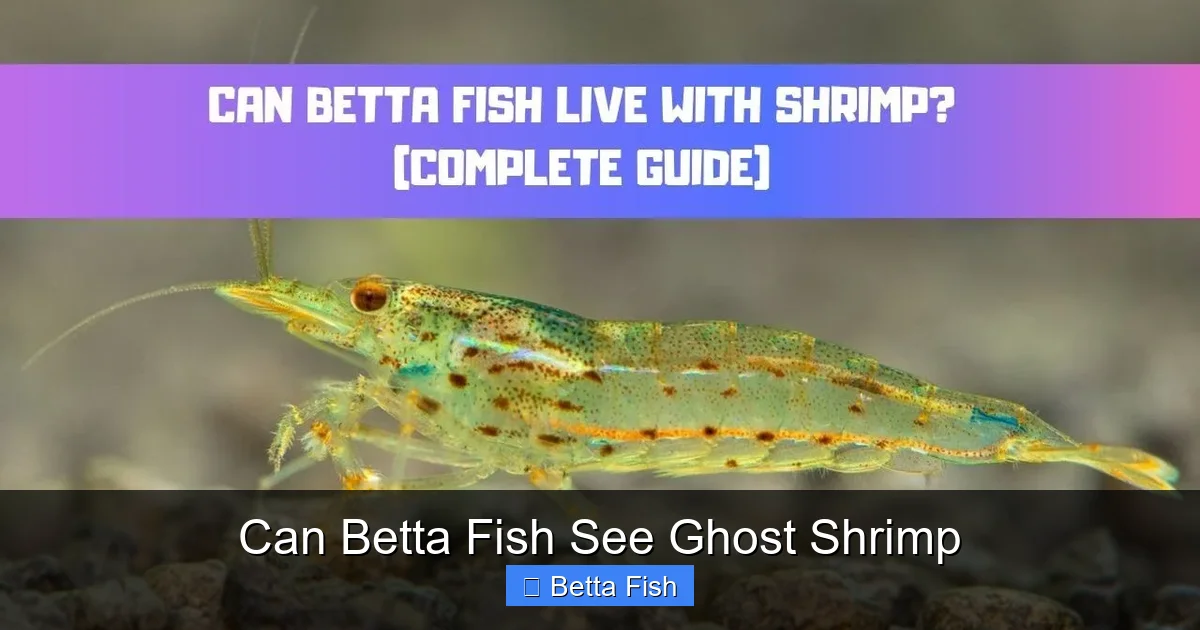
Yes, ghost shrimp are excellent tank cleaners. They eat algae, leftover food, and detritus that accumulates on the substrate and decorations. While they will not replace regular water changes and tank maintenance, they can help keep your betta tank cleaner between maintenance sessions. Many betta owners keep ghost shrimp specifically for this purpose.
Visual guide about Can Betta Fish See Ghost Shrimp
Image source: i.ytimg.com
How many ghost shrimp can I keep with my betta?
A good starting point is 3 to 5 ghost shrimp in a 10-gallon tank with a betta. This gives the shrimp enough numbers to feel secure and provides some redundancy in case your betta catches one or two. In larger tanks (20 gallons or more), you can keep larger groups of ghost shrimp. Always make sure the tank is properly cycled and has adequate filtration for the increased bioload.
Can ghost shrimp hurt my betta fish?
Ghost shrimp are completely harmless to betta fish. They do not have claws or any defensive mechanisms that could injure a betta. The relationship is entirely one-sided — the betta may pose a threat to the shrimp, but the shrimp will never pose a threat to the betta. You do not need to worry about your betta being harmed by ghost shrimp.
Will ghost shrimp breed in my betta tank?
Ghost shrimp can breed in freshwater tanks, but the larvae typically require brackish water to survive. This means that while you may see female ghost shrimp carrying eggs, the babies are unlikely to survive in a standard betta tank. If you want to breed ghost shrimp successfully, you would need a separate breeding setup with specific water conditions.
Final Thoughts on Betta Fish and Ghost Shrimp
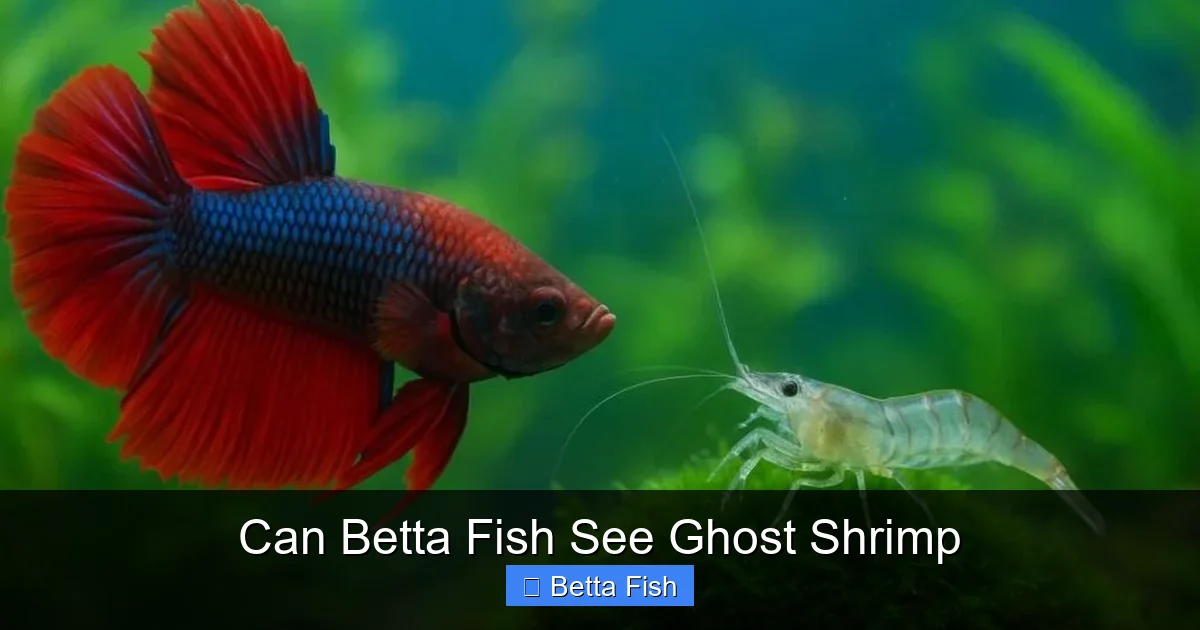
So, can betta fish see ghost shrimp? Absolutely. Despite their transparent bodies, ghost shrimp are visible to betta fish through their movement, internal organs, and slight coloration. Whether your betta chooses to ignore them or hunt them depends on its individual temperament, how well it is fed, and how your tank is set up.
Visual guide about Can Betta Fish See Ghost Shrimp
Image source: fishiohub.com
The key to success is preparation. Provide plenty of hiding spots, introduce the shrimp carefully, monitor interactions closely, and be ready to make adjustments if things do not go as planned. Many betta owners successfully keep ghost shrimp in their tanks and enjoy the benefits of having a natural cleanup crew alongside their beautiful betta.
Every betta is different, and what works in one tank may not work in another. The best approach is to observe your betta closely, respect its individual personality, and prioritize the well-being of all the creatures in your aquarium. With the right setup and a little patience, betta fish and ghost shrimp can make a fascinating and functional combination in your home aquarium.
Frequently Asked Questions
Can betta fish see ghost shrimp in low light?
Betta fish have decent vision in low light thanks to rod cells in their retinas, but their ability to detect ghost shrimp decreases in dim conditions. Ghost shrimp are harder to see in low light because their transparency makes them blend into the darker environment. However, movement can still alert your betta to their presence.
Do ghost shrimp hide from betta fish?
Yes, ghost shrimp are naturally shy and will hide from betta fish, especially when first introduced to a new tank. They instinctively seek out plants, rocks, and decorations to avoid predators. Providing plenty of hiding spots is essential for their survival in a betta tank.
Will a betta fish eat adult ghost shrimp?
Most betta fish cannot eat fully grown adult ghost shrimp because they are too large to fit in a betta’s mouth. However, some aggressive bettas may still attack and injure adult shrimp even if they cannot consume them. Juvenile ghost shrimp are at much greater risk of being eaten.
How can I tell if my betta sees the ghost shrimp?
Watch for signs like your betta tracking the shrimp with its eyes, following them around the tank, flaring, or darting toward them. If your betta completely ignores the shrimp, it may not have noticed them or may simply not be interested. A betta that actively pursues shrimp has definitely seen them.
Are ghost shrimp good tank mates for betta fish?
Ghost shrimp can be good tank mates for betta fish in many cases, but success depends on your individual betta’s temperament. They serve as excellent cleanup crew members and are interesting to watch. However, there is always a risk that a betta may hunt them, so proper tank setup and monitoring are important.
What size tank is best for keeping betta fish with ghost shrimp?
A minimum of 10 gallons is recommended for keeping betta fish with ghost shrimp. Larger tanks provide more space for shrimp to hide and reduce the chances of your betta encountering them frequently. A heavily planted 10-gallon or larger tank offers the best chance of successful cohabitation.

