How to Make Fish Tanks Smell Better
Fish tanks can develop unpleasant smells fast, but you can fix it with the right steps. This guide covers simple and effective ways on how to make fish tanks smell better, from regular water changes to proper filter maintenance. Keep your betta tank fresh and odor-free with these easy tips.
Nothing kills the mood of a beautiful aquarium faster than a bad smell. If you have ever walked past your betta fish tank and wrinkled your nose, you are not alone. Fish tank odors are a common problem, and they usually mean something needs attention. The good news is that fixing the smell is often simple and quick.
This guide walks you through everything you need to know about how to make fish tanks smell better. We will cover the real causes of tank odor, easy prevention tips, and practical fixes you can start today. Whether you have a small betta bowl or a larger aquarium, these steps work for any setup.
Most fish tank smells come from just a few everyday sources. Once you know what causes them, you can stop the problem at its root. Let us dive in.
Key Takeaways
- Regular water changes are the #1 way to prevent bad smells in your fish tank.
- Overfeeding is the most common cause of fish tank odor and should be avoided.
- A clean filter removes waste and keeps water fresh longer.
- Tank size matters — small tanks need more frequent maintenance to stay odor-free.
- Live plants help naturally absorb toxins and reduce smells in aquariums.
- Testing water quality regularly catches problems before they cause bad odors.
- A consistent maintenance routine makes tank smell control easy and effortless.
📑 Table of Contents
Why Fish Tanks Start to Smell Bad
Understanding the cause is the first step to fixing any problem. Fish tank odors are rarely random. They almost always point to a specific issue inside the tank. Here are the most common reasons your tank might smell:
Decaying Food and Waste
Fish food that sinks to the bottom and goes uneaten starts to rot within hours. Over time, this builds up and creates a foul, sour smell. Fish waste and leftover food are the top culprits when it comes to fish tank odor. If you notice a strong ammonia-like smell, this is usually the cause.
Dirty or Clogged Filters
Your filter does the heavy lifting for keeping water clean. But when it gets clogged or clogged media, it stops working properly. Dirty filter material can actually make the smell worse by trapping decaying matter. A fish tank filter needs regular rinsing and occasional replacement to work well.
Infrequent Water Changes
Water changes are the backbone of a clean tank. Without them, dissolved waste builds up fast. Stale water develops a musty, rotten-egg smell that is hard to ignore. Most tanks need at least a 25% water change every one to two weeks.
Too Many Fish or Overcrowding
More fish means more waste. If your tank is overstocked, the filter and water changes may not keep up. This leads to a buildup of ammonia and nitrites, which produce a strong, unpleasant odor. betta fish care works best in tanks that are not overcrowded.
Dead Plant Matter or Decor
Dead leaves, rotting wood, or old decorations can harbor bacteria that produce bad smells. If you have live plants, fallen leaves need to be removed regularly. Check decorations for any signs of decay or algae buildup.
How to Make Fish Tanks Smell Better: Step-by-Step Fixes
Now that you know what causes the smell, let us get into the fixes. These practical steps will help you eliminate fishy smell and keep your tank smelling fresh for days.
Step 1: Do Regular Water Changes
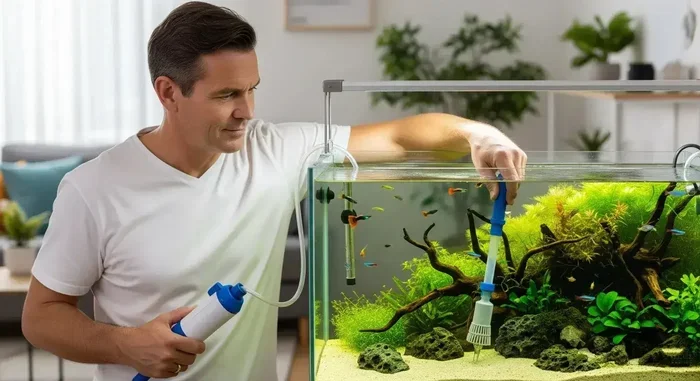
This is the single most effective thing you can do. A weekly 20-25% water change removes dissolved waste before it has a chance to smell. Use a gravel vacuum to suck up debris from the bottom while you change the water. Always use treated water that is the same temperature as the tank.
If you want to boost freshness, try adding a small piece of activated carbon to your filter. It absorbs odor-causing compounds and keeps the water cleaner longer.
Step 2: Stop Overfeeding Your Fish
Overfeeding is the number one mistake fish owners make. Uneaten food rots quickly and creates a strong smell. Feed your betta only what it can eat in two minutes, once or twice a day. If food falls to the bottom, remove it with a small net after feeding.
Here is a quick tip: skip one feeding day per week. This gives your fish’s digestive system a break and reduces waste buildup significantly.
Step 3: Clean Your Filter Properly
Rinse your filter media in old tank water once a month. Never use tap water, as the chlorine will kill the beneficial bacteria that keep your tank healthy. Replace filter cartridges every four to six weeks, or sooner if they look dirty.
A clean filter means better water flow and fewer odors. Think of it like changing the oil in a car — regular maintenance keeps everything running smoothly.
Step 4: Vacuum the Gravel
Debris hides in the gravel and releases smells as it breaks down. Use a gravel vacuum during water changes to pull out fish waste, old food, and plant debris. Focus on corners and areas with low flow where gunk tends to collect.
You do not need to remove all the gravel. Just focus on the top layer where most waste settles. This simple habit makes a huge difference in tank freshness.
Step 5: Add Live Plants
Live plants are natural air purifiers for aquariums. They absorb ammonia, nitrates, and other odor-causing compounds. Plants like java moss, anubias, and java fern are easy to care for and work great in betta tanks.
Even one or two small plants can noticeably reduce odors. They also give your betta places to hide and explore, which makes for a happier fish.
Step 6: Check Your Tank Size and Setup
Smaller tanks need more frequent maintenance because waste concentrates faster. If you have a tiny bowl, consider upgrading to a larger tank. A tank of at least 5 gallons gives your betta more room and makes it easier to maintain good water quality.
If you are wondering about the right size, check out this guide on how big betta fish tanks need to be for helpful advice on choosing the best setup.
Daily and Weekly Maintenance Routines
The best way to keep a fish tank from smelling bad is to stay ahead of it with a routine. Consistency is key. Here is a simple schedule that works well for most betta tanks:
Daily Tasks
- Feed your betta a small amount once or twice a day.
- Remove any uneaten food after a few minutes.
- Check the tank temperature and make sure it stays between 78-80°F.
- Quickly scan for any dead leaves or visible debris.
Weekly Tasks
- Perform a 20-25% water change with treated water.
- Vacuum the gravel to remove trapped waste.
- Wipe down the inside glass to remove algae buildup.
- Rinse filter media in old tank water.
- Check the filter is running properly and water flow is steady.
Monthly Tasks
- Replace filter cartridges if needed.
- Test water parameters with a liquid test kit.
- Trim any overgrown live plants.
- Clean the tank lid and light fixtures.
Following this routine keeps your tank clean and odor-free without a lot of effort. After a few weeks, it becomes second nature.
Common Mistakes That Cause Fish Tank Odors
Even experienced fish keepers sometimes make mistakes that lead to bad smells. Here are the most common ones to avoid:
Rinsing Filter Media with Tap Water
This kills the good bacteria in your filter. Without these bacteria, your tank cannot break down waste properly. Always rinse filter media in water taken from the tank during a water change.
Skipping Water Changes
Some people think a filter alone is enough. But filters only remove solid waste. Dissolved toxins and chemicals build up over time and cause odors. Regular water changes are non-negotiable.
Using the Wrong Substrate
Some gravel and sand types trap waste deep below the surface where you cannot reach it. Choose a smooth, fine gravel that is easy to vacuum. Avoid substrates with large gaps where debris can hide.
Ignoring Early Warning Signs
A slight smell is your tank telling you something is off. Do not wait until the odor becomes unbearable. Address small issues early to prevent bigger problems later. If you notice a faint smell, do a small water change right away.
Overcrowding the Tank
Adding too many fish or too many decorations can overload the tank’s biological system. Keep your betta tank clean and uncluttered. A well-spaced tank with good flow stays much fresher.
Quick Tips for a Fresh-Smelling Tank
Here are some bonus tips that make a big difference with minimal effort:
- Use activated carbon in your filter to absorb odors and impurities.
- Do not place the tank in direct sunlight, which promotes algae growth and smells.
- Keep the room well-ventilated so odors do not build up around the tank area.
- Clean the tank lid regularly, as condensation can trap smells.
- Add a small air stone to increase water movement and oxygen flow, which reduces odor-causing bacteria.
These small additions to your routine can keep your tank smelling like clean water instead of a fishy mess. For more tips on keeping your betta environment healthy, check out this article on how to make your betta fish happy, which covers overall tank wellness including cleanliness.
When to Seek Help for Persistent Odors
Most tank smells go away with the steps above. But if you have tried everything and the odor persists, there may be a deeper issue. Here are signs that you should look further:
- The smell returns within hours of a water change.
- Your betta fish seems lethargic or is gasping at the surface.
- You notice cloudy water that does not clear up.
- There is a strong rotten-egg or sulfur smell.
A rotten-egg smell often points to anaerobic bacteria building up in the substrate. This happens when debris decomposes in areas with no oxygen. To fix this, gently stir the gravel during a water change to release trapped gas. You may also need to remove and replace a portion of the substrate.
If your betta fish shows signs of illness alongside the odor, check out this guide on how to make your betta fish healthy again for advice on restoring your fish’s health and tank conditions.
Sometimes the issue is the water source itself. If your tap water has a strong chlorine or sulfur smell, consider using a water conditioner or switching to filtered water. Testing your tap water first can save you a lot of troubleshooting later.
Final Thoughts
Learning how to make fish tanks smell better comes down to one thing: consistent maintenance. A clean tank with proper filtration, regular water changes, and smart feeding habits will almost never develop a bad smell. The steps in this guide are simple, but they work incredibly well when you stick with them.
Your betta fish deserves a clean and fresh environment. A pleasant-smelling tank is not just nice for you — it is a sign that your fish is living in healthy water. Start with one or two of the tips above and build from there. Before long, you will have a tank that smells as clean as it looks.
Remember, prevention is always easier than fixing a bad smell. Keep up with your routine, stay observant, and your aquarium will stay fresh for weeks at a time.
Frequently Asked Questions
Why does my fish tank smell like fish?
A fishy smell usually comes from decaying food, fish waste, or dirty filter media. The bacteria that break down these materials release compounds that smell like fish. Regular water changes and proper filter maintenance are the fastest ways to fix this.
How often should I change the water to prevent bad smells?
A 20-25% water change every week works well for most betta tanks. If your tank is smaller than 5 gallons, you may need to do partial changes twice a week. Consistent water changes remove waste before it has a chance to produce odors.
Can overfeeding my betta cause a smelly tank?
Yes, absolutely. Uneaten food sinks to the bottom and rots, creating a strong sour or ammonia-like smell. Feed your betta only what it can finish in two minutes and remove any leftovers right away.
Is it safe to use air fresheners near a fish tank?
No, air fresheners can release chemicals that are harmful to fish and can dissolve into the water. Instead, focus on cleaning the tank properly and improving water quality to eliminate odors naturally and safely.
What type of filter is best for odor control?
Hang-on-back filters and sponge filters work well for betta tanks. Look for filters that include room for activated carbon, which absorbs odor-causing compounds. A filter with a good flow rate will keep the water moving and reduce smell buildup.
How can I tell if my tank water is causing the smell?
If the water itself smells bad when you scoop some out, the issue is water quality. Test for ammonia and nitrite levels using a liquid test kit. If either is above zero, you need to do a water change and check your filter function.