How to Sex Your Betta Fish
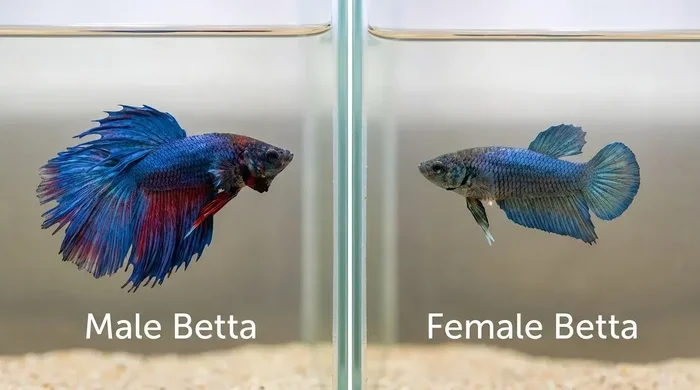
Figuring out how to sex your betta fish is easier than most people think. Male and female bettas have clear differences in fin length, body shape, color intensity, and behavior. This guide walks you through every visual and behavioral clue so you can confidently tell males from females in just minutes.
Have you ever stared at your betta fish and wondered whether it is a boy or a girl? You are not alone. How to sex your betta fish is one of the most common questions new fish owners ask. The good news is that it is surprisingly straightforward once you know what to look for.
Male and female bettas look and behave quite differently. These differences become more obvious as the fish grows older. By the time your betta reaches about three to four months of age, you should be able to tell the gender with confidence.
Knowing the sex of your betta matters for more than just curiosity. It affects how you set up the tank, what tankmates you choose, and even how you care for the fish day to day. Whether you are a complete beginner or someone who has had bettas for a while, this guide will give you all the tools you need.
We will cover every visual clue, behavioral sign, and practical tip you need. By the end, you will never second-guess yourself again when someone asks you to identify a betta fish gender.
Key Takeaways
- Males have longer, flowing fins: The most obvious sign is the dramatic tail and fin length that males display.
- Females have a white egg spot: Look for a small white dot near the ventral area on female bettas.
- Body shape differs clearly: Males are sleek and elongated, while females are rounder and bulkier.
- Color intensity varies by gender: Males typically show brighter, more vivid colors than females.
- Behavior tells a story: Males build bubble nests and flare more, while females can be territorial too.
- Age matters for accuracy: Sexing is most reliable once bettas reach full maturity at around 3 to 4 months old.
- Proper housing depends on knowing the sex: Males and females need different tank setups to stay healthy.
📑 Table of Contents
- Why Sexing Your Betta Fish Matters
- Visual Differences Between Male and Female Betta Fish
- Behavioral Differences You Can Observe
- How Age Affects Your Ability to Sex a Betta Fish
- Common Mistakes People Make When Sexing Betta Fish
- Practical Tips for Confirming Your Betta Fish Gender
- What to Do After You Know the Sex
- Final Thoughts on Sexing Your Betta Fish
Why Sexing Your Betta Fish Matters
Understanding how to sex your betta fish goes beyond just naming a gender. It plays a real role in the health and happiness of your fish. Here is why getting it right matters so much.
First, males and females need different living arrangements. Male bettas are highly territorial and cannot live together. They also tend to be aggressive toward fish with long, colorful fins. Females can sometimes live in small groups, but only under the right conditions.
Second, sexing helps you plan for breeding if that is your goal. Breeding bettas requires a separate setup and careful preparation. You cannot breed fish if you do not know their gender.
Third, knowing the sex helps you understand behavior. A male betta building a bubble nest is a completely different scenario from a female displaying aggression. Each needs a specific response from you as the owner.
Finally, proper care depends on accurate identification. If you think your fish is one gender but it is actually the other, you might miss important health or behavioral cues. Getting the sex right sets the foundation for everything else.
Visual Differences Between Male and Female Betta Fish
The easiest way to determine betta fish gender is by looking at physical features. Let us break down each visual clue so you can compare them side by side.
Fin Length and Shape
This is the most noticeable difference. Male bettas have long, flowing fins that trail behind them as they swim. Their tail fins, also called caudal fins, can be several times longer than their body. The dorsal fin runs along the back and is also quite extended.
Female bettas have much shorter fins. Their fins sit close to the body and look compact. This difference is very clear in adult fish. If your betta has long, dramatic fins, there is a very good chance it is a male.
Keep in mind that some female bettas do have slightly longer fins than others. But in general, the fin length gap between males and females is obvious once you know what to look for.
Body Shape and Size
Male bettas tend to have a slim, streamlined body shape. They look sleek and elegant when they swim. Their bodies are slightly longer and more narrow from side to side.
Female bettas have a rounder, bulkier body shape. They appear wider, especially around the belly area. This is because females carry eggs inside their bodies. When a female is ready to breed, her belly becomes even more rounded and pronounced.
If you look at your betta from above, the difference in body shape becomes even clearer. Males look like narrow torpedoes, while females look more like rounded eggs.
Color Intensity
Male bettas generally display brighter, more vivid colors. Their reds are deeper, their blues are richer, and their patterns are more dramatic. This is one reason why males are more popular in the aquarium trade.
Females tend to have softer, more muted colors. Their hues are still beautiful but less intense. Some females may also show color changes when they are ready to breed, becoming slightly darker or developing vertical stripes along their body.
However, color intensity alone is not a foolproof method. Some female bettas can be quite colorful too, especially certain breeds. Always use multiple clues together to confirm the sex.
The Egg Spot and Ventral Fins
This is one of the most reliable signs for identifying a female betta. Females have a small white spot near their ventral area, which is the underside of the fish. This spot is called the egg spot, and it is where eggs will eventually exit the body.
Males do not have a visible egg spot. If you see a small white dot on the underside of your betta, it is almost certainly a female.
Another physical difference involves the ventral fins, which are the small fins near the belly. Males tend to have slightly longer ventral fins compared to females. This is a subtle difference and may be hard to spot in younger fish.
Behavioral Differences You Can Observe
Physical traits are only part of the picture. Behavior also plays a big role in how to sex your betta fish. Watching how your fish acts can give you strong clues about its gender.
Bubble Nest Building
Male bettas are famous for building bubble nests. These are clusters of tiny bubbles that the male blows onto the surface of the water. A bubble nest is a sign that the male is ready to breed and feels safe in his environment.
Females do not build bubble nests. If you see a collection of bubbles floating near the surface, you can be confident your fish is a male. Some males build very elaborate nests, while others build small, simple ones. Both are normal.
If you want to encourage bubble nest building, make sure the water is calm and the tank has a gentle filter. Strong currents can break apart the bubbles. You can also learn more about creating the right environment in our guide on how to set up a fish tank for betta fish.
Flaring and Aggression
Male bettas flare their gills and fins to look bigger and more intimidating. They do this when they see another male, a reflection, or even a shadow. Flaring is a natural behavior for males and happens frequently.
Females also flare, but much less often. Female aggression tends to show up differently. Instead of flaring, females may chase each other or nip at fins. In a group of females, you might see a clear hierarchy form.
If your betta flares constantly and has long fins, it is almost certainly a male. A fish that rarely flares and has shorter fins is more likely a female.
Nesting and Breeding Behavior
When a male and female are ready to breed, their behaviors change significantly. The male will build or maintain a bubble nest and will try to attract the female. He may flare at her but will not harm her if she is ready.
The female will develop vertical stripes along her body, often called breeding bars. She will also become more receptive to the male’s advances. If you see these signs together, you have likely identified one male and one female.
Understanding these behaviors also helps you know when your fish is stressed or happy. For more tips on reading your betta’s mood, check out our article on how to know if your betta fish is happy.
How Age Affects Your Ability to Sex a Betta Fish
Age is a critical factor in sexing betta fish. Young bettas under about three months old can be very difficult to tell apart. The physical differences have not fully developed yet.
Here is a simple timeline to follow:
- Under 2 months: Fins are still short, and colors are not fully developed. Sexing is very unreliable at this stage.
- 2 to 3 months: Males begin to show slightly longer fins. Color differences start to become more noticeable.
- 3 to 4 months: Most physical and behavioral differences are clearly visible. This is the best time to determine the sex.
- 4 months and older: Full adult characteristics are present. Sexing is highly accurate at this point.
If you have a young betta, give it time before trying to identify the gender. Rushing the process can lead to mistakes. Patience is your best friend here.
Also, keep in mind that different betta breeds may show slightly different characteristics. Crown tail, veil tail, and half moon bettas all have unique fin shapes, but the general male vs female differences still apply across all types.
Common Mistakes People Make When Sexing Betta Fish
Even experienced fish keepers can make mistakes when trying to determine the sex of a betta fish. Here are the most common errors to avoid.
Relying on Only One Clue
The biggest mistake is using just one sign to determine gender. For example, some people assume that a colorful fish must be male. But some females can be quite colorful too. Always look at multiple clues together, including fin length, body shape, egg spot, and behavior.
Comparing Young Fish to Adult Standards
Trying to sex a baby betta using adult characteristics will lead to confusion. Young fish simply have not developed enough for the differences to be obvious. Wait until your fish is at least three months old before making a determination.
Confusing Female Aggression with Male Behavior
Some people assume that only males flare and show aggression. While males are more dramatic flarers, females can also be territorial. A female betta chasing other fish does not mean it is a male.
Ignoring the Egg Spot
The egg spot is one of the most reliable signs of a female betta, but many people overlook it. Always check the underside of your fish carefully. A visible white egg spot is a strong indicator of a female.
Avoiding these mistakes will save you a lot of confusion. Take your time, observe carefully, and use multiple signs to confirm the gender.
Practical Tips for Confirming Your Betta Fish Gender
Once you have made your initial assessment, here are some practical steps to confirm whether your betta is male or female.
- Look at the fins in good lighting. Natural light or a bright aquarium light works best. Dim lighting can hide fin details.
- Observe from above and from the side. Body shape is easiest to see from a top-down view.
- Watch for bubble nests. If you see a bubble nest, you have a male. This is one of the clearest signs.
- Check for the egg spot. Use a flashlight gently to illuminate the underside if needed.
- Monitor behavior over several days. One observation is not enough. Watch for patterns in flaring, nest building, and swimming style.
- Compare with reference photos. Looking at pictures of confirmed males and females can help train your eye.
When you are ready to set up the right home for your betta based on its gender, make sure you are providing the best possible environment. Proper tank setup, water quality, and nutrition all play a role in keeping your fish healthy and comfortable. You can find detailed guidance in our article on how to make your betta fish happy and our tips on how to take care of a betta male fish.
Also, remember that a happy betta is a healthy betta. Understanding gender is one piece of the puzzle, but overall care matters just as much. Keep the water clean, the temperature stable, and the tank enriched with plants and hiding spots.
What to Do After You Know the Sex
Once you have successfully identified your betta fish gender, you can adjust your care routine accordingly. Here is what changes based on whether you have a male or a female.
For male bettas, you should never house them with other males. A single male needs his own tank. If you want tankmates, choose small, peaceful fish that do not have long fins. Avoid fish that might trigger aggression or be mistaken for rival bettas.
For female bettas, you can consider a small group of three to five females, known as a sorority. However, this requires a larger tank, at least 10 gallons, with plenty of hiding spots. Not all females will get along, so be prepared to separate them if needed.
If you are planning to breed your bettas, you will need a separate breeding tank. Research the breeding process thoroughly before attempting it. Breeding requires careful water management, proper nutrition, and close monitoring.
No matter the gender, your betta will thrive with consistent care. Feed high-quality food, perform regular water changes, and keep the tank at the right temperature. For more on maintaining great water conditions, our guide on how to change your betta fish water is a great resource.
Final Thoughts on Sexing Your Betta Fish
How to sex your betta fish is a skill that becomes second nature with a little practice. The key differences in fins, body shape, color, and behavior make it possible for anyone to figure out the gender. You do not need special equipment or advanced knowledge. Just patience, good observation, and a willingness to learn.
Start by looking at the fins and body shape. Then check for the egg spot and bubble nests. Watch the behavior over time. Use all of these clues together, and you will get an accurate answer.
Remember that making mistakes is completely normal, especially with young fish. Give yourself grace and keep observing. The more bettas you look at, the easier it becomes.
Whether your fish is a male or a female, the most important thing is that you provide a safe, healthy, and stimulating home. Your betta will reward you with vibrant colors, interesting behavior, and years of companionship.
Now that you know how to sex your betta fish, you are better equipped to give it exactly the care it needs. Enjoy the journey of getting to know your fish, and never stop learning about these amazing creatures.
Frequently Asked Questions
Can you sex a baby betta fish?
It is very difficult to sex a baby betta under two months old. The physical differences have not developed yet. Wait until your fish is at least three months old for reliable results.
What is the fastest way to tell if a betta is male or female?
The fastest way is to look at the fins. Males have long, flowing fins, while females have short, compact fins. Checking for a white egg spot on the underside is also quick and reliable.
Do female bettas build bubble nests?
No, bubble nest building is a behavior exclusive to male bettas. If you see a bubble nest, your fish is definitely a male. Females do not exhibit this behavior.
Can male and female bettas live together?
Male and female bettas should not live together permanently except during brief breeding periods. Males will aggressively chase and may harm females outside of breeding. Always house males separately.
Why is my female betta turning darker?
Females often darken in color when they are ready to breed. They may also develop vertical stripes called breeding bars. This is a normal and natural response to mating readiness.
Is sexing a betta fish important if I am not breeding?
Yes, it still matters. Knowing the gender helps you choose the right tank setup, appropriate tankmates, and the best care routine. It also helps you understand your fish’s behavior better.
=== CONCLUSION ===
Learning how to sex your betta fish is a rewarding skill that improves your care for these beautiful animals. The differences between males and females are clear once you know what to look for. From flowing fins and egg spots to bubble nests and flaring behavior, each clue builds a complete picture.
Take your time, observe carefully, and use multiple signs to confirm the gender. Avoid common mistakes like relying on a single clue or trying to sex very young fish. With practice, you will be able to identify any betta’s gender in seconds.
Now that you have this knowledge, put it into action. Look at your betta today and see if you can spot the differences. Share what you have learned with other fish owners. The more people understand about betta fish care, the happier and healthier these incredible fish will be.