Can You Put Catfish With Betta Fish Safely in 2026
Can you put catfish with betta fish safely? These two very different fish have distinct needs and temperaments. While bettas are small and territorial, catfish are larger and often more aggressive. This guide explains whether they can share a tank, what risks exist, and how to make them coexist if possible.
Just because two fish come from different families doesn’t mean they can’t live together peacefully. Many aquarium enthusiasts dream up the perfect combination—perhaps a bright betta darting through plants alongside a curious catfish exploring the bottom. But mixing these very different species requires careful thought. You’ve probably seen videos online about putting various tropical fish together and been wondering if the same rules apply here. The short answer is no, most catfish with betta fish pairings won’t survive happily side by side in the same home tank. However, understanding why and learning how to set things up correctly can still lead to a thriving aquarium filled with happy, healthy fish. This guide breaks down the science behind fish compatibility, highlights the top reasons catsfish with betta fish clash, and offers practical solutions if you’re determined to try anyway.
## Understanding Betta and Catfish Differences
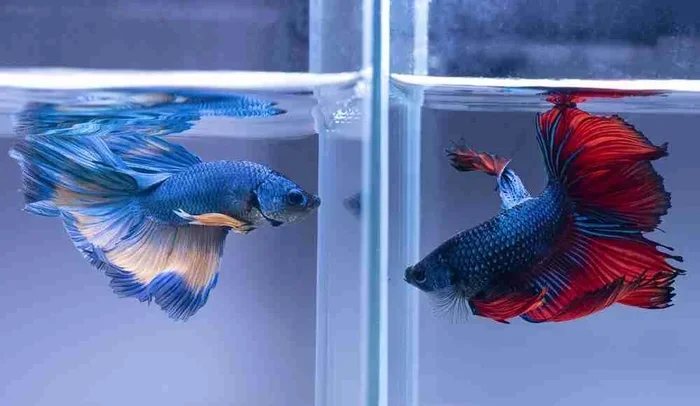
Before you even think about placing a betta next to a catfish, it helps to know just what these two remarkable creatures are. A betta fish, also known as a Siamese fighting fish, belongs to the genus Betta. Males develop those iconic flowing fins that make them such popular centerpiece décor in glass bowls and small aquariums. Their entire world revolves around defending a small territory, especially since males can be surprisingly aggressive toward other males of the same species. On the other hand, catfish belong to the order Siluriformes and represent a completely different evolutionary branch. They are known for their sensory barbels—those little whisker‑like feelers that help them navigate murky waters—and their strong suction‑cup mouths. In the wild, many catfish species grow quite large, sometimes reaching over half a foot in length, which sets them apart physically from the compact betta.
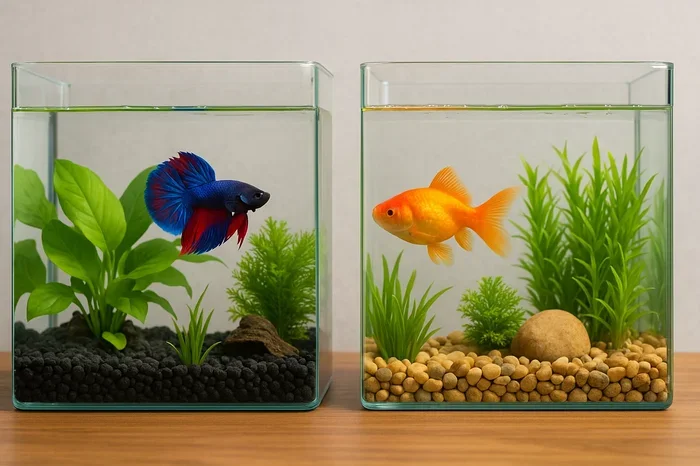
These fundamental differences spill over into every aspect of aquarium life. A betta typically lives comfortably in a 5‑gallon bowl or a 10‑gallon tank, thriving on a steady stream of oxygen and regular feeding. Its peak activity happens during the early morning hours when it hunts tiny insects floating in the water column. A catfish, however, prefers slower, deeper habitats with plenty of hiding spots and ample substrate to scavenge along the riverbed. Its day schedule mirrors that of a real fish—active during dawn and dusk, resting during the heat of midday sun. Because of these divergent habits, trying to cram them into the same enclosure creates immediate tension. The energy demands simply don’t line up, and the physical space required for each kind of lifestyle conflicts heavily.
Beyond appearance, consider their lifespans and growth patterns. Bettas usually reach maturity in six months to a year and can live for five years or longer with proper care. Catfish vary wildly; some dwarf varieties grow to under three inches, while others can balloon past twenty inches. Regardless of size, catfish tend to grow steadily rather than maturing rapidly. This means a young catfish could become far too large for a modest tank designed for a betta, outgrowing its space and creating constant discomfort. Additionally, bettas have a reputation for being solitary or semi‑territorial, often keeping distance from other fish unless a mate is present. Most catfish are social animals that prefer groups or at least company, requiring consistent interaction with neighbors to stay calm. Putting these personalities together without careful planning almost always leads to stress for one or both parties.
## Compatibility Factors for Successful Coexistence
When evaluating whether two fish species can share a tank, several environmental factors play critical roles. The first and perhaps most obvious factor is temperature. Bettas thrive in warm waters, ideally between 74°F and 80°F (23°C–27°C), with stable conditions that mimic their native Southeast Asian streams. Catfish, meanwhile, display a broader thermal tolerance but perform best in similar warm ranges. That said, there is overlapping ground here, which makes the case for compatibility seem reasonable at first glance. However, other variables often tip the scale dramatically against a combined situation.
Water chemistry is another major consideration. Betta fish are somewhat tolerant of fluctuating ammonia and nitrite levels, though they benefit from consistently clean water with low nitrates. Many catfish species, particularly the more predatory ones, are sensitive to rapid changes in dissolved oxygen and can suffer if the water becomes overly acidic or alkaline. Adjusting pH levels carefully becomes essential when mixing species whose ideal ranges differ slightly. For instance, a tank kept at a pH of 7.0 might be comfortable for a betta, yet still stressful for certain bottom‑dwelling catfish that prefer neutral to slightly basic conditions.
Space allocation represents the third pillar of compatibility analysis. A betta needs open water columns to dart and fight for territory, while a catfish requires abundant floor space to swim along the substrate and hide among rocks, plants, and driftwood. When two different spatial needs collide, the loser—usually the smaller, more territorial member—often suffers from chronic stress. Crowded conditions can lead to territorial disputes, abnormal fin clipping, and even physical injury. Think of it this way: giving a betta a crowded tank reduces its ability to hunt and display its fancy colors, while forcing a catfish into tight quarters limits its movement and foraging opportunities.
Filtration and waste management round out the trio of crucial factors. Betta fish produce moderate amounts of organic debris from their food scraps and bioloft, which their small filtration systems handle efficiently if water turns over regularly. Catfish, especially larger species, generate significantly more waste through their consumption of detritus and uneaten prey. Inadequate filtration can cause ammonia spikes that poison both tank mates alike. Therefore, even if you manage to place a betta beside a catfish initially, the water quality may deteriorate quickly, leading to illness in both fish.
## Can They Actually Coexist Safely?
After weighing all these elements, the honest answer remains negative for the majority of cases. Placing a catfish with betta fish in the same tank is highly unlikely to result in a harmonious relationship. The fundamental mismatch stems from conflicting behavioral drives: bettas defend small patches of territory with fierce intensity, while many catfish rely on group dynamics and collective scavenging. When introduced together, the betta will likely patrol the area aggressively, chasing the catfish away when it moves near water surfaces. Conversely, if a particular catfish species shows curiosity and opportunism, it might test boundaries with unexpected vigor, potentially nipping or biting the betta despite its small size.
A second reason for caution involves the potential for accidental injury. Betta fish possess sharp, pointed fins used in combat displays. During territorial encounters, they may strike with surprising force, leaving cuts or bruises that can become infected if bacteria enter the wound. Catfish, on the other hand, use their powerful jaws to tear apart food sources. Their sudden lunges can easily snap a betta’s delicate fins, turning what looks like a harmless bite into a serious injury. Even a minor scratch can turn into a prolonged infection, especially given that bettas have limited healing capabilities due to their compact body structure.
Furthermore, resource competition poses an invisible threat. In the wild, a healthy betta spends most of its time hunting insects that float near the surface, whereas a catfish navigates the lower layers where drifting particles gather. When forced into the same confined space, both fish compete for food and oxygen. If the catfish consumes most of the available nutrients, the betta may starve or resort to unsustainable behaviors like eating algae off decorations. Over time, malnutrition weakens the betta’s immune system, making it more susceptible to disease—a trade‑off that ultimately favors neither party.
In short, the biological realities of these two species make sustained co‑habitation problematic. While isolated incidents of tolerance may occur in rare setups—such as a slow‑moving, non‑predatory catfish living quietly below a betta’s surface—the general consensus among experienced hobbyists is clear. Attempting this pairing without meticulous research typically ends in one fish suffering greatly, if not dying prematurely.
## What If You Still Want to Try It?
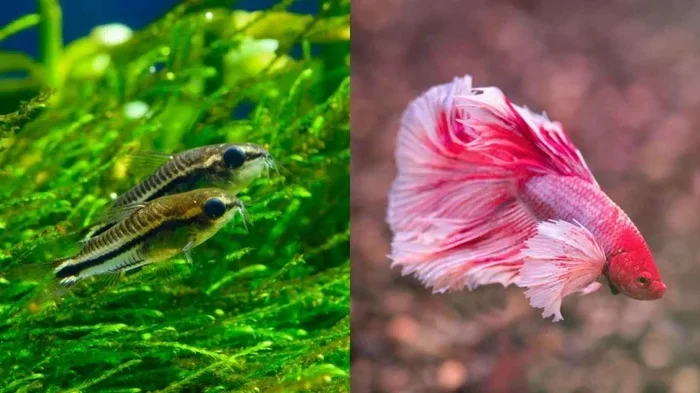
If you are genuinely passionate about having both species in your aquarium, there are cautious strategies you can follow to reduce risk and increase the odds of success. Before diving in, invest time in researching specific species within each category. Not all catfish are created equal, and some varieties behave much more like gentle garden dwellers than fearsome predators. Small, bottom‑dwelling catfish such as the Amethyst catfish (Silurgis flavens) or the White‑cheeked catfish (Corybatus bicolor) often tolerate more varied environments. By choosing a calmer variety, you give yourself a better chance at finding harmony.
Another solid approach involves setting up separate tanks that gradually merge. Start by housing the betta alone, then add the chosen catfish after the betta has settled and established territory. Place the newcomer in the opposite corner of the tank, allowing them to observe each other from a distance. Monitor their interactions daily, watching for signs of aggression such as repeated nipping attempts toward the betta’s fins or excessive tail dragging. If any tension appears, remove the catfish back to its own tank and reconsider.
Feeding both species appropriately contributes to a smoother transition. Feed the betta small amounts of high‑protein insects or frozen pellets twice daily, while the catfish receives larger portions of plant matter, worms, or commercial catfish pellets once or twice a day. Offering varied nutrition keeps both fish satisfied and less desperate for confrontation. Additionally, maintain pristine water quality through frequent partial water changes, careful waste removal, and adequate filtration capacity. Healthy fish are far more resilient to the stresses of mixed‑species environments.
Finally, never underestimate the power of observation. When two fish share a tank, spend extra minutes each day noting their behaviors. Are the betta actively hunting near the surface? Is the catfish lingering near the bottom or occasionally venturing upward? Track these patterns over weeks, and adjust husbandry practices accordingly. Patience and attentive care are your strongest tools when attempting anything beyond textbook recommendations.
## Better Fish for Your Betta’s Tanks
While the idea of hosting catfish with betta fish carries significant challenges, there are countless other fish that make excellent companions in a single aquarium. Choosing the right non‑competing partner depends on matching temperament, size, and dietary needs to your betta’s preferences. Below are several popular options that typically coexist peacefully with siamese fighters.
### Peaceful Bottom Dwellers
– Guppies – Bright, bubbly swimmers that occupy the upper levels, letting the betta focus on its own territory below.
– Neon Tetras – Colorful schooling fish that school in the middle layer, avoiding direct conflict with the betta’s surface predator instincts.
– Corydoras Catfish – Despite the name suggesting otherwise, these small, social catfish are actually very gentle and get along well with bettas in experienced setups.
– Hennecuss – A hardy, non‑aggressive cichlid that tolerates a wide range of conditions and provides visual interest.
### Active Midwater Companions
– Dwarf Gouramis – Similar fin‑length aesthetics to bettas but with milder personality, making them suitable for shared spaces.
– Kribensis – A peaceful labyrinth‑breeder that thrives in warmer water and rarely bullies smaller tank mates.
– Amano Shrimp – While not a fish, shrimp add movement and color while staying out of direct confrontations with bettas.
### Planted Tank Enhancers
– Java Moss – Provides natural hiding spots that both species appreciate without triggering territorial fights.
– Anubias Nana – A clinging plant that anchors itself to decor, reducing competition for primary housing space.
– Riccia – Soft texture adds visual depth and gives bettas a sense of security while catfish browse beneath.
Each of these choices aligns better with the betta’s natural preferences, offering a stable environment where neither species dominates. Remember that variety in diet and activity level enhances overall tank stability, and rotating stock periodically can keep fish engaged and prevent boredom.
## Common Myths About Catfish
One persistent misconception in the aquarium hobby is that any catfish species will automatically tolerate a betta companion. In reality, the term “catfish” encompasses dozens of genera, each with unique behaviors shaped by millions of years of evolution. Many people assume that seeing a catfish photoshopped next to a betta online proves compatibility, but that snapshot ignores the context provided by the species involved. For example, the African giant catfish (Pandaïrus malae) grows massive and is notorious for displaying violent territorial displays. Meanwhile, smaller species like the zebrafish catfish (Otocinclus cataractarum) are tiny, docile grazers that might appear agreeable at first glance. Always verify the exact taxonomy before committing to a mixed‑tank scenario.
Additionally, the notion that catfish are universally peaceful is equally unfounded. Some catfish serve as voracious scavengers that will tear apart any leftover food if left unattended. Others act as opportunistic predators that view a betta as a tasty snack, especially if the fish shows signs of weakness or exhaustion. These contradictions highlight why selecting a specific catfish breed is absolutely vital. Researching the individual species ensures you understand its typical temperament, size ceiling, and social needs before introducing it to your existing inhabitants.
By cutting through the oversimplified narratives and focusing on concrete biological facts, you’ll make smarter decisions that prioritize the welfare of both fish. The goal is always a balanced ecosystem where each inhabitant feels secure and able to express its natural behaviors. Only then can you confidently welcome additional guests into your home aquarium.
## Conclusion
Putting catfish with betta fish in the same tank is generally not advised because their differing ecological niches, temperaments, and environmental needs create more trouble than benefits. While creative approaches such as gradual introductions, selective species pairing, and meticulous husbandry can improve outcomes, the inherent incompatibility remains difficult to overcome. Instead of forcing these two distinctive species together, you might find greater satisfaction by exploring alternative tank mates that truly complement a betta’s lifestyle. Whether you opt for vibrant guppies, elegant neon tetras, or gentle corydoras, you’ll end up with a more stable and enjoyable underwater world. Take your time, prioritize research, and enjoy the rewarding journey of building a balanced aquarium that showcases the beauty of freshwater biodiversity without compromising the health of any resident.
Key Takeaways
- Species differences matter – Bettas and catfish have contrasting lifestyles, sizes, and behaviors.
- Compatibility is low – Most catfish breeds would be too aggressive for a betta’s well‑being in a shared home tank.
- Environment must match – Both species require specific temperature and water‑quality ranges that rarely align perfectly.
- Signs of stress – Aggressive bites, hiding, or loss of appetite signal that the pair isn’t working.
- Alternatives exist – There are many peaceful tank mates that suit a betta much better than catfish do.
- Gradual integration helps – Even when attempted, close monitoring prevents harm to either fish.
Frequently Asked Questions
What is can you put catfish with betta fish?
can you put catfish with betta fish is an important topic with many practical applications.