Not sure if your betta is a girl? This guide walks you through the key physical traits, fin shapes, and behavioral signs that reveal a female betta. Follow our simple steps and never guess again!
Key Takeaways
- Fin shape matters: Female bettas have shorter, less elaborate fins than males.
- Body width is a clue: Look for a fuller, “egg‑shaped” body in females.
- Vent (anus) location: A visible vent near the base of the anal fin signals a female.
- Behavioral hints: Less aggressive, more schooling‑like behavior often points to a female.
- Age influences visibility: Younger bettas show subtler differences; wait 3‑4 months for clearer signs.
- Use a magnifying glass: Small details become obvious with a little extra focus.
- Cross‑check with trusted resources: Compare your observations with expert guides for confidence.
📑 Table of Contents
- Introduction: Why Knowing the Sex of Your Betta Matters
- 1. Physical Characteristics That Reveal a Female Betta
- 2. Behavioral Signs That Hint at a Female
- 3. Practical Steps to Identify a Female Betta
- 4. Common Mistakes and How to Avoid Them
- 5. Why Proper Identification Improves Care
- Conclusion: Confidently Identify Your Female Betta
Introduction: Why Knowing the Sex of Your Betta Matters
Betta fish are stunning, vibrant, and full of personality. Whether you’re a beginner or a seasoned hobbyist, one of the first questions you’ll face is, “How to determine female betta fish?” Knowing the gender of your betta helps you make better decisions about tank setup, breeding, and even daily care.
Male bettas are famous for their flamboyant fins and territorial nature, while females are often more modest in appearance but can be just as lively. Getting the gender right prevents accidental aggression, ensures a happier community tank, and sets the stage for successful breeding if that’s your goal.
In this article we’ll break down every visual and behavioral clue, give you step‑by‑step methods, and share practical tips you can try today. By the end, you’ll be able to look at any betta and say with confidence, “That’s a female.”
1. Physical Characteristics That Reveal a Female Betta
1.1. Fin Length and Shape
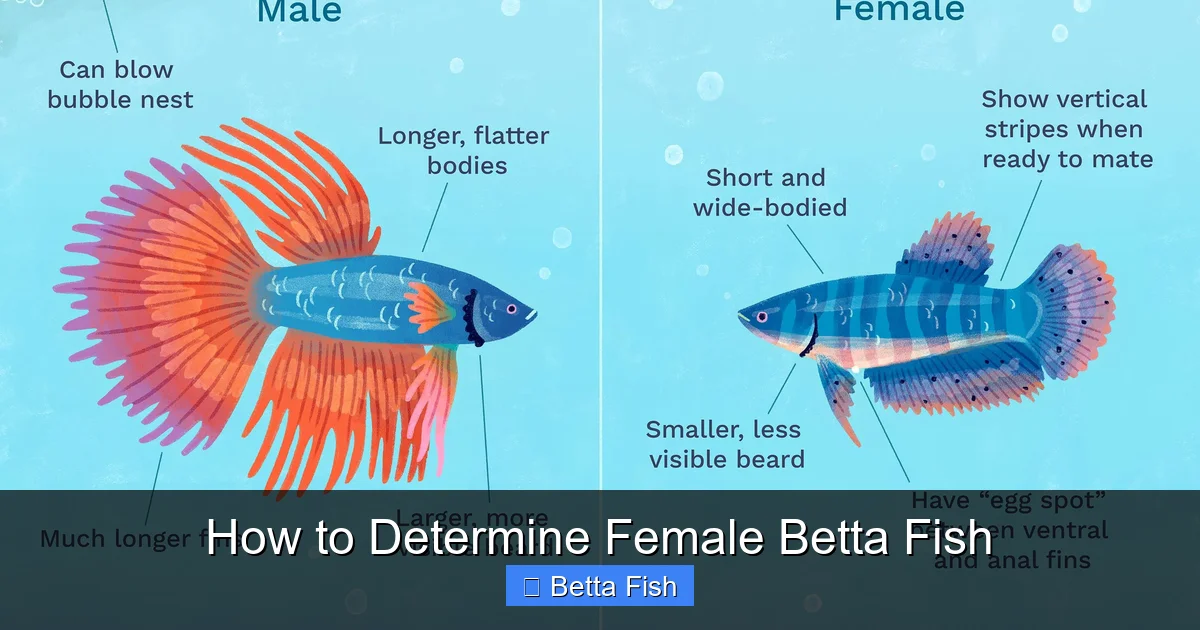
The most obvious difference lies in the fins. Male bettas develop long, flowing fins that can look like a lion’s mane. Female fins are shorter, more rounded, and lack the dramatic extensions. When you compare two fish side‑by‑side, the female’s dorsal and caudal fins will appear compact and less “fluffy.”
1.2. Body Thickness and “Egg‑Shape”
Females tend to have a fuller, more rounded abdomen—especially when they are mature and possibly carrying eggs. This gives them an “egg‑shaped” silhouette. Males usually have a slimmer, torpedo‑like body that tapers toward the tail.
1.3. The Vent (Anus) Location
Look at the base of the anal fin. Female bettas have a visible vent just below the fin, often appearing as a tiny slit or dot. In males, the vent is hidden under a more pronounced abdominal pouch and is harder to see.
1.4. Color Intensity
While both sexes can display brilliant colors, males often show brighter, more saturated hues, especially during breeding displays. Females may have softer tones, though this is not a foolproof indicator on its own.
2. Behavioral Signs That Hint at a Female
2.1. Aggression Levels
Male bettas are famously aggressive toward other males, flaring their gills and fins when they sense a rival. Females are generally less territorial and may tolerate other bettas better, especially in a community tank.

Visual guide about How to Determine Female Betta Fish
Image source: europarl.europa.eu
2.2. Schooling Tendencies
In a group, females are more likely to swim together or show curiosity toward tank mates. If you notice a betta that is less prone to flare and more interested in exploring, chances are she’s female.
2.3. Breeding Behavior
When a female is ready to spawn, she will display a “gravid” belly and may become more receptive to a male’s advances. Observing this behavior can confirm her sex, but it requires a male companion, which isn’t always practical.
3. Practical Steps to Identify a Female Betta
3.1. Use a Magnifying Glass or Smartphone Camera
Small details like the vent or fin edges can be missed with the naked eye. A simple magnifier or a close‑up phone photo makes these features pop.
Visual guide about How to Determine Female Betta Fish
Image source: thesprucepets.com
3.2. Compare Two Fish Side‑by‑Side
If you have both a male and a female, place them in the same tank (under supervision) and note the differences. This visual comparison is often the fastest way to learn.
3.3. Wait Until the Fish Is 3‑4 Months Old
Very young bettas (under 2 months) have underdeveloped sexual characteristics. Patience pays off—by the time they’re a few months old, the fin shape and body form become clearer.
3.4. Check the “Nape” Area
The nape (the area just behind the head) in males often has a small, raised ridge called the “nuchal hump.” Females lack this feature.
3.5. Reference Trusted Guides
Cross‑checking your observations with reputable sources can boost confidence. For a deeper dive, read How To Tell If Betta Fish Are Male Or Female for additional visual examples.
4. Common Mistakes and How to Avoid Them
4.1. Relying on Color Alone
Bright colors are not exclusive to males. Some female bettas, especially those selectively bred, can be just as vivid. Always combine color with fin shape and body form.
4.2. Ignoring the Vent
The vent is one of the most reliable indicators, yet many hobbyists overlook it. Take a moment to focus on the base of the anal fin—if you see a small slit, you likely have a female.
4.3. Mistaking a Juvenile for an Adult
Young fish have undeveloped fins and bodies, making gender identification tricky. Give them time to grow before drawing conclusions.
4.4. Over‑Aggressive Handling
Stress can cause a betta to hide its natural features. Handle your fish gently and observe in a calm environment for the most accurate assessment.
5. Why Proper Identification Improves Care
5.1. Tank Setup Choices
Females can often share a larger tank with other peaceful fish, while males usually need a solitary setup to prevent fighting. Knowing the sex helps you design the right environment.
5.2. Feeding Strategies
Female bettas may require slightly more protein during breeding periods. Adjusting diet based on gender can promote health and vitality.
5.3. Breeding Planning
If you plan to breed, identifying a healthy female is the first step. A correctly identified pair will have a higher success rate and fewer complications.
5.4. Health Monitoring
Some diseases manifest differently between sexes. For example, fin rot may progress faster in males with larger fins. Knowing the gender lets you spot warning signs early.
Conclusion: Confidently Identify Your Female Betta
Determining female betta fish isn’t a mystery reserved for experts. By focusing on fin shape, body thickness, vent location, and subtle behavioral cues, you can make an accurate call even as a beginner. Take your time, use a magnifier, and compare with trusted resources like How To Distinguish Male And Female Betta Fish. With practice, you’ll spot a female at a glance and provide the right care for a happy, healthy aquarium.
Frequently Asked Questions
How can I tell if my betta is a female without a male for comparison?
Focus on fin length, body shape, and the vent near the anal fin. Females have shorter fins, a rounder abdomen, and a visible vent.
Do all female bettas have the same color intensity as males?
No. While many females are less vivid, selective breeding can produce bright females. Color alone isn’t reliable for gender identification.
At what age is it safest to determine the sex of a betta?
Wait until the fish is about 3‑4 months old. Younger bettas haven’t developed clear sexual characteristics yet.
Can a female betta become aggressive like a male?
Females are generally less territorial, but they can show aggression if stressed or if their space is limited.
Is the vent visible in all female bettas?
Yes, the vent is typically visible as a small slit or dot beneath the anal fin in most healthy females.
Do I need a special tank setup for a female betta?
Females can often share a larger, well‑planted tank with peaceful tank mates, unlike males who usually need a solo setup.

