Which Fish Oil Is Better Salmon or Sardines
When choosing fish oil for your Betta fish, sardine oil is generally the superior choice over salmon oil. Sardine oil boasts a more favorable EPA to DHA ratio for inflammation and immunity, and crucially, sardines are low on the food chain, meaning they accumulate far fewer harmful contaminants like mercury and PCBs. While salmon oil is a powerful omega-3 source, its higher potential for toxin buildup makes sardine oil the safer, more targeted option for the sensitive systems of small, ornamental fish like Bettas. Always select a reputable, molecularly distilled product regardless of source.
Key Takeaways
- Sardine oil typically has a higher EPA content relative to DHA compared to salmon oil, which is beneficial for managing inflammation and supporting the immune system in Betta fish.
- Sardines are a “smaller” fish lower on the food chain, so they bioaccumulate significantly fewer ocean-borne contaminants like mercury, arsenic, and industrial chemicals than larger, predatory fish like salmon.
- Both oils are excellent sources of Omega-3 fatty acids (EPA and DHA), which are essential for Betta fish as they cannot produce them on their own, supporting fin health, vibrant coloration, and overall vitality.
- Salmon oil often has a higher overall DHA concentration, which is fantastic for neurological development and cognitive function, but this benefit must be weighed against its higher contaminant load for small fish.
- Sustainability is a key factor sardine populations are generally very robust and quickly reproducing, making their oil a more environmentally responsible choice than many wild-caught salmon fisheries.
- For Bettas, purity and safety are the ultimate priorities; the marginally higher EPA in sardine oil combined with its dramatically cleaner profile makes it the consistently recommended choice by advanced aquarists and fish health specialists.
- Processing matters more than the source fish alone; always choose oils that are molecularly distilled to remove impurities, regardless of whether they are derived from salmon or sardines.
📑 Table of Contents
- The Omega-3 Dilemma: Why Your Betta Needs Supplemental Fish Oil
- Nutritional Face-Off: Comparing Salmon Oil and Sardine Oil Profiles
- The Contaminant Question: Why the Food Chain is Everything
- Sustainability and Ethics: A Cleaner Conscience
- The Betta-Specific Breakdown: Why Sardines Often Win
- How to Choose and Use Fish Oil for Your Betta: A Practical Guide
- Conclusion: The Clear Choice for the Discerning Betta Keeper
The Omega-3 Dilemma: Why Your Betta Needs Supplemental Fish Oil
As a dedicated Betta fish keeper, you meticulously curate their environment—the perfect tank, the right heater, the ideal water parameters. But what about what’s inside them? The vibrant, flowing fins, the brilliant reds and blues, the energetic personality… all of that is fueled by nutrition. And at the heart of Betta nutrition are Omega-3 fatty acids, specifically Eicosapentaenoic acid (EPA) and Docosahexaenoic acid (DHA). These are essential fats; your Betta’s body cannot manufacture them. They must come from their diet.
In the wild, Bettas are micro-predators, consuming tiny crustaceans, insect larvae, and other small aquatic creatures that are themselves rich in these vital oils. In captivity, even high-quality Betta pellets often fall short in providing optimal, bioavailable levels of EPA and DHA. This is where a pure fish oil supplement becomes a game-changer. But when you stand in the supplement aisle, you’re faced with a fundamental question: which fish oil is better, salmon or sardines? It’s a deceptively simple question with profound implications for your Siamese fighting fish’s long-term health and beauty. The answer isn’t just about which has “more” omega-3s; it’s about the type of omega-3s, the purity of the product, and the unique, delicate biology of the Betta splendens.
Debunking the “More is Better” Myth
A common initial thought is to seek the fish oil with the highest total omega-3 content per serving. This logic, however, overlooks two critical nuances. First, the ratio of EPA to DHA matters immensely for different health outcomes. Second, and far more crucial for small fish like Bettas, is the issue of environmental contaminants. Larger, longer-lived fish higher on the oceanic food chain—like many salmon species—act like sponges for toxins. Smaller, short-lived fish like sardines simply don’t have the time to accumulate dangerous levels of heavy metals and industrial pollutants. Therefore, the “better” oil is the one that delivers the right fatty acids in the safest possible package.
Nutritional Face-Off: Comparing Salmon Oil and Sardine Oil Profiles
Let’s dive into the hard data. We’re comparing two distinct sources, each with its own biochemical signature. Understanding these profiles is the first step to making an informed choice for your Betta.
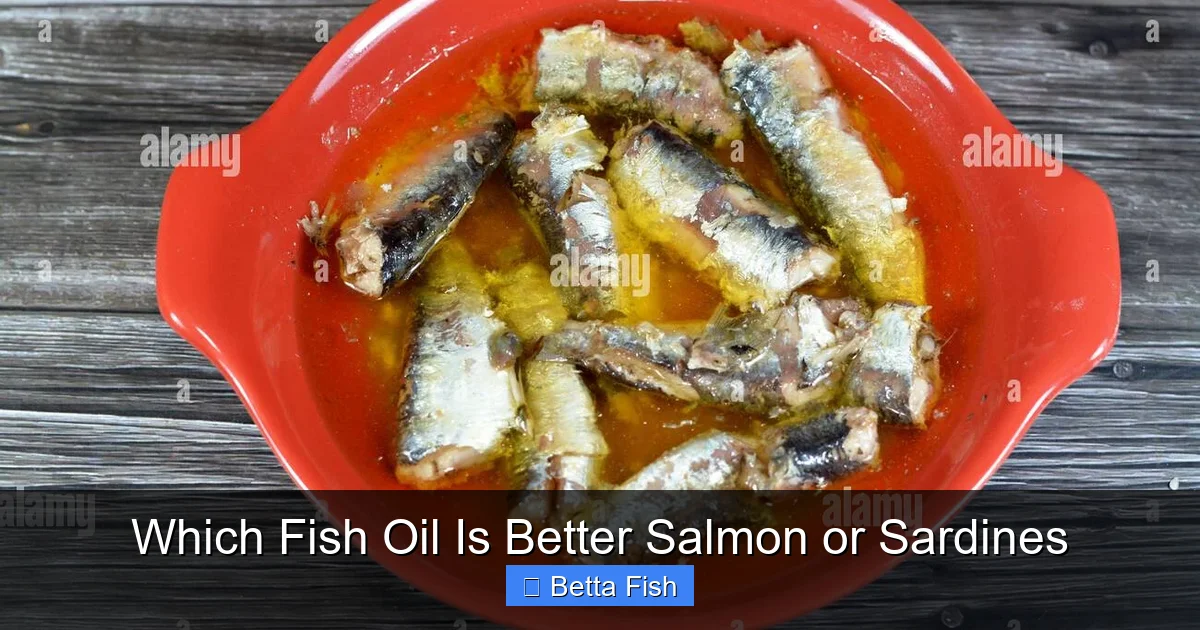
Visual guide about Which Fish Oil Is Better Salmon or Sardines
Image source: c8.alamy.com
The EPA/DHA Ratio: The Inflammation vs. Cognition Balance
EPA and DHA are both Omega-3s, but they play different primary roles. EPA is the champion of inflammation regulation. It helps produce compounds that resolve inflammation, which is vital for Bettas prone to fin rot, tail biting, or general stress responses. DHA is the structural superstar, a primary building block of cell membranes, especially in the brain and nervous system, supporting learning, memory, and neurological health. It also contributes to the stunning, pigment-rich coloration Bettas are famous for.
- Salmon Oil Profile: Typically contains a higher total volume of Omega-3s per gram. Its ratio often leans more heavily toward DHA. For example, a standard analysis might show 18% EPA and 12% DHA, or a ratio closer to 1.5:1 (EPA:DHA). This makes it excellent for cognitive support and color enhancement.
- Sardine Oil Profile: Often exhibits a more balanced or even EPA-dominant profile. A common sardine oil analysis might show 20% EPA and 10% DHA, a 2:1 ratio. This higher EPA concentration makes it particularly potent for modulating inflammatory responses and bolstering the immune system—two areas where captive Bettas frequently need support due to water quality stressors and confined environments.
Practical Takeaway for Your Betta: If your primary goal is to combat a current inflammatory issue (like recovering from fin damage) or provide a general immune boost, sardine oil’s EPA edge is meaningful. If you are focused on maximizing color intensity and supporting neurological function in a young, healthy Betta, salmon oil’s higher DHA is attractive. However, this single factor is almost always outweighed by the next, more critical category.
The Contaminant Question: Why the Food Chain is Everything
This is the non-negotiable, paramount consideration that tips the scales decisively for most Betta keepers. The principle is called bioaccumulation. Toxins like methylmercury, polychlorinated biphenyls (PCBs), dioxins, and various industrial chemicals persist in the marine environment. They are absorbed by plankton. Small fish eat plankton, accumulating the toxins from every plankton they consume. Larger fish eat many smaller fish, concentrating the toxins from hundreds or thousands of their prey. This process repeats up the food chain, resulting in massive toxin loads in apex predators.
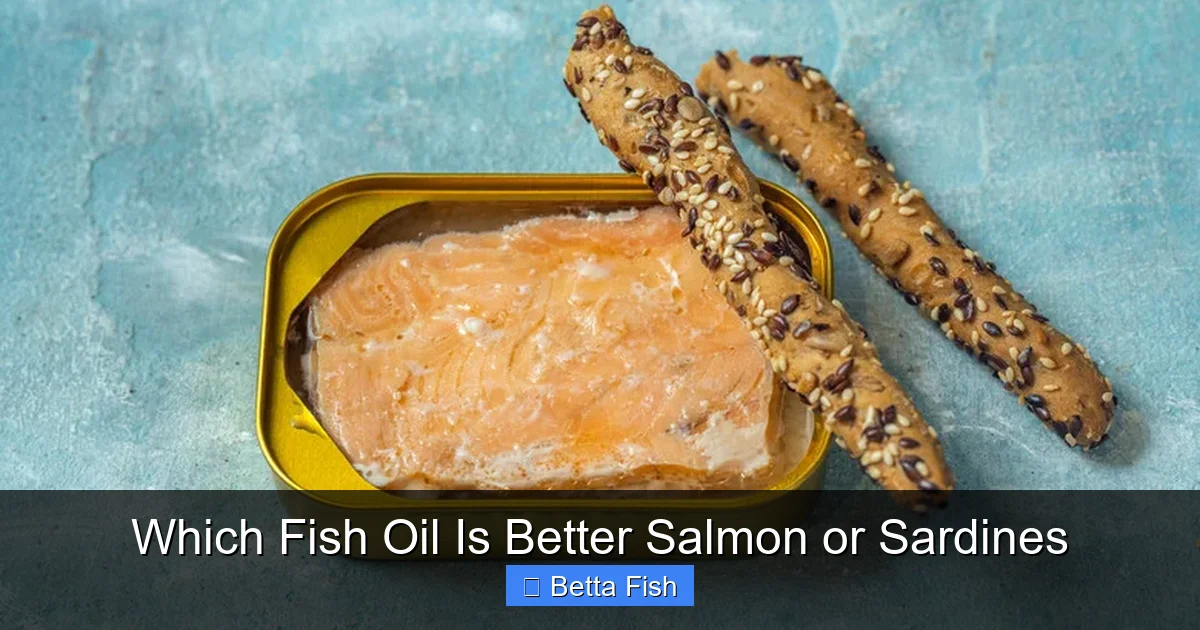
Visual guide about Which Fish Oil Is Better Salmon or Sardines
Image source: tastingtable.com
Salmon: The Predatory Position
Most salmon species (especially wild-caught King, Sockeye, and Atlantic salmon) are active, mid-to-upper-level predators. They spend years in the ocean, consuming other fish, krill, and squid. This lifestyle, while impressive, means they have ample opportunity to accumulate contaminants. Studies have consistently shown that salmon, particularly larger, older specimens, carry higher detectable levels of mercury, PCBs, and other persistent organic pollutants (POPs) than smaller forage fish. For a tiny Betta, whose entire body weight might be less than a single gram of tissue, introducing even minute amounts of these toxins is a significant concern. Their small size and sensitive physiology make them more vulnerable to the subtle, cumulative effects of heavy metal exposure, which can impact organ function over time.
Sardines: The Forage Fish Advantage
Sardines are the definition of a forage fish. They are small (usually under 6 inches), short-lived (often 5-7 years max), and they feed primarily on plankton and tiny krill. They occupy a much lower rung on the food chain. Because they don’t eat other fish, they simply do not accumulate toxins in the same way or to the same degree. A sardine’s contaminant load is inherently lower from the start. This isn’t to say sardines are toxin-free—no ocean fish is—but their baseline is dramatically cleaner. When you extract oil from sardines, you are starting with a much purer raw material.
The Visual Proof: Look for brands that provide a Certificate of Analysis (COA). You will often see sardine oil products testing at or near non-detectable levels for mercury, while some salmon oil COAs may show trace, though legally safe, amounts. For your Betta, “legally safe for humans” is not the same as “optimally safe for a 1-gram fish.” Sardine oil’s inherent purity provides a crucial margin of safety.
Sustainability and Ethics: A Cleaner Conscience
Beyond direct health impacts, the source of your fish oil has ecological consequences. The sustainability of the fishery is a valid and important part of the “which is better” equation.
Visual guide about Which Fish Oil Is Better Salmon or Sardines
Image source: thumbs.dreamstime.com
Salmon Fisheries: A Mixed Picture
Wild salmon fisheries are managed with varying degrees of success. Some, like certain Alaskan salmon runs, are considered among the best-managed and most sustainable in the world. However, others face pressures from overfishing, habitat degradation (like dammed rivers affecting spawning), and climate change impacting ocean temperatures and food sources. Furthermore, a massive portion of the salmon oil market comes from farmed salmon. Salmon farming has significant environmental drawbacks, including chemical use (pesticides, antibiotics), waste pollution, and the practice of feeding smaller wild fish (like anchovies and sardines) to the farmed salmon—a net loss of protein and an ecological inefficiency.
Sardine Fisheries: A Model of Resilience
Sardines are often hailed as one of the most sustainable seafood choices on the planet. They are incredibly prolific spawners, with a single female capable of producing tens of thousands of eggs. Their populations can fluctuate dramatically with ocean cycles (like El Niño), but when managed properly, sardine fisheries are highly resilient. They require no feeding—they are the food. Harvesting sardines for direct human or pet consumption is far more ecologically efficient than using them as feed for larger farmed fish. Organizations like the Monterey Bay Aquarium’s Seafood Watch consistently rate Pacific sardines as a “Best Choice” for sustainability.
Practical Tip: Look for certifications on the bottle. The Marine Stewardship Council (MSC) blue label is a reliable indicator of a sustainably managed wild fishery. Sardine oils are far more likely to carry this certification than salmon oils.
The Betta-Specific Breakdown: Why Sardines Often Win
Now, let’s connect all this science directly to your Betta fish’s unique needs. Bettas are not just small fish; they are anabantoids with a labyrinth organ, incredibly aggressive by nature, and often kept in less-than-ideal conditions (small tanks, poor water changes). Their health challenges are specific.
Immune System & Inflammation: The Daily Battle
Fin rot, velvet, ich—these are all conditions exacerbated by stress and underlying inflammation. Bettas are notorious fin nippers, often due to boredom or stress, creating open wounds prone to secondary bacterial infections. The anti-inflammatory properties of EPA are crucial here. Sardine oil’s typically higher EPA concentration provides a more direct tool for modulating this inflammatory response. A strong, well-regulated immune system is a Betta’s best defense, and EPA is a key modulator of immune cell function.
Fin Development and Regeneration
Those spectacular, flowing fins are made of delicate, feathery membranes. They require healthy cell membranes to grow and repair. Both EPA and DHA are integral to cell membrane fluidity and integrity. However, the process of fin regeneration after damage is an inflammatory one initially, requiring careful management. The EPA in sardine oil can help manage this initial inflammation, while the DHA (present in both oils) supports the rebuilding of strong, healthy tissue. Some advanced breeders anecdotally report slightly faster and stronger fin regrowth when using a high-EPA oil like sardine-based.
Sensitivity and Toxin Load: The Critical Factor
This is the clincher. A Betta fish weighs what? 1 to 3 grams fully grown. A standard human supplement dose is 1,000 mg (1 gram). You are giving a fraction of a fraction of that dose to your Betta—perhaps a tiny drop or a light coating on their food. Yet, even at that minuscule dose, the relative concentration of contaminants in the source oil matters profoundly. If the raw salmon oil has 5x the mercury of sardine oil, then your Betta is getting 5x the mercury dose from the same volume of oil, even after purification. Given their small size and long lifespans (3-5+ years in optimal care), minimizing any chronic, low-level toxic load is a prudent and caring choice. Sardine oil offers the simplest path to the purest supplement.
When Might Salmon Oil Be Considered?
There are niche scenarios. If you are breeding Bettas and want to potentially optimize the neurological development and coloration of offspring, a high-quality, molecularly distilled salmon oil could be cycled into the broodstock diet. For a large, robust Betta in a pristine, heavily planted tank with impeccable water quality, the difference might be negligible. But for the average keeper seeking a safe, effective, daily supplement for a pet Betta, sardine oil presents a lower-risk, high-reward profile.
How to Choose and Use Fish Oil for Your Betta: A Practical Guide
Assuming you’re now leaning toward sardine oil, or at least understand the priorities, here is how to select and apply this supplement effectively and safely.
1. Purity is Non-Negotiable: Look for “Molecularly Distilled”
This is the most important label term. Molecular distillation is a low-temperature vacuum process that removes virtually all mercury, PCBs, dioxins, and other contaminants based on their molecular weight. It does not significantly affect the beneficial omega-3s. Do not buy a fish oil for your Betta that does not explicitly state it is molecularly distilled. “Concentrated” or “pharmaceutical grade” are also good signs, but “molecularly distilled” is the gold standard.
2. Form Matters: Liquid vs. Capsules
For Bettas, liquid oil is the only practical choice. You need to be able to measure a microscopic amount. Capsules are for human consumption. Buy a liquid fish oil in an amber glass bottle (plastic can leach chemicals). It should have a mild, ocean-like smell, not a strong, rancid fish odor (which indicates oxidation).
3. Dosage: Less is More
This is where many well-meaning owners err. Over-supplementation is dangerous. Fish oil is fat-soluble and can contribute to fatty liver disease if given in excess. A safe, effective dosage for a Betta is extremely small.
- Method A (Direct): Using a glass dropper, place 1 single, tiny drop (less than 0.05 ml) directly onto the water surface near your Betta once or twice a week. The oil will spread. This is best for single-fish tanks.
- Method B (Food Coating): Place your Betta’s pellet or a few frozen daphnia in a small dish. Add one tiny drop of oil and stir gently to coat. Feed immediately. This is the preferred method as it ensures ingestion and minimizes oil on the water surface, which can gunk up filters and reduce gas exchange.
- Frequency: Start with once a week. Observe your Betta. For maintenance, 1-2 times per week is sufficient. If addressing a specific health issue like fin rot, you might increase to every other day for a short 2-3 week period, then return to maintenance.
4. Storage: Keep it Fresh
Omega-3s are highly perishable and oxidize quickly when exposed to light, heat, and air. Always store your bottle in the refrigerator. Use it within 6-8 weeks of opening. Discard if it develops a sharp, pungent, rancid smell.
5. A Word on “Betta-Specific” Blends
You may find oils marketed specifically for Bettas or tropical fish. These are often just rebranded general fish oils with a huge markup. Your best bet is to buy a high-quality, human-grade sardine or salmon oil from a reputable supplement brand (look for third-party testing seals like IFOS, USP, or NSF) and use the minute dosing methods described above. It’s purer and more cost-effective.
Conclusion: The Clear Choice for the Discerning Betta Keeper
The debate of “salmon or sardines” for fish oil is a classic case of a simple question revealing complex layers. On paper, both are exceptional sources of the essential Omega-3 fatty acids your Betta needs to thrive. Salmon oil offers a slightly higher DHA punch, potentially superb for color and brain health. However, when we apply the specific, sensitive context of the Betta fish—its tiny size, its susceptibility to stress and inflammation, its long-term health in a captive environment—the scales tip decisively.
Sardine oil’s inherent advantage lies in its purity and its EPA profile. Born from a short-lived, plankton-eating fish low on the food chain, it starts with a dramatically lower burden of ocean contaminants. This provides an indispensable margin of safety for your small, long-lived companion. Its typically higher EPA to DHA ratio aligns perfectly with the daily immune and inflammatory support needs of a Betta living in our care. When combined with the superior sustainability of sardine fisheries, the choice becomes even clearer.
Ultimately, the “better” fish oil for your Betta is the purest, most contaminant-free oil you can provide. That almost always points to a high-quality, molecularly distilled sardine oil. It is the supplement that delivers profound benefits with the absolute minimum of risk—the very definition of optimal care. By choosing sardine oil and dosing it with the respect its potency demands, you are not just adding a supplement; you are investing in the fundamental cellular health that will manifest as stronger fins, brighter colors, a more resilient immune system, and a longer, more vibrant life for your beloved Betta.
Frequently Asked Questions
Can I use my own human fish oil capsules for my Betta?
No, you should not use human fish oil capsules intended for oral consumption. The dosage is impossible to measure accurately for a Betta, and the capsule ingredients (gelatin, fillers) are unnecessary and can foul the water. Always use a pure, liquid, molecularly distilled fish oil where you can control the tiny dose.
How quickly will I see results from adding fish oil to my Betta’s diet?
Visible results like improved fin quality or enhanced color typically take 4-6 weeks of consistent supplementation, as the fatty acids need to be incorporated into cell membranes. Improvements in immune response and reduced inflammation can be more subtle and internal, but you may notice better recovery from minor injuries or reduced stress signs over the same period.
Is there a vegetarian or algae-based alternative to fish oil for my Betta?
Yes, algae oil is a direct source of DHA and some EPA, as algae are where fish originally get their omega-3s. However, algae oils for humans are often DHA-dominant and can be very expensive. For a Betta, a high-quality algae oil could be used, but the EPA profile may not be as optimal for inflammation as sardine oil. It is a viable, contaminant-free option if carefully sourced.
What happens if I accidentally give my Betta too much fish oil?
A single large overdose might cause digestive upset or temporary cloudiness in the water from excess oil. Chronic over-supplementation is the real risk, as it can lead to fatty liver disease and suppress the immune system. This is why the “less is more” dosing principle is critical. If you suspect an overdose, perform a water change and skip supplementation for a week.
My fish oil smells fine, but it’s a year old and unopened. Is it still good?
Probably not. Even unopened, fish oil degrades over time. Rancid oxidized oil is pro-inflammatory and harmful, providing no benefits and potentially damaging cells. Always check the “best by” date. Once opened, the clock starts ticking much faster (6-8 weeks refrigerated). When in doubt, throw it out—your Betta’s health is not worth the risk.
Will adding fish oil make my Betta’s tank water cloudy or smelly?
It can if you over-dose or add it directly to the water without using the food-coating method. A single tiny drop properly coated on food should not affect water quality. Any oil that gets into the water will eventually form a thin film and be filtered out or absorbed. Using the food method is the cleanest way to supplement.