How Does a Betta Fish Have Babies
So how does a betta fish have babies? The process starts with a male building a bubble nest, followed by a courtship dance, egg laying, and fertilization. Understanding the betta fish breeding process helps you create the right conditions for healthy fry. This guide walks you through every stage of betta fish reproduction in simple, easy-to-follow steps.
Have you ever wondered how does a betta fish have babies? It is a fascinating process that is very different from how mammals reproduce. Betta fish do not give live birth. Instead, they lay eggs, and the male plays a big role in raising them.
If you have ever kept bettas, you know they are beautiful and full of personality. But watching them breed is a whole new experience. The process involves bubble nests, colorful courtship dances, and careful parental care. In this guide, we will walk you through every step of betta fish reproduction.
Whether you are a beginner or an experienced fish keeper, understanding the betta fish breeding process helps you set up the right environment. You will learn what happens before the eggs, during mating, and after the babies hatch. Let us dive in and explore the incredible journey of how betta fish bring new life into the world.
Key Takeaways
- Betta fish are egglayers: The female releases eggs and the male fertilizes them externally.
- A bubble nest is essential: The male builds a nest of bubbles at the water surface to hold the eggs.
- Proper tank setup matters: Warm water, gentle filtration, and hiding spots make breeding successful.
- A female can lay 30 to 500 eggs: The number depends on her age, health, and conditions.
- Fry need special care: Baby bettas require tiny food and clean water to survive their first weeks.
- Separate the parents after breeding: Both male and female may eat the eggs or fry if left together.
- Patience is key: The full breeding cycle from courtship to free-swimming fry takes about 2 to 3 days.
📑 Table of Contents
The Betta Fish Breeding Process
Betta fish breeding is a carefully orchestrated process. Every step matters for successful reproduction. The male and female each have specific roles. Understanding these roles helps you support them properly.
Step 1: Preparing the Breeding Pair
Before breeding can happen, you need a healthy male and a healthy female. Not just any two bettas will breed successfully. Both fish need to be mature, well-fed, and kept in good conditions.
Here is what to keep in mind:
- Age: Both fish should be at least 4 to 6 months old.
- Health: Look for bright colors, active behavior, and a healthy appetite.
- Conditioning: Feed both fish high-quality food for 1 to 2 weeks before breeding.
- Separate housing: Keep the male and female in separate tanks until you are ready to breed them.
If you are new to keeping both sexes together, check out our guide on can you have a male and female betta fish for important tips on safe introductions.
Step 2: The Bubble Nest
This is one of the most interesting parts of betta fish reproduction. The male builds a bubble nest at the surface of the water. These nests are made of tiny air bubbles coated with saliva.
The bubble nest acts as a nursery for the eggs. The male carefully constructs it over several hours or even days. A good nest is round and fluffy. It should sit firmly at the water surface.
Here is what triggers bubble nest building:
- Warm water temperature: Ideally between 78 and 82 degrees Fahrenheit.
- Low water flow: Gentle or still water makes nest building easier.
- Proper nutrition: A well-fed male is more likely to build a strong nest.
If the male does not build a nest, do not worry right away. Sometimes it takes a little time. Adjusting the water temperature and reducing flow often helps.
Step 3: The Courtship Dance
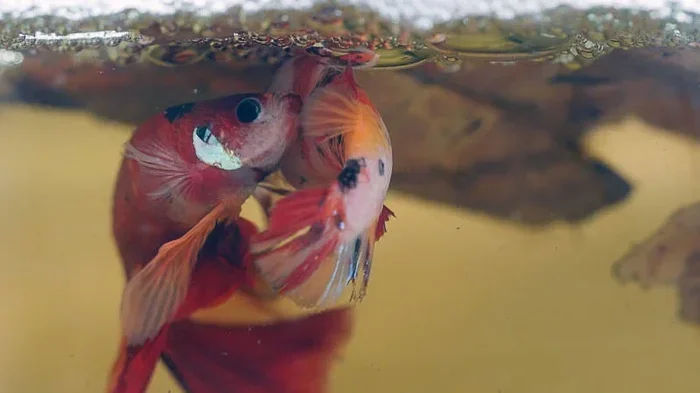
Once the bubble nest is ready, the male starts courting the female. This is where things get really fun to watch. The male flares his fins and wraps his body around the female.
The courtship dance can last from a few hours to a full day. During this time, the female releases eggs and the male fertilizes them. It is a delicate process that requires calm water and no disturbances.
Betta fish breeding behavior includes several signs of a successful courtship:
- The male wraps around the female repeatedly.
- The female releases a cluster of eggs each time.
- The male picks up the eggs and places them in the bubble nest.
- Both fish may show darker coloring during the process.
After the eggs are all collected in the nest, the female usually loses interest. At this point, it is important to remove the female from the tank. The male becomes protective and may harm her if she stays too long.
How Does a Male Betta Fish Fertilize the Eggs
The fertilization process in bettas is unique. Unlike some fish that fertilize eggs inside the body, bettas do it externally. The male releases milt (sperm) over the eggs as the female lays them.
Here is how it works step by step:
- The female releases a small batch of eggs.
- The male immediately releases milt to fertilize them.
- The male picks up the fertilized eggs in his mouth.
- He carries them to the bubble nest and places them carefully.
- This process repeats until all eggs are fertilized and nestled.
The male betta fish plays a very active role. He is essentially a single father from the moment the eggs are laid. He guards the nest, repairs it if needed, and keeps the eggs oxygenated by gently blowing bubbles.
For a deeper look at this process, read our article on how a male betta fish fertilizes the eggs.
What Happens If the Nest Breaks
Sometimes the bubble nest can break or fall apart. This is not the end of the world. The male will usually rebuild it. However, if the nest breaks repeatedly, it may signal a problem with water conditions or surface agitation.
Keep the water surface still and warm. Avoid strong filter outflows that push against the surface. A gentle sponge filter works best during the breeding phase.
How Many Eggs Does a Betta Fish Lay
Now that you understand the fertilization process, you may be wondering about quantity. How many eggs can a female betta produce in one spawning session?
A healthy female betta can lay anywhere from 30 to 500 eggs in a single batch. The number depends on several factors:
| Factor | Effect on Egg Count |
|---|---|
| Age | Younger females tend to lay fewer eggs |
| Size | Larger females generally produce more eggs |
| Health | Well-fed, healthy females lay more eggs |
| Water Quality | |
| Spawning Experience | First-time mothers may lay fewer eggs |
Not all eggs will hatch, and not all fry will survive. In the wild, many eggs are lost to predators and environmental factors. In a home aquarium, you can improve survival rates with proper care.
For more details on egg counts, check out our article on how many eggs a betta fish lays.
Setting Up the Right Breeding Tank
The environment where breeding happens makes a huge difference. A proper betta fish tank setup for breeding is not the same as a regular home aquarium. You need to create conditions that mimic the betta’s natural breeding habitat.
Tank Size and Setup
A breeding tank does not need to be large. A 5 to 10 gallon tank works perfectly. The key is to keep the water surface calm so the bubble nest stays intact.
Here is a simple setup checklist:
- Tank size: 5 to 10 gallons is ideal.
- Water temperature: Keep it between 78 and 82 degrees Fahrenheit.
- Gentle filter: Use a sponge filter with very low flow.
- Floating plants: These provide hiding spots and help support the bubble nest.
- No gravel substrate: A bare bottom tank makes cleaning easier.
- Dim lighting: Soft light reduces stress for both fish.
If you are unsure about tank sizing, our article on how big a betta fish tank needs to be has helpful guidelines for any setup.
Water Conditions for Breeding
Clean, warm water is the foundation of successful betta fish breeding. Here are the ideal parameters:
- Temperature: 78 to 82 degrees Fahrenheit (25 to 28 degrees Celsius).
- pH level: Between 6.5 and 7.0.
- Water hardness: Soft to moderately hard (3 to 15 dGH).
- Ammonia and nitrite: Must be at zero.
- Nitrate: Below 20 ppm.
Test the water before introducing the fish. Any spikes in ammonia or nitrite can stress both the male and female, which can ruin the breeding attempt.
Caring for Betta Fish Babies (Fry)
Once the eggs hatch, you enter the most delicate phase of the entire process. Baby bettas, called fry, are incredibly tiny and fragile. They need special care to survive their first few weeks of life.
What Do Betta Fry Eat
Fry cannot eat regular fish food. Their mouths are simply too small. They need very fine, live or frozen food that they can easily consume.
Here are the best food options for betta fry:
- Infusoria: Tiny organisms that grow in cultured water. Perfect for the first few days.
- Baby brine shrimp: A nutritious live food that fry love.
- Microworms: Small nematodes that are easy to culture at home.
- Crushed flake food: Only after the fry are a few days old and big enough.
Feed the fry small amounts several times a day. Overfeeding can dirty the water quickly, which is dangerous for such tiny creatures.
Water Maintenance for Fry
Clean water is critical for baby bettas. But you must be very gentle when changing water. Even small water changes can harm or kill fry if done too aggressively.
Follow these tips for fry water care:
- Change 10 to 20 percent of the water daily.
- Use water that matches the tank temperature exactly.
- Siphon gently to avoid sucking up the fry.
- Keep the tank covered to maintain humidity, which helps fry develop their labyrinth organ.
After about 3 to 4 weeks, the fry will start to look like tiny versions of adult bettas. At this point, you can begin feeding them slightly larger food and gradually transition them to a normal feeding schedule.
When Can Fry Be Separated
Once the fry are free-swimming and about half an inch long, they can be moved to their own growing tanks. Keeping them separated prevents overcrowding and gives each fish room to grow properly.
If you are wondering how many babies betta fish typically have and how to manage them, our article on how many babies betta fish have provides more detailed numbers and management tips.
Common Mistakes to Avoid During Breeding
Breeding bettas can be rewarding, but it is easy to make mistakes. Here are some common errors that beginner fish keepers make:
- Skipping the conditioning phase: Both fish need proper nutrition before breeding. Do not rush this step.
- Leaving the female in the tank too long: The male may become aggressive and harm her after breeding.
- Using too strong a filter: The water flow can destroy the bubble nest and stress the fish.
- Overcrowding the breeding tank: A small, focused tank works better than a large community setup.
- Feeding fry too much: Excess food fouls the water fast. Feed small amounts frequently.
- Ignoring water quality: Fry are extremely sensitive to ammonia and nitrate spikes.
Avoiding these mistakes gives your breeding pair the best chance of success and helps more fry survive to adulthood.
Expert Insights on Betta Fish Reproduction
Experienced betta breeders emphasize patience and observation. Every breeding pair is different. Some pairs breed easily on the first try, while others need several attempts before they are successful.
Here are a few expert tips that make a real difference:
- Watch the water temperature closely. Even a one-degree drop can delay or prevent breeding.
- Use a divider tank first. Let the pair see each other before full introduction. This reduces stress.
- Do not panic if the male eats some eggs. This is normal behavior, especially for first-time fathers.
- Be ready to act fast. If you notice the male ignoring the nest, check the water conditions immediately.
Remember, betta fish breeding is a natural process. With the right setup and a little patience, your fish can successfully produce healthy fry. The key is to create a calm, clean, and warm environment that supports every stage of reproduction.
Conclusion
How does a betta fish have babies? The answer lies in a beautiful, multi-step process that starts with bubble nests and ends with tiny fry swimming in your tank. From courtship to fertilization to hatching, every stage requires the right conditions and a little care from you.
The male betta fish takes on the role of a devoted father, building a nest, fertilizing the eggs, and guarding them until they hatch. The female contributes by releasing healthy eggs during spawning. Together, they create the next generation of these stunning fish.
If you are thinking about breeding your bettas, start with healthy fish, a proper tank setup, and the right food. Be patient, watch closely, and enjoy the process. Raising betta fry is one of the most rewarding experiences in the hobby.
With the knowledge you now have, you are well-equipped to support your bettas through their breeding journey. Good luck, and happy fish keeping!
Frequently Asked Questions
Do betta fish have live babies or eggs?
Betta fish are egglayers, not livebearers. The female releases eggs into the water, and the male fertilizes them externally. He then collects the eggs and places them in his bubble nest until they hatch.
How long does the betta fish breeding process take?
The full process from courtship to free-swimming fry takes about 2 to 3 days for the eggs to hatch, and around 3 to 4 weeks for the fry to become independent. The entire journey from mating to mature juveniles can take several months.
Can you breed betta fish in a community tank?
It is not recommended. Breeding bettas need a separate, controlled environment. A community tank has too many variables, including other fish that may eat the eggs or stress the breeding pair.
Why did my male betta fish eat the eggs?
Egg eating is common, especially with first-time fathers. It can happen if the nest is disturbed, water conditions are poor, or the male is simply inexperienced. Try again with better conditions and minimal tank disturbances.
What should I feed betta fry?
Start with infusoria or liquid fry food for the first week. Then introduce baby brine shrimp and microworms. As they grow, you can gradually offer crushed flake food and small pellets.
How many babies do betta fish have in one batch?
A healthy female can lay between 30 and 500 eggs per spawning session. Not all will hatch, and not all fry will survive. On average, you can expect around 50 to 100 surviving fry per batch with good care.