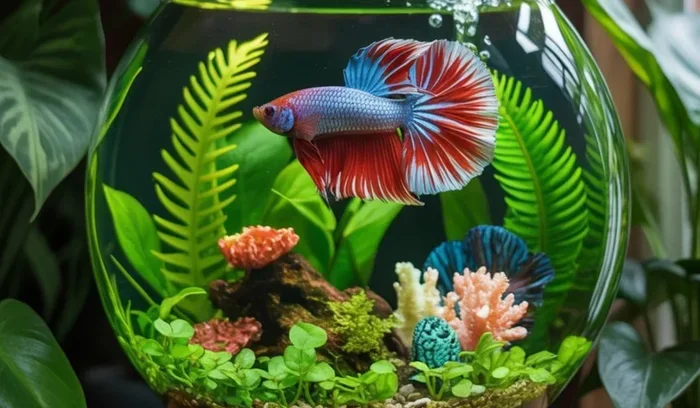
Can You Put Betta Fish With Guppies Together In The Same Tank
Can you put betta fish with guppies together? Usually, no. Most male bettas may chase or bite guppies, and long fins can draw attacks, so learn how to judge the risk, set up the tank, and spot danger signs early.
Can you put betta fish with guppies together in the same tank? Usually, no. A male betta may see bright, long fins as a threat or food.
Some female bettas may tolerate guppies, but risk stays. Watch for harm.
Key Takeaways
- Most male bettas should stay solo: Guppies can look like rivals or prey, especially when they have long fins.
- Female bettas are not a guarantee: Some may tolerate guppies, but others can still chase or bite.
- Tank size matters: A 20-gallon long tank gives both fish more room and more hiding spots.
- Guppies need a group: Keep at least six healthy male guppies so they do not feel isolated.
- Watch for stress: Chasing, fin loss, hiding, and stopped eating are serious warning signs.
- Separate at once: Do not wait if your betta attacks a guppy.
📑 Table of Contents
1. Can You Put Betta Fish With Guppies Together? The Short Answer
Can you put betta fish with guppies together? For many homes, the answer is no. Bettas are solitary and territorial once they settle. Guppies are active, colorful, and often have soft, flowing fins. That mix can turn a small mistake into an injury.
If you want a wider look at guppy and betta tank risks, review that guide before choosing any companion. Tank size, fish history, fin shape, and water care all change the risk.
A small bowl is never a good shared home. Bettas need stable heat, gentle flow, and space to claim. Guppies need room to swim as a group. A cramped tank makes both species more tense.
Quick comparison
| Factor | Lower-risk choice | Higher-risk choice |
|---|---|---|
| Betta type | Calm female betta | Active male betta |
| Guppy type | Fast, short-finned guppies | Slow, fancy, long-finned guppies |
| Tank setup | Large, planted, and cycled tank | Small, bare tank |
| Past behavior | Betta has lived calmly with small fish | Betta chases glass or other fish |
The safest choice is a solo tank for an active or unknown betta. A shared tank is an experiment, not a promise. Never add a guppy just to test the betta.
2. Why Betta and Guppy Tank Mates Often Clash
Bettas evolved to defend territory and chase small prey. A guppy’s quick motion, bright color, and fin can trigger that drive. The betta may strike once, then keep chasing. Even one chase can leave a guppy too scared to eat.
This is a form of betta aggression. It is not revenge, and it is not a personality flaw. It is a mix of instinct, space, and past experience.
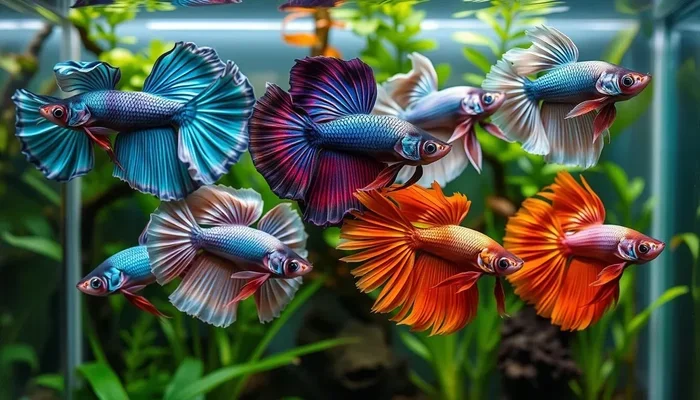
Guppies are social fish. Their schooling behavior helps them feel safe. In a betta tank, one bold fish may chase the group, while the others have few safe places to hide.
A female betta with guppies may be calmer than a male, but it is not a safe default. Some females guard a corner just as strongly as males. Others nip fins when stressed or hungry.
Stress can turn a calm tank mean
A cycled aquarium with stable water parameters lowers risk. Poor water cycling, high waste, or a strong filter can raise it. Bettas also react badly to sudden changes in heat, light, or decor.
- Ammonia or nitrite above zero can make fish irritable.
- A new fish can make a betta defend its space.
- Too much food or too little food can increase conflict.
- A sick betta may become more active and hard to read.
The guppies can suffer too. A dominant guppy may bully the group, even if the betta stays calm. A good setup must protect every fish, not just the betta.
3. When a Shared Tank May Be Worth Trying
A shared tank is not impossible. It only makes sense when many green lights line up. If even one key condition is missing, choose a different plan.
Green-light checklist
- Your betta has lived calmly with small community fish before.
- You use a female betta or an unusually peaceful male. A female is not a guarantee.
- The tank is at least 20 gallons and has a long swim area.
- The tank is fully mature, filtered, heated, and tested.
- You keep six to eight healthy male guppies, not one lonely fish.
- The guppies are fast, short-finned, and not easily frightened.
- The tank has plants, caves, and clear hiding spots.
- No fish has shown fin nipping, chasing, or injury in the past.
These points do not make the setup risk-free. They only make the risk easier to judge. A peaceful betta in a rich tank may do better than an active betta in a bare tank.
Avoid long-finned guppies
Long-finned guppies are more likely to be targeted. Slow, delicate fins are easy to catch. Avoid fancy-tail guppies in a betta tank. A bold, short-finned guppy is still not safe, but it has a better chance of staying out of reach.
Why a group matters
Guppies feel safer in a group. A single guppy has no school to follow, and the betta can focus on it. A group of six to eight gives each fish more chances to move away. Use male guppies only, since they will not fill the tank with fry.
Do not use a live fish as a test
Do not add one guppy and wait to see what happens. If the betta attacks, the guppy may be hurt before you can act. A mirror can also stress a betta. Use past behavior and careful planning instead.
4. How to Set Up the Tank Safely
A safe setup starts before any fish meet. Build a calm home first. Then watch each fish for days. A good planted aquarium gives both species more choice and fewer sudden face-to-face meetings.
Water and tank basics
Use a 20-gallon long tank or larger when possible. This gives the betta a territory and gives guppies room to spread out. Keep the tank fully mature before adding community fish. A new tank can swing in water parameters, which adds stress.
- Keep the water temperature near 78°F and avoid sudden swings.
- Keep ammonia and nitrite at zero.
- Keep nitrate low, ideally under 20 ppm.
- Use gentle aquarium filtration and aim the flow away from the betta’s resting spot.
- Change about 20% to 30% of the water each week, if needed by your test results.
Guppies like slightly hard, alkaline water. Bettas do best in stable water they know. Test the water rather than guessing. A filter that is too strong can tire a betta, while a weak filter can let waste build.
Add cover and visual barriers
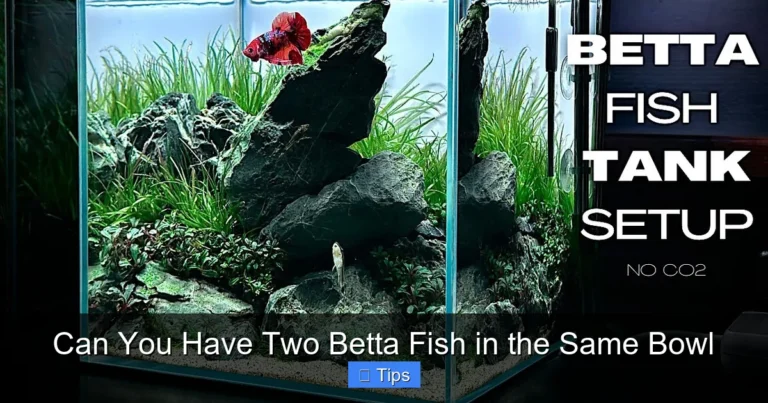
Use live or soft silk plants, floating leaves, caves, and a background. Add a shelf or dense plant cluster to break the view. These visual barriers stop one fish from blocking every route. They also let each species choose its own zone.
Do not fill the tank with tight decorations. Fish still need open swim space. Do not use sharp plastic that can tear fins. Make sure the filter intake has a guard.
Use a quarantine period
Keep every new fish separate for two to four weeks. This quarantine period helps catch illness before it reaches the main tank. Feed, test, and observe the guppies on their own first.
Quick tip: use a tank divider, not a dare
A clear tank divider can help you watch reactions before a full meet. Place the guppies on one side and the betta on the other. Watch for repeated lunging, flaring, or refusal to eat. If you see those signs, stop.
If the betta stays calm, you may try a short supervised meet after removing the divider. There is no safe way to force this. Be ready to separate them at once. Never reach in with your hand if a fight starts. Use a divider, a clean container, or a soft barrier.
After the setup, feed each group in a way that reduces rivalry. Drop small amounts in more than one place. Remove uneaten food. Check fins and behavior every day for the first week, then keep a close eye on changes.
5. Common Mistakes and Warning Signs
Most bad shared tanks come from a simple mistake. The fish may look fine at first, then fail after days of stress. Watch actions, not just appearances.
Warning signs in the betta
- Repeated chasing, even when the guppies are far away.
- Biting or pulling at guppy fins.
- Flaring, side-on posing, or striking the glass.
- Staying near the top and waiting for movement.
- Refusing food because it is focused on the other fish.
One flare can be normal. Repeated, targeted behavior is not. If a guppy loses fins, floats oddly, hides all day, or stops eating, treat it as a serious stress signal.
Common setup mistakes
- Keeping only one guppy instead of a small group.
- Choosing slow, fancy, or very long-finned guppies.
- Using a small tank with few hiding spots.
- Adding fish before the tank is cycled.
- Assuming a female betta will always be safe.
- Rearranging the tank right before adding new fish.
- Trying to fix a fight with a mirror or extra feeding.
Expert insight: judge the whole tank
A shared tank is a small guppy community tank, not just a betta tank. Watch the guppies when the betta is resting. If they cluster at the top, dart at every shadow, or refuse food, the setup is not working. A calm betta does not erase guppy stress.
The tank hierarchy also matters. One bold guppy may start trouble, and the betta may join in. More space and cover give weaker fish a chance to move. Still, cover cannot cancel a strong hunting drive.
What to do if trouble starts
- Separate the fish at once.
- Keep the injured fish in clean, warm water.
- Do not return it until fins have healed and behavior is stable.
- Return the betta to a calm solo setup if needed.
- Choose another compatible fish for the next plan.
Do not wait for a wound to get worse. A small fin nick can turn into a larger problem. Quick action protects both fish and saves time.
6. Conclusion: Is It Worth Trying?
Can you put betta fish with guppies together? Sometimes, but most homes should not try. A male betta often sees guppies as rivals or food. Long fins, a small tank, and a new fish can raise the risk.
A female betta may be calmer, and a well-planted 20-gallon tank may help. Yet neither one guarantees safety. The best plan is to use a peaceful, proven betta, a full group of fast male guppies, and a tank with many escape routes.
If you want a calm aquarium with less risk, keep the betta solo or choose tank mates that match its needs better. If you do try this pairing, watch daily and separate at the first real attack. Your betta and guppies will be safer when you put care before curiosity.
Frequently Asked Questions
Can a male betta live with guppies?
Usually, no. A male betta may chase, bite, or nip the fins of guppies, especially long-finned ones. A solo tank is the safer choice.
Can a female betta live with guppies?
Maybe, but it is not guaranteed. A calm female betta may tolerate fast, short-finned guppies in a large, planted tank. Watch closely and separate at the first attack.
What type of guppy is least risky?
Bold, short-finned guppies are less likely to be caught than fancy or slow types. A group of healthy male guppies also helps. No type is risk-free with a betta.
How big should the tank be?
A 20-gallon long tank or larger is a safer starting point. It gives the betta room to claim a zone and lets guppies spread out. Always use a cycled tank, heater, filter, and plenty of cover.
How many guppies can you keep with a betta?
Keep at least six guppies if you try this pairing. More can reduce stress, but you must match the number to tank size and filter strength. Male guppies are the better choice because they do not breed nonstop.
What should I do if my betta attacks a guppy?
Separate them right away. Use a divider or clean container, not your hand. Keep the injured fish in warm, clean water and consider a solo setup for the betta.