How Many Gallons Should A Betta Fish Have For A Happy Life
Betta fish need at least 5 gallons of water to thrive and stay healthy. A larger tank gives them more space to swim and helps keep the water clean. When you ask how many gallons should a betta fish have, the answer is simple: bigger is always better for their well-being.
Betta fish are some of the most popular pets in the world. They are beautiful, colorful, and full of personality. Many people buy them because they look amazing in small bowls or tiny tanks. But here is the hard truth: those small setups are not good for them. If you want your betta to live a long and happy life, you need to think about tank size from the start.
One of the most common questions new fish keepers ask is how many gallons should a betta fish have. The answer might surprise you. It is not about fitting the fish into the smallest possible space. It is about giving them room to swim, clean water to breathe, and a stable environment to thrive. In this guide, we will break down everything you need to know about betta tank sizes, why it matters, and how to choose the right setup for your fish.
Key Takeaways
- Minimum Tank Size: A betta fish needs at least 5 gallons of water to live comfortably and stay healthy.
- Better Water Quality: Larger tanks keep water conditions stable and reduce harmful toxin buildup.
- More Swimming Space: Bettas are active fish that enjoy room to explore and exercise.
- Easier Maintenance: Bigger tanks require fewer water changes and are simpler to care for over time.
- Healthier Fish: Proper tank size reduces stress and lowers the risk of common betta diseases.
- Room for Decor: A larger tank gives you space for plants, hiding spots, and enrichment items.
- Longer Lifespan: Bettas in appropriately sized tanks often live longer and show brighter colors.
📑 Table of Contents
- Why Tank Size Matters for Betta Fish
- How Many Gallons Should A Betta Fish Have For Optimal Health
- Water Quality and Tank Size Go Hand in Hand
- Space to Swim and Enrichment Matter Too
- Common Mistakes When Choosing a Betta Tank
- Expert Insights for a Happy Betta Setup
- Final Thoughts on Tank Size and Betta Care
Why Tank Size Matters for Betta Fish
Tank size is one of the most important parts of betta care. A small tank might look cute on a desk or shelf, but it causes big problems behind the scenes. Water quality drops fast in tiny tanks. Waste builds up quickly. Oxygen levels can become unstable. All of these things stress your fish and make them sick over time.
When you understand how many gallons should a betta fish have, you also understand why bigger tanks are easier to manage. Larger volumes of water dilute waste better. They hold temperature more steadily. They give beneficial bacteria more surface area to grow and filter the water naturally. This means less work for you and a healthier life for your betta.
The Problem With Small Tanks and Bowls
Small bowls and nano tanks under 2 gallons are very popular in pet stores. They are cheap and take up little space. But they are not kind to betta fish. In a tiny container, ammonia spikes happen fast. Temperature swings are common. Your fish has almost no room to move around. Over time, this leads to faded colors, clamped fins, lethargy, and a shorter lifespan.
Many people think bettas are lazy because they sit at the bottom or near the surface. Often, they are just stressed or uncomfortable. A betta in a proper tank shows off its fins, explores, and interacts with its environment. That is the difference between surviving and truly living.
The Truth About the 5-Gallon Minimum
Most experienced fish keepers agree that 5 gallons is the minimum for a single betta fish. This size gives your fish enough water volume to stay stable. It also gives you room for a gentle filter, a heater, and some live or artificial plants. A 5-gallon tank is still small enough to fit in most homes, but large enough to make a real difference in water quality.
Some people hear that bettas live in shallow rice paddies in the wild and assume they do not need much water. That is a myth. Wild bettas live in large, shallow wetlands with plenty of space and natural filtration. They do not live in stagnant puddles. Your home tank should mimic good conditions, not extreme ones.
How Many Gallons Should A Betta Fish Have For Optimal Health
If you are asking how many gallons should a betta fish have, the short answer is at least 5 gallons. The better answer is that more space is almost always better. A 10-gallon tank gives your betta even more stability and swimming room. It also gives you more options for tank mates, plants, and decorations later on.
The right size also depends on your experience level. Beginners often do better with a 5-gallon tank because it is easier to place and heat. More experienced keepers may choose 10 gallons or larger for extra comfort and flexibility. Either way, staying above the 5-gallon mark is a smart move for your fish’s health.
5 Gallons vs 10 Gallons vs Larger Tanks
Here is a simple comparison to help you choose:
| Tank Size | Best For | Pros | Cons |
|---|---|---|---|
| 5 Gallons | Beginners, single betta | Stable water, manageable size, affordable | Less swimming space, limited tank mate options |
| 10 Gallons | Enthusiasts, future tank mates | Better stability, more decor room, easier maintenance | Takes more space, slightly higher cost |
| 20 Gallons or More | Community setups, experienced keepers | Excellent water stability, room for plants and friends | Needs more equipment, larger footprint |
As you can see, each size has its place. For most people asking how many gallons should a betta fish have, a 5-gallon tank is the sweet spot to start. If you have room and budget, moving up to 10 gallons is even better.
Signs Your Betta Needs More Space
Your fish can give you clues if the tank is too small. Watch for these warning signs:
- Lethargy: Your betta sits at the bottom or hides all day.
- Faded Color: Bright colors turn dull or washed out.
- Clamped Fins: Fins stay close to the body instead of flowing.
- Frequent Illness: Your fish gets sick again and again.
- Glass Surfing: Your betta paces along the glass, seeming restless.
If you notice these issues, check your tank size, water quality, and temperature first. Upgrading to a larger tank can make a huge difference.
Water Quality and Tank Size Go Hand in Hand
Many new keepers focus on food and decorations, but water quality is the real key to a healthy betta. Tank size directly affects water quality. In a larger tank, waste spreads out more. Ammonia and nitrite levels rise more slowly. That gives you more time to catch problems before they hurt your fish.
This is why experts often say that how many gallons should a betta fish have is really a question about water stability. More water means fewer sudden changes. Fewer sudden changes mean less stress. Less stress means a stronger immune system and a happier fish.
Filtration and Heating Needs by Tank Size
A bigger tank often needs a stronger filter, but it also gives you more choices. For a 5-gallon tank, a gentle sponge filter or a small hang-on-back filter works well. Bettas do not like strong currents, so keep the flow mild. For a 10-gallon tank, you can use a slightly larger filter as long as the current stays gentle.
Heating is another important topic. Bettas are tropical fish and need warm water, usually between 78 and 82 degrees Fahrenheit. Smaller tanks lose heat faster and can swing in temperature quickly. A larger tank holds warmth more steadily, which makes your heater work more efficiently. If you want to know more about heating, you can read can betta fish have a heater for helpful details.
Quick Tips for Better Water Quality
- Add a Gentle Filter: Keep water moving without creating a strong current.
- Use a Heater: Maintain a steady tropical temperature.
- Test Water Regularly: Check ammonia, nitrite, nitrate, and pH.
- Do Partial Water Changes: Replace 25 to 50 percent of the water weekly.
- Avoid Overfeeding: Extra food creates extra waste.
Space to Swim and Enrichment Matter Too
Bettas are not just pretty decorations. They are active, curious fish. In the wild, they explore shallow waters, hunt for food, and hide among plants. In a tank, they need room to do similar things. A larger tank gives them vertical and horizontal space to move around.
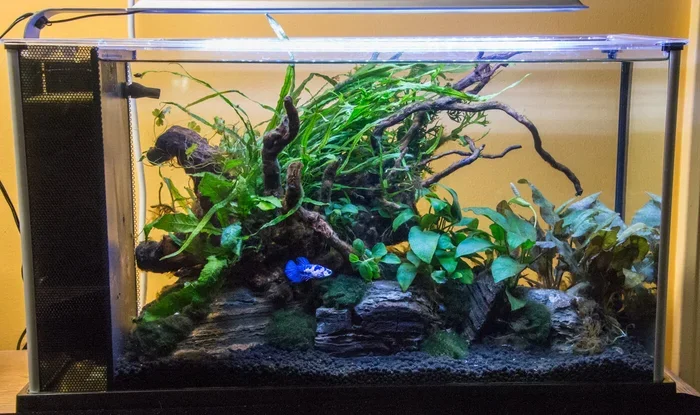
When people ask how many gallons should a betta fish have, they often think only about water volume. But space also means enrichment. Plants, caves, and open swimming areas all matter. A 5-gallon tank can be enriched well. A 10-gallon tank gives you even more room to create a beautiful, stimulating environment.
Plants, Decor, and Hiding Spots
Live plants are a great addition to a betta tank. They help absorb nitrates, provide oxygen, and give your fish places to explore. If you want to know whether plants are safe, check can i have a betta fish with plants for practical advice. Soft plants are best because bettas sometimes rest on leaves or hide inside them.
Decorations should be smooth and free of sharp edges. Bettas have long, delicate fins that tear easily. Avoid plastic plants with stiff spikes. Instead, choose silk plants or live options like java fern, anubias, and moss. These add beauty without harming your fish.
Do Bettas Really Need a Lot of Room?
Yes, they do. Some people believe bettas are fine in tiny spaces because they are not fast swimmers. That is not the full story. Bettas may not chase prey across a reef like some fish, but they still need room to turn, stretch their fins, and explore. If you want to understand more about their activity needs, you can read do betta fish like a lot of space for a closer look.
A larger tank also supports better behavior. Bettas often flare, build bubble nests, and interact with their surroundings when they feel comfortable. These are signs of a healthy, content fish. A cramped tank can suppress natural behaviors and make your betta seem dull or withdrawn.
Common Mistakes When Choosing a Betta Tank
Choosing the right tank is not always simple. Many new keepers make the same mistakes again and again. Avoiding these errors can save your fish from stress and save you from frustration.
Mistake 1: Trusting the Pet Store Bowl
Pet stores often sell bettas in tiny cups or bowls because they are cheap and easy to display. That does not mean those setups are ideal. A betta can survive in a small cup for a short time, but it should not live there long term. Always plan for a proper tank before or soon after bringing your fish home.
Mistake 2: Ignoring the Filter
Some people think bettas do not need filtration because they breathe air from the surface. While bettas do have a special organ called a labyrinth organ, they still need clean water. A good filter helps remove waste and keeps the tank healthy. If you are unsure about filters, you can learn more in can you have a filter with a betta fish.
Mistake 3: Overcrowding the Tank
A larger tank does not mean you should fill it with many fish right away. Bettas can be territorial, especially males. If you want to add tank mates, choose carefully and research compatibility. For example, you may want to read can you have other fish in a betta tank before making any decisions.
Mistake 4: Skipping Water Changes
Even a large tank needs regular maintenance. Waste still builds up over time. Nitrate levels rise. Algae can grow. A consistent water change schedule keeps the environment safe. If you want to understand why this matters, see do betta fish have to have water changes.
Common Mistakes at a Glance
- Buying a bowl: Too small for stable water and proper care.
- No filter: Waste builds up faster and harms your fish.
- No heater: Temperature swings stress bettas and weaken immunity.
- Overcrowding: Too many fish create competition and aggression.
- Overfeeding: Extra food pollutes the water quickly.
Expert Insights for a Happy Betta Setup
Good betta care is about consistency, not perfection. You do not need the most expensive tank on the market. You do need a setup that keeps water clean, temperature steady, and stress low. Here are some expert insights to help you build a better home for your fish.
Choose Quality Over Cuteness
A pretty bowl is not a good home. A simple 5-gallon or 10-gallon tank with a heater and filter is far better. It may not look as tiny and cute on a shelf, but it supports a much healthier fish. When you think about how many gallons should a betta fish have, think about the life inside the tank, not just the look of the setup.
Start Small, But Not Too Small
If you are new to fish keeping, a 5-gallon tank is a great starting point. It is manageable, affordable, and much better than a bowl. As you gain confidence, you can move to a 10-gallon tank or larger. This gives you room to learn and grow without overwhelming yourself.
Watch Your Betta’s Behavior
Your fish will tell you a lot if you pay attention. Active swimming, bright colors, and healthy fins are good signs. Hiding all the time, fading color, or constant flaring at reflections may mean something is wrong. Sometimes the issue is the tank size. Sometimes it is water quality, temperature, or stress from reflections. For example, you can read can betta fish have a mirror to learn how mirrors affect betta behavior.
Think Long Term
Bettas can live several years with good care. That means your tank should work for the long haul, not just the first few weeks. A larger tank is easier to maintain over time because water conditions stay more stable. It also gives you room to adjust your setup as you learn more.
Final Thoughts on Tank Size and Betta Care
So, how many gallons should a betta fish have? For most bettas, the best starting point is 5 gallons or more. That size gives your fish a safer, cleaner, and more comfortable home. It also makes your daily care easier and helps your betta show off its natural beauty and behavior.
Remember that tank size is only one part of good care. Filtration, heating, water changes, feeding, and enrichment all matter too. When you put these pieces together, you give your betta the best chance at a long, vibrant life. A well-cared-for betta is not just a pretty ornament. It is a lively pet that rewards your effort every day.
If you are setting up your first tank, start with a 5-gallon setup and build good habits from there. If you already have a betta in a small bowl, consider upgrading as soon as you can. Your fish may not be able to tell you what it needs, but its health and behavior will speak for themselves.
Frequently Asked Questions
How many gallons should a betta fish have as a minimum?
A betta fish should have at least 5 gallons of water for a healthy and stable home. Smaller tanks can cause poor water quality and more stress. Bigger tanks are easier to maintain and better for long-term care.
Can a betta fish live in a 1-gallon tank?
A betta might survive in a 1-gallon tank for a short time, but it is not a good long-term setup. Water quality drops fast in such a small space, and temperature swings are common. A larger tank is much safer for your fish.
Is a 5-gallon tank good for a betta fish?
Yes, a 5-gallon tank is a great starting point for a single betta. It offers enough water volume for stability and room for a heater and gentle filter. Many beginners find this size manageable and effective.
Do betta fish need a large tank to be happy?
Bettas do not need a huge tank, but they do need enough space to swim and explore comfortably. A 5-gallon tank is the minimum, while 10 gallons or more gives even more comfort. More space usually means less stress and better behavior.
What happens if a betta fish tank is too small?
In a tank that is too small, waste builds up quickly and water conditions become unstable. Your betta may become lethargic, lose color, or get sick more often. Upgrading to a larger tank usually improves health and energy.
Can I add other fish if I have a bigger betta tank?
A bigger tank gives you more options, but you still need to choose tank mates carefully. Bettas can be aggressive, so compatibility matters more than size alone. Research each species before adding it to the same tank.